Garnet Blasting Media: Eco-Friendly, High Performance & Complete Buyer’s Guide
The preferred choice for open-air industrial blasting, pipeline coating preparation, and waterjet cutting worldwide — covering garnet mineral grades, mesh size selection, dust performance data, environmental compliance, and a head-to-head comparison against copper slag and aluminum oxide.
1. What Is Garnet Blasting Media?
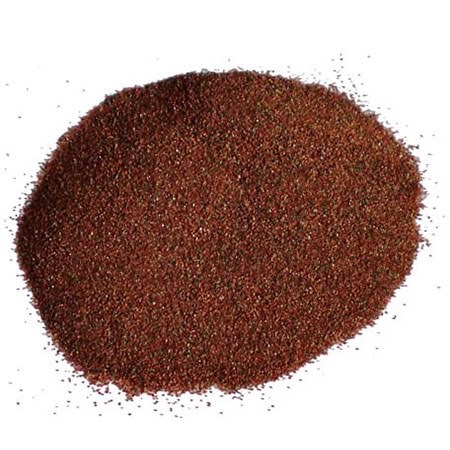
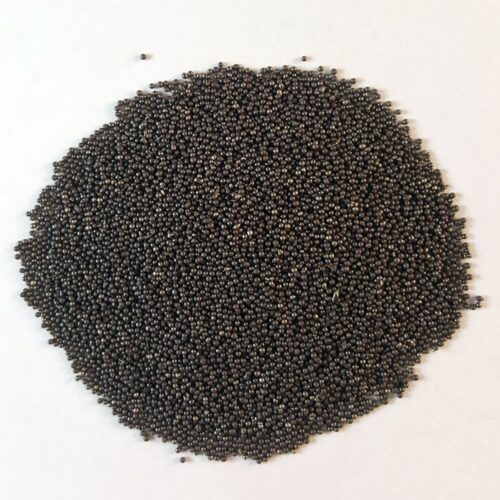
Garnet is a naturally occurring iron-aluminum silicate mineral belonging to the nesosilicate group, mined from alluvial and hard-rock deposits primarily in Australia, India, South Africa, and China. For industrial abrasive applications, the two commercially significant garnet varieties are almandine (Fe₃Al₂(SiO₄)₃) and andradite (Ca₃Fe₂(SiO₄)₃) — both offering hardness, density, and particle toughness properties that make them highly effective blasting abrasives.
In the global abrasive blasting market as of March 2026, garnet occupies a well-defined position: harder and more effective than legacy slag abrasives, significantly lower in dust generation than copper slag or silica sand, fully silica-free, and preferred for open-air industrial blasting operations where environmental and health compliance are primary considerations alongside performance. It is also the dominant abrasive for waterjet cutting globally — a separate but related application discussed in detail in Section 6.
Garnet’s sub-angular particle shape — more rounded than aluminum oxide but sharper than glass bead — produces a well-defined, consistent anchor profile on steel surfaces without the extreme aggression of corundum abrasives. This makes it an excellent choice for applications where profile quality and surface cleanliness are more important than maximum profile depth.
2. Garnet Mineral Grades — Almandine vs Andradite
Not all garnet is equal. The two main commercial varieties used in blasting and waterjet cutting have meaningfully different physical properties that affect performance in specific applications.
For most industrial blasting applications, almandine garnet is the preferred specification due to its higher hardness, greater density, and more consistent sub-angular particle shape. Australian almandine (from deposits in Western Australia) is widely considered the highest-quality blasting garnet in global trade and commands a premium price accordingly. Indian almandine is a cost-competitive alternative widely used in Middle Eastern and Asian markets. For waterjet cutting, almandine is essentially the exclusive specification — its hardness and density are critical for achieving clean cut quality and acceptable cutting speed.
3. Mesh Size Selection & Surface Profile Data
Garnet for blasting is sized and sold by US mesh designation (or equivalent). The mesh number indicates the number of openings per linear inch in the sieve — higher mesh numbers indicate finer particles. For structural steel blasting, the most common commercial grades span 16 to 120 mesh, covering the profile range required by the vast majority of industrial coating specifications.
| Mesh Size | Particle Size (µm) | Profile Depth (Rz) | Cleanliness | Typical Application |
|---|---|---|---|---|
| 16–20 Mesh | 850–1,180 | 90–120 µm | Sa 2.5 | Heavy mill scale removal, maximum profile for thick coating systems |
| 30–40 Mesh Most used | 425-600 | 65–90 µm | Sa 2.5 | Structural steel, bridges, ship hulls, industrial storage tanks |
| 40–60 Mesh Most used | 250–425 | 50–70 µm | Sa 2.5 | Pipeline FBE coating prep, general steel, offshore platforms |
| 60–80 Mesh | 180-250 | 35–55 µm | Sa 2–2.5 | Thinner coating systems, light rust removal, pre-prime finishing |
| 80 Mesh Waterjet grade | 150-212 | 25–40 µm | Sa 2 | Waterjet cutting of steel, aluminum, stone, glass, composites |
| 100–120 Mesh | 106-150 | 15–28 µm | Sa 2 | Fine surface conditioning, pre-coating of thin substrates |
Profile ranges are indicative for almandine garnet at 5–7 bar blast pressure, 150–200 mm standoff. Actual profiles vary with blast angle, nozzle condition, and substrate hardness. Always verify against your coating system’s PDS profile specification.
4. Dust Performance — The Key Environmental Advantage
Garnet’s most commercially important advantage over copper slag, coal slag, and silica sand is its dramatically lower dust generation rate. When abrasive particles fracture on impact with the substrate, they generate airborne respirable dust — the primary inhalation hazard in blasting operations. Garnet’s mineral toughness and particle integrity mean it fractures into relatively few fine fragments per impact cycle compared to more friable abrasives.
Relative Airborne Dust Generation — Open Blasting at Equivalent Conditions
The practical implications of lower dust generation extend well beyond worker health. Less airborne dust means better visibility during blasting operations — operators can see the surface being treated more clearly, improving blast quality and consistency. It means less downtime for dust settlement before inspection or coating. And in many jurisdictions, lower dust levels allow open blasting to proceed with less elaborate containment infrastructure, reducing project setup costs significantly.
For operations on or near waterways, in urban environments, or on sites with strict environmental permit conditions, garnet is frequently the only mineral abrasive that can be specified to meet both the technical performance requirements and the environmental dust and waste generation limits simultaneously. For comprehensive guidance on eco-friendly media options across all categories, see our dedicated guide on eco-friendly and silica-free blasting media.
5. Applications by Industry
Bridges & Infrastructure
Open-air blasting of steel bridges, elevated roadways, and transmission towers. Garnet’s low dust generation allows work to proceed with reduced environmental containment requirements in sensitive or trafficked locations.
Pipeline Coating Preparation
Internal and external pipe surface preparation for fusion-bonded epoxy (FBE) and three-layer polyethylene (3LPE) coating systems. 40–60 mesh garnet is widely specified by pipeline coating contractors worldwide for consistent profile quality.
Marine & Shipbuilding
Ship hull blasting for anti-corrosion and anti-fouling coating preparation in drydock environments. Garnet’s low iron contamination risk and low dust output are advantages in enclosed drydock conditions where air quality is a concern.
Industrial Storage Tanks
Internal lining preparation for oil, chemical, and water storage tanks. Garnet is preferred for tank lining work where the enclosed environment amplifies dust exposure risk — lower dust generation reduces cumulative exposure during interior blasting operations.
Structural Steel Fabrication
Blast cleaning of structural steel sections, beams, columns, and fabricated assemblies prior to shop primer or coating application. Garnet produces the Sa 2.5 / SSPC-SP10 cleanliness and 50–90 µm anchor profiles required by most structural coating systems. See our industrial surface prep guide for detail.
Waterjet Cutting
The dominant abrasive for precision waterjet cutting of steel, aluminum, titanium, stone, glass, and composite materials. 80 mesh almandine garnet is the near-universal specification in waterjet cutting centers worldwide — covered in depth in Section 6 below.
6. Garnet for Waterjet Cutting
Why Garnet Dominates Waterjet Cutting
Waterjet cutting systems use a high-pressure water jet (typically 3,000–6,000 bar) combined with abrasive particles to cut through virtually any material. Garnet is the abrasive of choice for waterjet cutting for a combination of reasons that no other commercially available abrasive replicates:
- Hardness (Mohs 7.5–8.0): Hard enough to cut steel, titanium, stone, and glass effectively, but not so hard that it causes excessive nozzle wear in the cutting head focusing tube (typically made of tungsten carbide)
- Density (3.9–4.1 g/cm³): High enough to carry significant cutting momentum through the water stream, maximizing material removal rate per unit of abrasive consumed
- Consistent sizing: 80 mesh (150–212 µm) garnet provides a narrow particle size distribution that delivers predictable kerf width and smooth cut edges — essential for tight-tolerance parts
- Sub-angular shape: Produces efficient cutting action without the extreme nozzle wear that sharper synthetic abrasives (silicon carbide) would cause in the high-velocity water stream
- Clean cut surface: Garnet leaves no metallic contamination on cut edges — critical when cutting stainless steel, titanium, or food-contact materials
- No hazardous waste: Spent garnet from waterjet cutting is typically classified as non-hazardous waste, simplifying disposal compared to alternatives
The standard waterjet cutting grade is 80 mesh almandine garnet from Australian or Indian sources, meeting the BARTON or equivalent quality standard. Higher mesh (120) is used for ultra-fine finishing cuts; lower mesh (60) for faster cutting of thick plate where edge quality is secondary to speed. If you are sourcing garnet for a waterjet application, always confirm the mesh size distribution against your cutting head manufacturer’s recommendation and the material thickness and tolerance requirements of your production parts.
7. Garnet vs Alternatives — Direct Comparison
Understanding how garnet performs against the most commonly considered alternatives helps clarify which applications it wins on and where other media are better suited. For the complete multi-media comparison across all blasting abrasive types, see the Blasting Media Comparison Chart.
| Параметр | Гранат | Оксид алюминия | Copper Slag | Стальная крошка |
|---|---|---|---|---|
| Hardness (Mohs) | 7.5–8.0 | 9.0 ▲ | ~7.0 | ~8.0 |
| Образование пыли | Very low ▲ | Low-medium | High ▼ | Низкий |
| Silica-free | Yes ▲ | Yes ▲ | Yes ▲ | Yes ▲ |
| Возможность вторичной переработки | 3–5 cycles △ | 100–200 cycles ▲ | Single use ▼ | 500+ cycles ▲ |
| Iron contamination risk | None ▲ | None (WFA) ▲ | Possible ▼ | High ▼ |
| Surface profile quality | Excellent ▲ | Excellent ▲ | Good △ | Excellent ▲ |
| Unit price (USD/MT) | $400–700 △ | $600–900 ▼ | $80–200 ▲ | $700–1,100 ▼ |
| Cost per m² (open blast) | Low ▲ | Medium △ | Low-medium △ | Not applicable |
| Waterjet cutting | Ideal ▲ | Not used ▼ | Not used ▼ | Not used ▼ |
| Cabinet blast systems | Limited △ | Ideal ▲ | Not suitable ▼ | Ideal ▲ |
▲ Advantage · △ Neutral / acceptable · ▼ Disadvantage · Prices indicative as of March 2026 FOB China.
The comparison makes garnet’s commercial positioning clear: it excels in open-air blasting where dust, environmental compliance, and profile quality are primary concerns, and it is unrivalled for waterjet cutting. Where high recyclability in cabinet systems is the priority, оксид алюминия is the stronger specification. For the heaviest production-line automated blast rooms, стальная крошка dominates on cost per m².
8. Sourcing, Standards & What to Check
Garnet quality varies considerably between sources and suppliers. Australian almandine garnet is the benchmark for blasting and waterjet cutting quality — consistent hardness, well-controlled particle size distribution, and low levels of clay, silica, and other mineral contaminants. Indian garnet is widely used and generally of good quality at a lower price point; Chinese garnet is growing in volume but requires more rigorous incoming quality verification.
Key Quality Parameters to Verify
- Free silica content: Request a certified XRF or XRD analysis confirming free crystalline silica content below 1% — the threshold for OSHA and EU regulatory compliance. Do not accept verbal assurances on this point.
- Particle size distribution: Sieve analysis report confirming that the actual mesh distribution matches the purchased grade specification. Off-spec particle sizes produce inconsistent surface profiles.
- Chloride content: For pipeline and offshore applications where coating adhesion over chloride contamination is a known failure mode, verify chloride content in the garnet meets the project specification (typically <25 ppm).
- Moisture content: Garnet absorbs surface moisture and can clump in humid storage conditions, causing blast pot feed problems. Specify maximum moisture content and confirm packaging integrity before sea freight acceptance.
- Heavy metal content: For projects on environmentally sensitive sites, verify that spent garnet from the specific source will be classified as non-hazardous waste under local regulations — not all garnet sources produce the same spent waste classification.
For a step-by-step guide to matching garnet mesh size to your specific substrate and coating system requirements, refer to our complete blasting media selection guide. For cost-per-m² benchmarking of garnet against other media, see the Blasting Media Cost Guide & ROI Analysis.
9. Frequently Asked Questions
Related Resources
Explore the full blasting media resource library from Jiangsu Henglihong Technology for further guidance on media selection, cost analysis, and application-specific recommendations:
- Blasting Media: Complete Industry Guide — full overview of all media types and applications
- Types of Blasting Media: Complete Guide — how garnet compares to all other abrasive types
- How to Choose the Right Blasting Media — step-by-step selection framework and substrate matrix
- Aluminum Oxide Blast Media: Uses & Grit Guide — the high-recyclability alternative for cabinet systems
- Glass Bead Blasting Media — for smooth satin finishes on stainless and aluminum
- Steel Grit vs Steel Shot — metallic abrasives for high-volume automated blast rooms
- Eco-Friendly Blasting Media: Low-Dust & Silica-Free Options
- Blasting Media Comparison Chart — side-by-side data for all major abrasives
- Blasting Media Cost Guide & ROI Analysis — cost-per-m² modeling and price benchmarks
- Blasting Media Safety Guide — OSHA/EU compliance, PPE, silica risk management
- Industrial Surface Prep: Best Blasting Media for Metal
- Blasting Media for Automotive Restoration
- Plastic Blast Media for Aerospace & Automotive
- Silicon Carbide Blast Media: Hardest Abrasive Explained
Source Garnet Blasting Media from a Trusted Manufacturer
Jiangsu Henglihong Technology supplies almandine garnet in blasting and waterjet cutting grades, with certified free-silica analysis, sieve analysis documentation, and reliable sea freight export to North America, Europe, the Middle East, and beyond.
Request a Quote or Technical SampleФильтры