Black Beauty Abrasive for Sandblast Cabinets: Setup, Tips & Compatible Machines
A practical guide to using Black Beauty Extra Fine and Fine grades in pressure and suction blast cabinets — covering nozzle sizing, pressure settings, dust collection, media life, and troubleshooting.
1. Is Black Beauty Right for Your Cabinet?
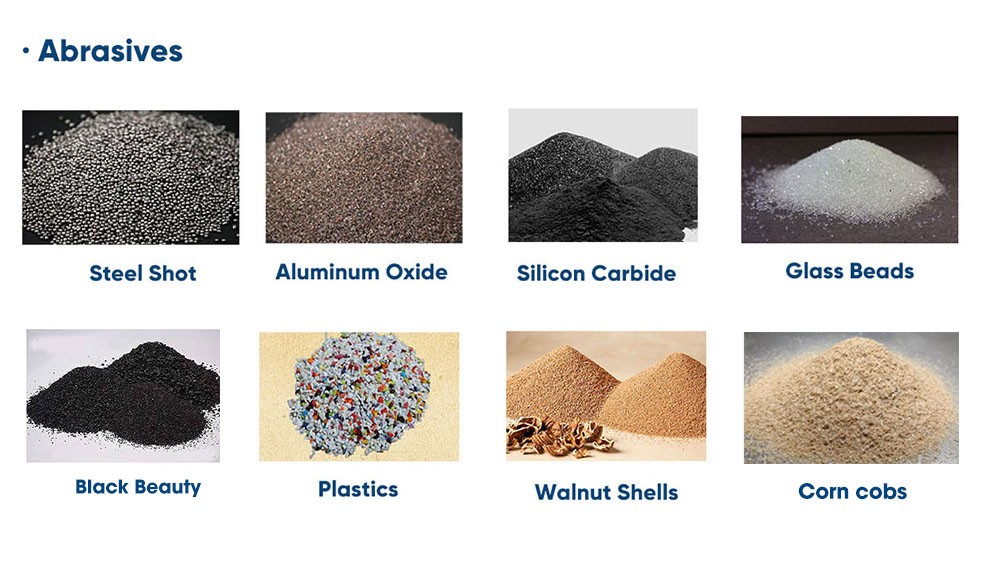
Black Beauty coal slag can be used effectively in sandblast cabinets, but it behaves differently from glass beads, aluminum oxide, or steel shot — the media most commonly associated with cabinet blasting. Understanding those differences before you load your cabinet saves time, media cost, and equipment wear.
The core characteristics that define Black Beauty’s cabinet behavior:
- High friability: Coal slag fractures aggressively on impact, generating significant fines with every cycle. This is the most important difference from aluminum oxide or glass beads — both of which maintain particle integrity better across multiple passes.
- Angular cutting action: The sharp, irregular particle edges cut paint, rust, and mill scale fast — faster than glass beads — which is why Black Beauty is often chosen for stripping rather than finishing applications.
- Single-use economics in small cabinets: Reclaim efficiency in suction-fed bench-top cabinets is low with coal slag due to high fines generation. Expect media to degrade significantly after 1–2 uses; plan for frequent media replacement rather than extended reclaim cycling.
- Darker residue: The black media leaves a dark residue on cabinet interior surfaces and on parts. This is purely cosmetic but should be expected, particularly on light-colored or non-ferrous substrates.
For a complete product overview: Black Beauty Abrasive Blasting Media: The Complete Buyer’s Guide. For the grit selection reference: Black Beauty Grit Size Chart.
2. Grade Selection: Extra Fine vs. Fine
Only two of the four commercial Black Beauty grades are suitable for standard sandblast cabinet use. Medium and Coarse grades require nozzle orifices and air volumes that most cabinet systems cannot supply, and their larger particle size causes bridging in the suction hose and nozzle assemblies of most bench-top and mid-size walk-in cabinets.
| Grade | Mesh | Cabinet Use | Anchor Profile (Mil) | Best Application |
|---|---|---|---|---|
| Extra Fine | 30/60 | ✅ Fully compatible | 1.0–2.6 | Light stripping, paint removal on thin-gauge parts, valves, fittings, small fabricated components. Least aggressive — good for parts where deep profiling is not wanted. |
| Fine | 20/40 | ✅ Compatible (pressure cabinets) | 2.0–3.8 | Paint and rust removal on structural parts, automotive components, hand tools. Faster cutting than Extra Fine; suitable where SSPC-SP 6 or SP 10 cleanliness is needed. |
| Medium | 12/40 | ⚠️ Not recommended | 3.0–4.8 | Requires 1/4″ minimum nozzle orifice; most cabinets cannot supply adequate air volume. Use only in large walk-in pressure cabinets with 1/4″+ nozzle systems. |
| Coarse | 8/16 | ❌ Not compatible | 4.0–6.0+ | Not suitable for cabinet use — requires 5/16″ nozzle and high-volume compressor. For field and large blast room use only. |
3. Compatible Cabinet Types
4. Initial Setup and Loading
Before loading Black Beauty into a cabinet for the first time, confirm the following:
- Check media screen / classifier: Most cabinets have a classifier screen that separates oversize particles and debris from the recirculating media stream. Verify the screen mesh is appropriate for your chosen grade — a screen with too large openings allows broken particle chunks to re-enter the nozzle and cause bridging. Recommended: 14-mesh or finer classifier for Extra Fine; 10-mesh for Fine grade.
- Inspect nozzle orifice diameter: Measure your current nozzle’s bore diameter. Do not use Extra Fine through a nozzle larger than 3/8″ — the media-to-air ratio becomes too dilute and cutting efficiency drops. Do not use Fine grade through a nozzle smaller than 3/16″.
- Check dust collector capacity: Black Beauty generates more fines and dust than glass beads or aluminum oxide. If your dust collector is undersized (i.e., already near filter capacity with your previous media), expect it to reach saturation faster with coal slag. Check filter condition before first use.
- Confirm cabinet is dry: Any moisture in the cabinet interior, hopper, or air lines will cause coal slag to clump and bridge. Drain compressed air water traps before loading. If the shop is in a high-humidity environment, a refrigerated air dryer inline with the cabinet supply is highly recommended.
- Load media quantity: Do not overload the hopper. Fill to approximately 60–70% of hopper capacity to allow adequate media circulation without media backup into the nozzle assembly.
5. Pressure and Nozzle Settings
| Параметр | Extra Fine (30/60) — Suction | Extra Fine (30/60) — Pressure | Fine (20/40) — Pressure |
|---|---|---|---|
| Nozzle Orifice | 1/8″ – 3/16″ (3.2–4.8 mm) | 1/8″ – 1/4″ (3.2–6.4 mm) | 3/16″ – 1/4″ (4.8–6.4 mm) |
| Operating Pressure | 40–70 psi | 60–90 psi | 70–100 psi |
| Compressor CFM Required | 5–10 CFM (bench-top) | 10–20 CFM | 15–25 CFM |
| Recommended Nozzle Type | Straight bore or mini-Venturi | Mini-Venturi or straight bore | Mini-Venturi |
| Nozzle Material | Boron carbide preferred; tungsten carbide acceptable | Boron carbide | Boron carbide |
| Expected Nozzle Life | 40–70 hours (tungsten carbide) | 60–100 hours (boron carbide) | 50–80 hours (boron carbide) |
6. Dust Collection Requirements
Dust collection is the most critical cabinet infrastructure requirement when running Black Beauty coal slag. The high friability of coal slag means significantly more fine particulate is generated per unit of media consumed compared to aluminum oxide or glass beads.
6.1 Two-Stage Collection
Effective dust collection for coal slag in a cabinet requires a two-stage system:
- Stage 1 — Cyclone separator: Removes the bulk of spent media and coarse fines by centrifugal separation. The cyclone discharges clean-ish media back to the hopper for recirculation (though with coal slag, this recirculated material will be of degraded quality).
- Stage 2 — Cartridge or bag filter dust collector: Captures the fine respirable fraction that passes through the cyclone. For coal slag, use cartridge filters with a minimum efficiency of MERV 15 or equivalent. Replace or pulse-clean filters when differential pressure across the collector exceeds the manufacturer’s rated limit — this happens faster with coal slag than with less friable media.
6.2 Air Volume
The dust collector must maintain sufficient air volume to keep the cabinet interior under slight negative pressure — visible as the cabinet door seal holding firmly closed during blasting. Inadequate air volume allows dust to escape around door seals and glove ports. As a rule of thumb, dust collector air volume should be at least 3× the compressor CFM output supplying the blast nozzle.
6.3 Respiratory Protection at the Cabinet
Even with a properly functioning dust collection system, operators should wear at minimum a half-face respirator with P100 particulate filter cartridges when loading media, clearing jams, or opening the cabinet for part removal. The dust inside a coal slag cabinet is a nuisance dust hazard — keep it contained and controlled.
7. Media Life and Replacement Timing
Unlike aluminum oxide or glass beads — which can run for 5–10 cycles before significant performance degradation — Black Beauty coal slag has a much shorter effective cabinet life. Signs that media needs to be replaced:
- Cutting speed drops noticeably — parts that took 5 minutes to strip now take 8–10 minutes. This indicates the effective particle size in the hopper has degraded as angular particles break down to rounded fines.
- Dust collector filter reaches saturation much faster than normal — the fines-to-cutting-particle ratio has shifted; the media is now generating more dust than cutting force.
- Cabinet window fogging increases — more fine particles reaching the window means more dust in the cabinet air volume; a sign of media degradation.
- Media clumping or bridging in the hopper — degraded media with absorbed moisture and fine particles tends to clump and bridge more readily than fresh media.
In a typical bench-top suction cabinet running Extra Fine Black Beauty on automotive parts or hand tools, expect to replace the media after 2–4 hours of active blasting. In a pressure cabinet with a functional reclaim system, this extends to 4–8 hours before performance becomes noticeably degraded.
8. Troubleshooting Common Problems
| Problem | Likely Cause | Решение |
|---|---|---|
| Media bridging / not flowing from hopper | Moisture in media or cabinet; fines accumulation creating clumps | Drain air lines and traps; empty hopper, dry it thoroughly, refill with dry media. If recurring, add inline air dryer to compressor supply. |
| Nozzle clogging / inconsistent media flow | Oversize particle chunks from media fracture; debris in hopper | Check classifier screen — clean or replace if clogged. Verify screen mesh size is appropriate for the grade being used. |
| Poor cutting speed despite correct settings | Degraded media — too many fines, insufficient angular particles | Replace media. If problem recurs quickly, check that fresh media is being used (not recycled fines from a previous session). |
| Dust escaping around cabinet door seals | Dust collector filter saturated; inadequate air volume; door seal worn | Check and service dust collector; verify CFM. Inspect and replace door gasket if compressed or cracked. |
| Nozzle wearing out unusually fast | Operating pressure too high; ceramic nozzle used instead of carbide | Reduce pressure to recommended range; switch to boron carbide or tungsten carbide nozzle. |
| Parts coming out darker than expected | Black coal slag residue on part surface | Normal with coal slag — part surfaces will be dark grey. If residue is problematic for downstream processing, blow off with compressed air or use an air wash separator in the cabinet cycle. |
| Cabinet window scratching rapidly | Angular coal slag particles impacting the window at oblique angles | Verify nozzle angle — direct blast should be away from the window. Replace glass with polycarbonate and add protective film overlay, which can be peeled off when visibility degrades. |
9. When to Switch to a Different Media
Black Beauty is a practical, economical choice for cabinet blasting when paint and rust removal is the goal and media longevity is not the priority. Consider switching to an alternative when:
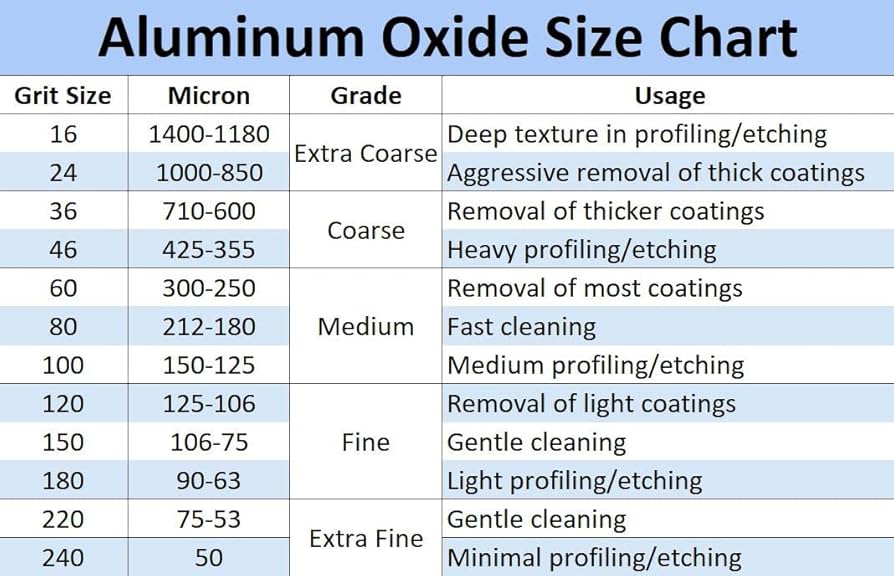
- High-frequency production cabinet use: If you blast parts daily and run the cabinet for multiple hours per day, aluminum oxide’s 5–10 cycle life and better reclaim economics will almost certainly be more cost-effective than frequent coal slag replacement.
- Surface finishing rather than stripping: If the goal is a peened, satin, or decorative finish rather than profile creation for coating adhesion, glass beads are the correct media — coal slag creates too aggressive and irregular a surface texture for finishing applications.
- Non-ferrous metals (aluminum, brass, titanium): Coal slag can embed particles in softer non-ferrous substrates, potentially causing contamination issues in precision applications. Glass beads or aluminum oxide are typically specified for aerospace and precision non-ferrous parts.
- Dust-sensitive environment: If the workshop is not isolated or the dust collection system is undersized, coal slag’s high fines generation may be unacceptable. Garnet generates significantly less dust and is a better choice for dusty-environment cabinets.
For detailed media comparisons to inform your choice: Black Beauty vs. Aluminum Oxide · How to Choose the Right Blasting Media
Return to overview: Complete Buyer’s Guide · Related: Grit Size Chart · Safety & Compliance
Фильтры