Plastic & Organic Blasting Media: Walnut Shell, Corn Cob & Plastic Grit
A complete technical guide to soft abrasive blasting media — covering walnut shell, corn cob, urea, melamine, and acrylic plastic grit for applications where substrate integrity must be preserved and harder abrasives would cause damage.
Why Soft Blasting Media Exists
The hardest, most aggressive abrasive blasting media — silicon carbide, aluminum oxide, steel grit — are designed to cut, profile, and transform tough metal surfaces. But a significant category of industrial blasting requirements is precisely the opposite: the need to clean, strip, or condition a surface without cutting into it, altering its dimensions, or damaging a substrate that cannot tolerate the impact energy of a hard abrasive.
This is the domain of soft blasting media. With Mohs hardness values ranging from 2.5 to 4, plastic and organic abrasives interact with surfaces through a mechanism closer to scrubbing than to cutting. They are able to dislodge paints, coatings, carbon deposits, and light contamination without etching the substrate beneath — a capability that is simply not achievable with harder alternatives.
For an overview of the full abrasive blasting media spectrum from softest to hardest, see: Abrasive Blasting Media: Complete Guide to Types, Properties & Selection. For a direct comparison of angular vs. round media behavior: Angular vs Round Blasting Media: Surface Profile & Finish Differences.
Types of Plastic & Organic Blasting Media
Soft blasting media falls into two broad categories — engineered plastic abrasives (manufactured from synthetic polymer resins) and organic agricultural abrasives (derived from natural plant materials). Each has distinct performance characteristics, recyclability, and environmental profiles.
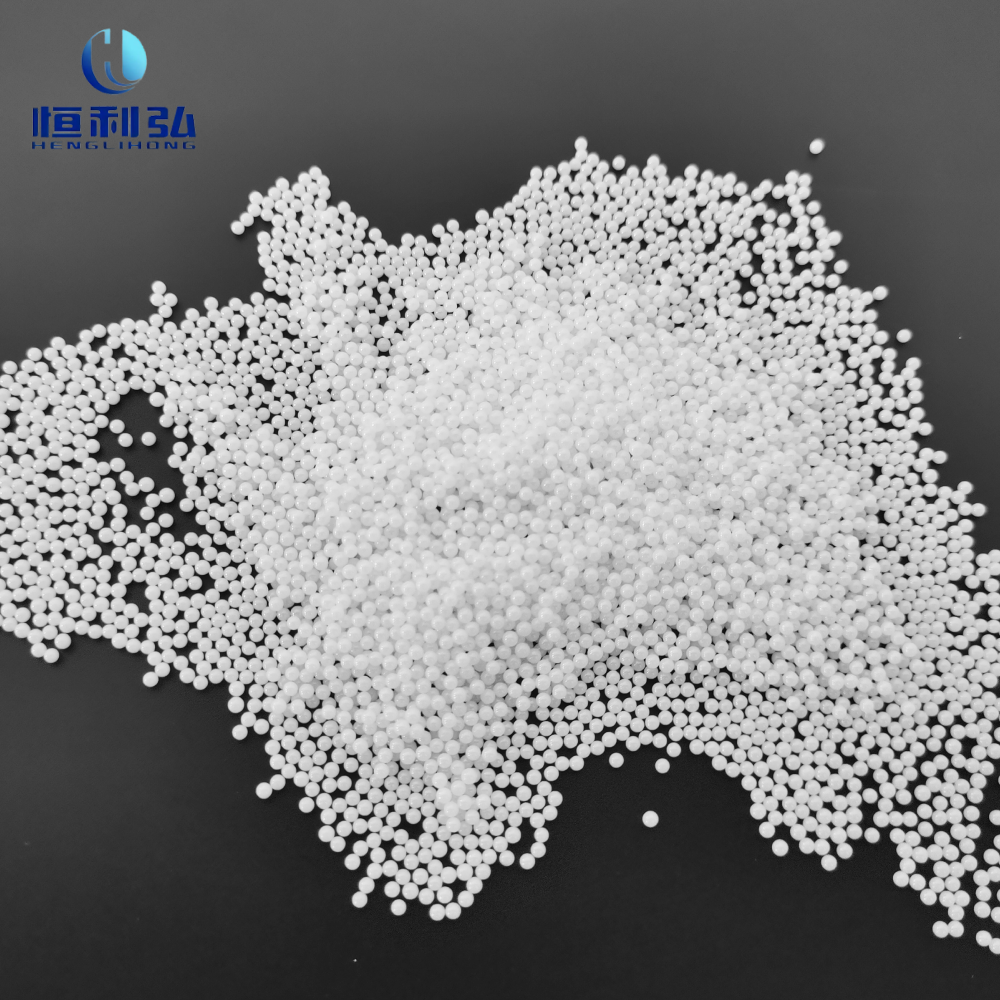
Urea Plastic Grit
The softest plastic media. Highly friable — fractures easily on impact, making it very gentle on substrates. Ideal for stripping powder coatings from aluminum extrusions without surface damage.
Melamine Plastic Grit
Harder than urea, better toughness and more reuse cycles. Removes heavier coatings while remaining gentle on aluminum, composites, and glass fiber. Standard for aerospace paint stripping.
Acrylic Plastic Grit
Hardest of the plastic grades. Static-dissipative — safe for blasting electronic components and PCBs without risk of electrostatic discharge damage. Fine sizing available.
Walnut Shell Grit
Crushed black walnut shells. Soft enough for engine parts and turbine blades, angular enough to remove carbon deposits and light coatings. Biodegradable and naturally sourced.
Corn Cob Grit
The gentlest option in this category. Used where walnut shell is still too aggressive — polishing, drying, light cleaning of wood, plastic, and brass surfaces. Highly absorbent — picks up oil and moisture during blasting.
Peach Pit / Apricot Shell
Similar performance to walnut shell but with slightly different particle morphology. Used in food-grade equipment cleaning and light surface conditioning. Biodegradable.
Properties Comparison Table
| メディア・タイプ | モース硬度 | Shape | 密度 (g/cm³) | Reuse Cycles | Biodegradable | Dust Level | Relative Cost |
|---|---|---|---|---|---|---|---|
| Urea Plastic Grit | 3.0–3.5 | アンギュラー | 1.3–1.4 | 2–3× | No | 低い | Medium-High |
| Melamine Plastic Grit | 3.5–4.0 | アンギュラー | 1.5–1.6 | 3–5× | No | 低い | Medium-High |
| Acrylic Plastic Grit | 3.5–4.0 | アンギュラー | 1.18–1.20 | 3–5× | No | 非常に低い | 高い |
| Walnut Shell Grit | 3.0–4.0 | Sub-angular | 0.7–0.8 | 1× (single) | Yes | Low-Med | Low-Med |
| Corn Cob Grit | 2.5–3.0 | Irregular | 0.35–0.45 | 1× (single) | Yes | 低い | 低い |
| Peach Pit / Apricot Shell | 3.0–3.5 | Sub-angular | 0.65–0.75 | 1× (single) | Yes | 低い | Low-Med |
Plastic Grit: Urea, Melamine & Acrylic — Technical Details
Engineered plastic blasting media is produced by grinding and screening polymer resins into angular particles with controlled size distributions. The choice among the three main plastic types — urea, melamine, and acrylic — is driven by the coating to be removed, the substrate material, and any special requirements such as static dissipation.
Urea Plastic Grit
Urea-formaldehyde resin grit is the softest and most friable of the plastic abrasives. Its low Mohs hardness (3–3.5) and high friability make it the most gentle option for substrates that cannot tolerate any surface alteration. Urea grit fractures readily on impact with the substrate, which limits its aggressiveness but also limits its reuse cycles to typically 2–3 passes. It is most commonly used for:
- Stripping powder coatings and paint from aluminum extrusions and die castings at low blasting pressures (20–40 PSI).
- Removing coatings from glass fiber reinforced plastic (GFRP) components without cutting the glass fiber reinforcement.
- Cleaning plastic injection molds of resin buildup and release agent residue without scratching mold steel surfaces.
Melamine Plastic Grit
Melamine-formaldehyde grit is harder (Mohs 3.5–4) and tougher than urea, offering better coating removal performance and more reuse cycles (3–5 passes). It has become the standard plastic abrasive for aerospace paint stripping because it removes topcoats and primer systems from aluminum aircraft skins and carbon fiber composite panels without affecting the substrate or altering the surface profile. Approved under numerous aerospace material specifications (AMS, MIL-SPEC) for use on primary structure components.
Melamine is also the preferred plastic media for:
- Removing multi-layer paint from automotive body panels before repaint, preserving OEM primer coats where intact.
- Stripping coatings from composite boat hulls without delaminating fiber reinforcement.
- Deflashing thermoplastic injection-molded parts — removing mold flash from parting lines without affecting part dimensions.
Acrylic Plastic Grit
Acrylic (polymethyl methacrylate, PMMA) grit has a similar hardness to melamine but a key additional property: it is static-dissipative — it does not generate or accumulate electrostatic charge during blasting. This makes it the only plastic blasting media safe for use on live or assembled electronic components, printed circuit boards (PCBs), and semiconductor equipment where electrostatic discharge (ESD) could damage sensitive components. Acrylic’s lower density also means it carries less impact energy per particle, making it among the most gentle of the plastic abrasives at a given blasting pressure.
Plastic blasting media must be used at significantly lower pressures than mineral or metallic abrasives. Typical working pressures for plastic grit applications are 20–60 PSI (1.4–4.1 bar), compared to 60–110 PSI for aluminum oxide or steel grit. Excessive pressure with plastic media causes rapid media breakdown without improving cleaning performance, and can generate enough impact energy to damage the substrate the process is intended to protect.
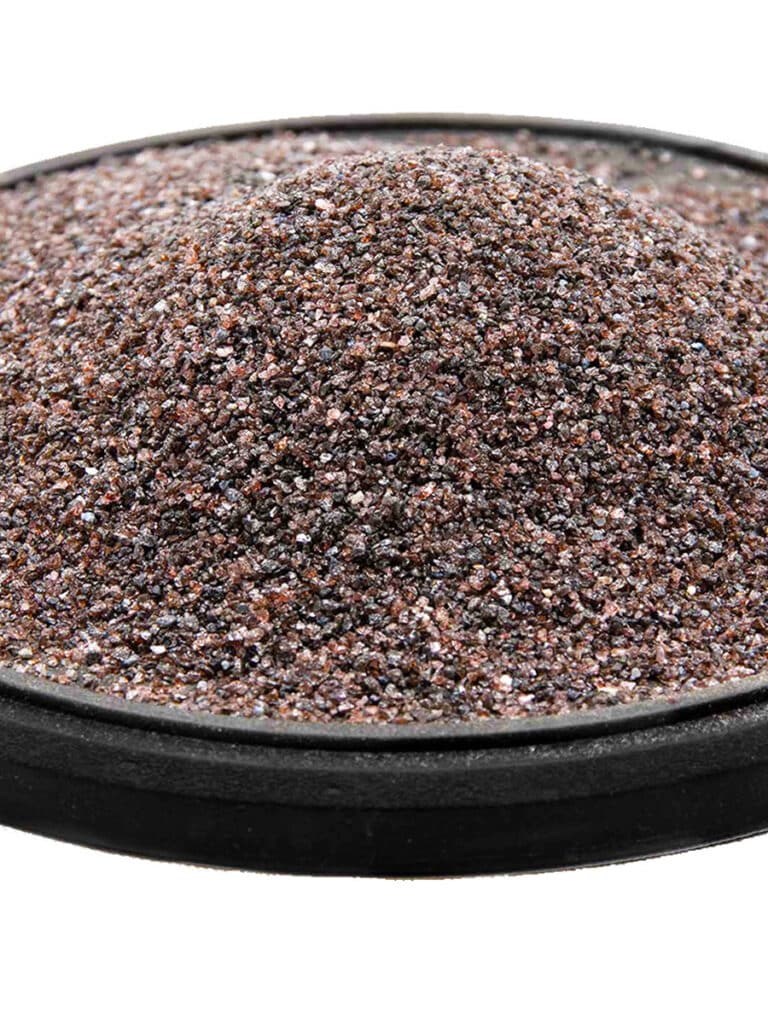
Walnut Shell Blasting Media
Walnut shell grit is produced by crushing and screening the shells of black walnuts (Juglans nigra) into angular particles with a hardness of approximately Mohs 3–4. Unlike plastic grit, walnut shell is a 100% natural, biodegradable material — its disposal is straightforward (assuming no hazardous substrate contamination) and it carries no polymer or chemical manufacturing footprint.
The angular shape of walnut shell particles gives them meaningful cleaning and light coating removal capability despite their low hardness. They are effective at removing soft deposits — carbon buildup, grease, light corrosion products, residual coatings — without abrading metal surfaces measurably. This non-abrasive character makes walnut shell the preferred media for cleaning engine components that will be reassembled and returned to service without any subsequent surface treatment: the cleaned surface must be dimensionally correct and free from abrasive contamination.
Key Applications for Walnut Shell
- Aircraft turbine blade cleaning: Removing carbon deposits and contamination from turbine blade surfaces during MRO (maintenance, repair, and overhaul) operations. The blades must be dimensionally correct after cleaning — walnut shell removes deposits without altering the airfoil profile.
- Automotive engine reconditioning: Cleaning pistons, cylinder heads, intake manifolds, and valve train components of carbon and varnish deposits without damaging machined surfaces.
- Wood restoration & graffiti removal: Stripping deteriorated paint or graffiti from wood surfaces without raising the grain or damaging the wood fiber structure — impossible with harder abrasives.
- Food processing equipment: Cleaning food-contact surfaces and equipment internals where residue-free cleaning is required and chemical cleaning is undesirable. Walnut shell leaves no chemical residue and is food-safe.
Walnut shell is available in standard mesh sizes from 4/8 mesh (coarse, ~2.4–4.8 mm) through 40/60 mesh (fine, ~0.25–0.42 mm). Coarser sizes remove heavier deposits faster; finer sizes provide gentler action and better access to complex surface geometries. For engine cleaning applications, 20/40 mesh is the most commonly specified; for turbine blades, 40/60 or finer is typical to preserve airfoil surface finish.
Corn Cob Blasting Media
Corn cob grit is produced from the ground cob (the woody core) of corn (maize) plants. With a Mohs hardness of just 2.5–3, corn cob is the gentlest blasting abrasive in common industrial use — softer than even walnut shell. Its particle shape is irregular rather than distinctly angular, which further reduces its tendency to scratch or etch surfaces.
Beyond its extremely gentle action, corn cob has a distinctive secondary property: it is highly absorbent. Corn cob particles readily absorb oils, moisture, cutting fluids, and light contamination from surfaces during blasting, making them effective for cleaning and drying simultaneously. This absorbency is particularly valued in applications where surface contamination consists of both solid deposits and oily residues that need to be removed in a single step.
Key Applications for Corn Cob
- Brass and bronze surface polishing: Corn cob’s gentle action can produce a polished, brightened finish on soft non-ferrous metals without the scratching that harder media would cause. Tumbler barrels loaded with corn cob and a polishing compound are standard in ammunition and jewelry manufacturing.
- Wood cleaning and restoration: The most gentle wood-safe blast media — cleans weathered and contaminated wood surfaces without raising grain or fiber damage. Used in heritage building restoration.
- Plastic and composite surface cleaning: Removes contamination and light coatings from plastic components, fiberglass, and composite panels with virtually no risk of substrate damage.
- Drying and degreasing operations: In vibratory finishing systems, corn cob media is used to dry and burnish parts after aqueous cleaning processes, absorbing residual moisture and light lubricant traces from complex part geometries.
Reusability & Disposal
Plastic and organic blasting media differ significantly in their reusability and disposal profiles.
Plastic grit (urea, melamine, acrylic) can be reclaimed and reused 2–5 times depending on grade and operating conditions. Reclaim is practical in enclosed cabinet blasting systems with dust collection; plastic grit used in open blast operations is generally not economically recoverable. Spent plastic media is classified as non-hazardous industrial solid waste in most jurisdictions (subject to the nature of substrate contaminants in the spent material) and disposed of through standard industrial waste streams.
Walnut shell and corn cob are practical only as single-use media — they fracture too rapidly and absorb too much contamination for effective reclaim in most industrial settings. However, their biodegradability is a significant disposal advantage: clean spent organic media can typically be composted or disposed of as organic agricultural waste, avoiding the cost and administrative burden of industrial waste disposal. This advantage disappears if the spent media is contaminated with heavy metals, lead paint, or other hazardous substances from the substrate — in those cases, the spent media must be managed as hazardous waste based on its contamination content, regardless of the media’s own non-hazardous nature.
When the blasted substrate is non-hazardous (carbon steel free of lead paint, wood, aluminum without chromate primer), spent walnut shell and corn cob media can typically be composted or land-disposed as non-hazardous organic waste — a significant cost and complexity advantage over industrial waste disposal of mineral or slag abrasives. Always verify the contamination content of spent media before selecting a disposal route, as the substrate’s coating chemistry drives the waste classification, not the media itself.
For a comprehensive treatment of media waste streams and recycling options across all media types: Abrasive Blasting Media Recycling & Reclaim Systems: Reduce Cost & Waste.
産業用途
Aerospace: Aircraft Paint Stripping
Stripping paint from aircraft structures is one of the most technically demanding blasting applications precisely because the substrates — aluminum alloy skins, CFRP panels, composite radomes, and honeycomb assemblies — cannot tolerate the profile-creating, material-removing action of harder abrasives. Melamine plastic grit, used at carefully controlled pressures (typically 30–50 PSI) and standoff distances, strips topcoat and primer systems from aircraft skins while preserving the anodized or alodined surface treatment beneath. This capability allows airlines and MRO shops to return stripped aircraft to service without re-treating the base surface — a significant time and cost saving. For more on aviation applications, see: Blasting Media for Automotive & Aerospace Applications.
Automotive: Coating Removal Without Substrate Damage
Automotive restorers and body shops use plastic blasting media to strip paint from body panels where the sheet metal is too thin or too deformed to safely tolerate the stresses of harder abrasive blasting. Melamine grit removes multiple paint layers cleanly without warping thin steel panels — a problem that can occur with aluminum oxide or steel grit at the pressures needed for effective paint removal. Plastic media is also used to strip coatings from fiberglass body panels and bumpers, which cannot be processed at all with mineral or metallic abrasives.
Mold & Die Cleaning
Plastic injection molds, rubber molds, and die casting dies accumulate resin buildup, release agent residue, and contamination over their service lives. These residues must be removed periodically to maintain part quality, but the mold steel surfaces — often highly polished or precision-textured — cannot be scratched or altered. Urea and melamine plastic grit, used at low pressures in bench-top or cabinet blasting systems, removes the contamination without affecting the mold surface finish. This application is one where plastic media has no practical alternative — chemical cleaning is slow, incomplete, and carries its own substrate compatibility risks.
Electronics & PCB Assembly Cleaning
Acrylic plastic grit’s ESD-safe properties make it the only blasting media appropriate for direct application to assembled electronic components and PCBs. It is used to remove flux residues, conformal coating rework spots, and contamination from electronic assemblies in repair and rework operations — a niche application but one where the wrong media choice would cause immediate component damage.
Food Industry Equipment Maintenance
Food processing equipment — mixers, conveyors, tanks, and heat exchangers — must be cleaned periodically of food residues, mineral scale, and biofilm without introducing abrasive contamination into food contact zones. Walnut shell and corn cob media, being natural food-safe materials, can be used in environments where synthetic abrasives and chemical cleaners are unacceptable. Both media types leave no residues of concern and are compatible with food-grade cleaning protocols.
How to Choose Between Soft Media Types
| Application Requirement | Recommended Media | Key Reason |
|---|---|---|
| Aircraft paint stripping (aluminum skin) | Melamine plastic grit | Aerospace spec compliant, preserves alodine/anodize |
| CFRP composite paint stripping | Melamine plastic grit | Does not cut carbon fiber reinforcement |
| Mold cleaning (polished steel) | Urea plastic grit | Softest grade — no risk of mold face scratching |
| PCB / electronics cleaning | Acrylic plastic grit | ESD-safe — won’t damage electronic components |
| Engine component carbon removal | Walnut shell grit | Removes carbon without altering machined surfaces |
| Turbine blade deposit removal | Fine walnut shell (40/60 mesh) | Non-abrasive on airfoil, removes soft deposits |
| Wood restoration / graffiti removal | Walnut shell or corn cob | Will not damage wood grain — biodegradable |
| Brass/bronze polishing and drying | Corn cob grit | Gentlest action, high absorbency for oils/moisture |
| Food equipment cleaning | Walnut shell or corn cob | Food-safe, biodegradable, no chemical residue |
| Powder coat stripping (aluminum extrusion) | Urea plastic grit, low pressure | Removes coating at 20–40 PSI without substrate damage |
For a broader selection framework covering all media types and hardness levels, refer to: How to Choose Abrasive Blasting Media: 7 Key Factors Explained.
Need Help Selecting the Right Blasting Media for Sensitive Substrates?
Jiangsu Henglihong Technology’s technical team can help you identify the most appropriate media for delicate applications — from aircraft component MRO to precision mold cleaning — and connect you with the right product specification and supplier. Contact us for a free technical consultation.
Request a Free Consultationよくある質問
フィルター