Plastic Blast Media: Gentle Stripping Without Substrate Damage
The complete guide to plastic blast media — urea, melamine, and acrylic resin types, why aerospace and automotive industries specify plastic for composite and aluminium stripping, grit size selection, operating pressure guidelines, and factory-direct bulk pricing.
What Is Plastic Blast Media?
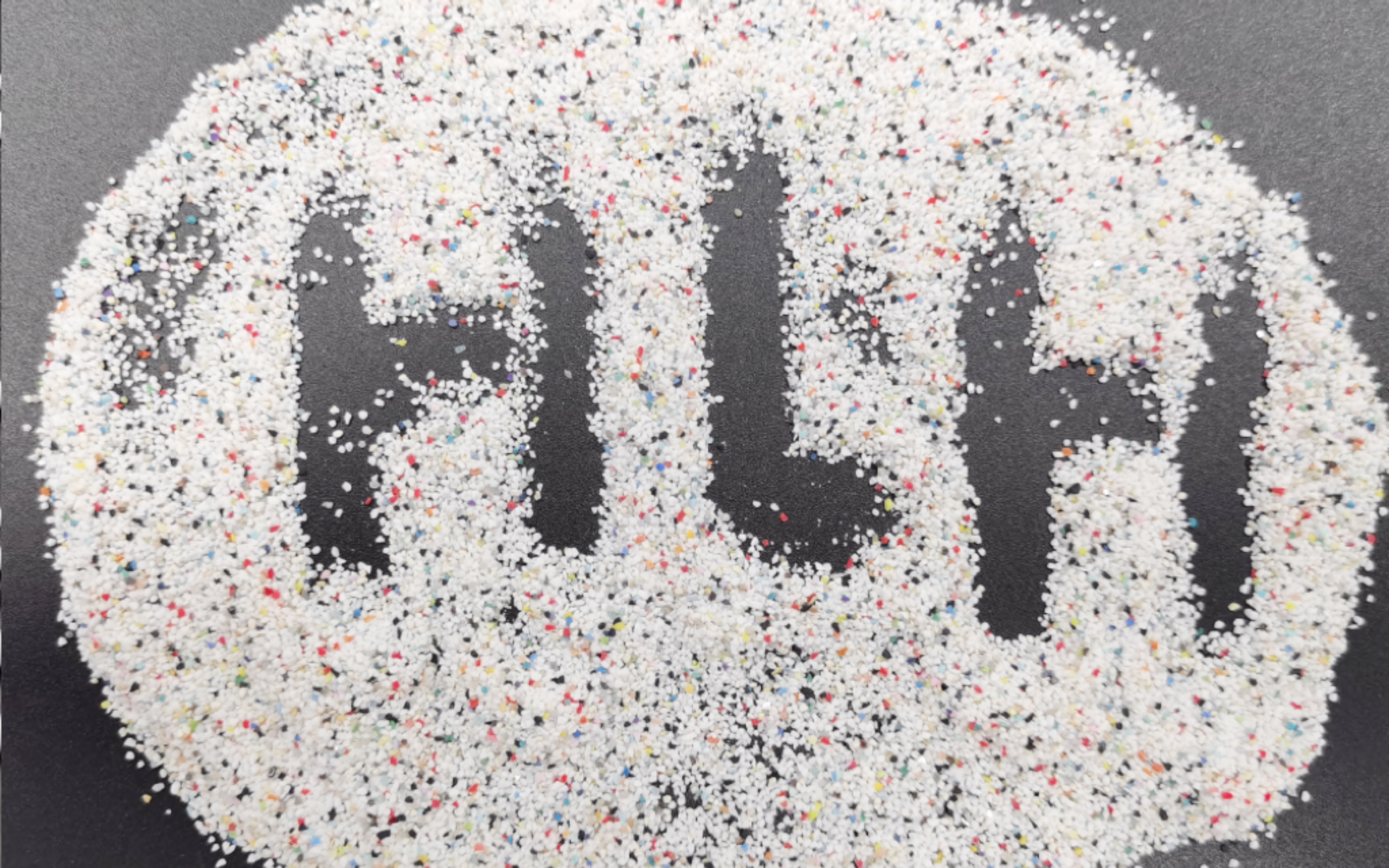
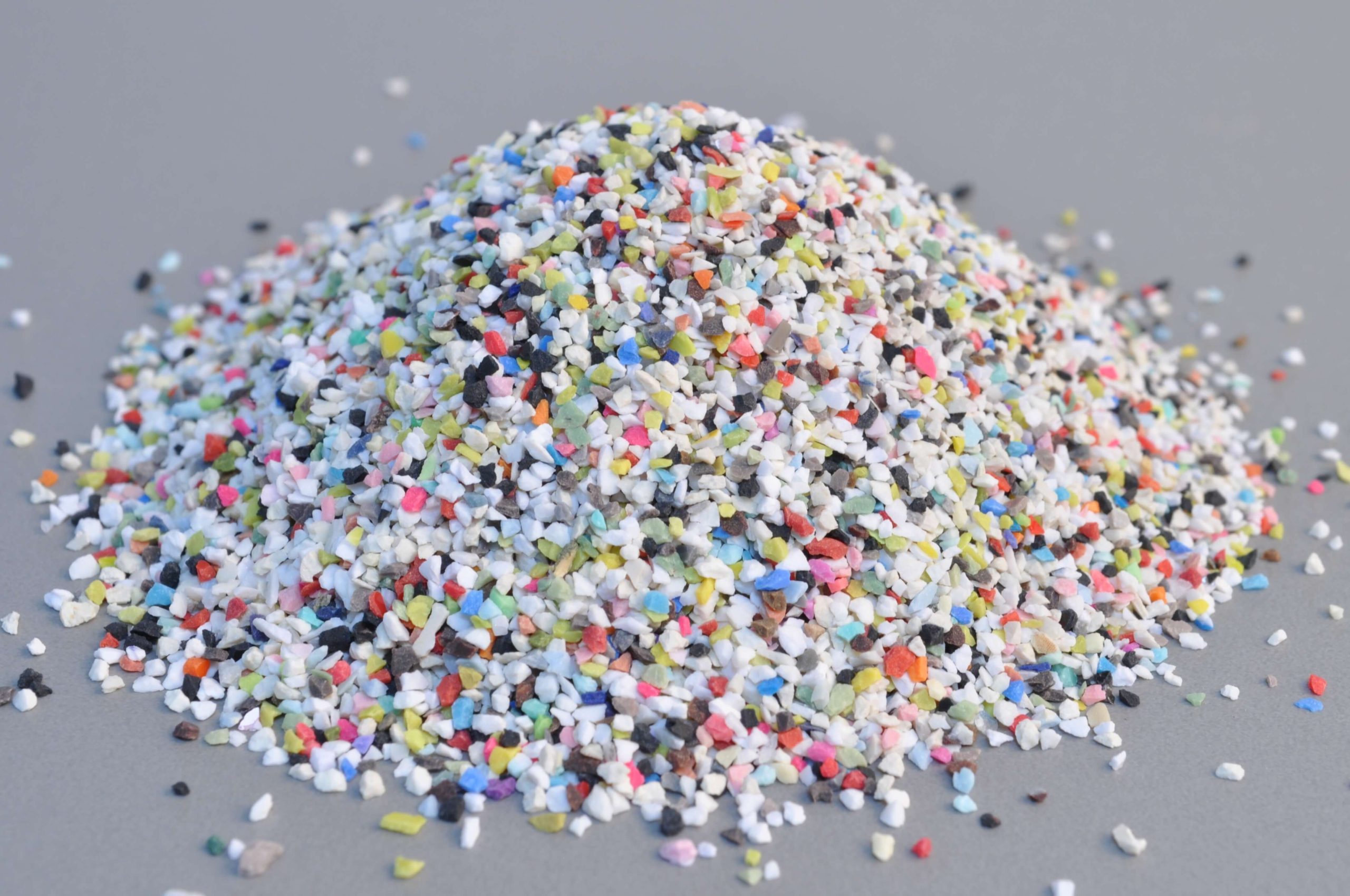
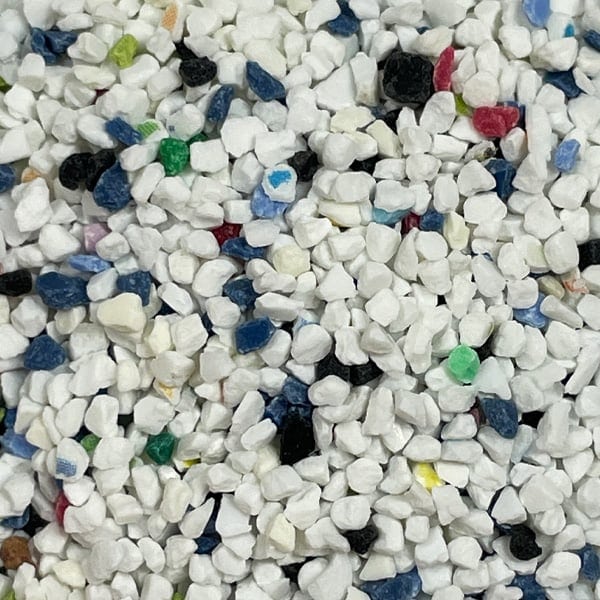
Plastic blast media consists of angular particles manufactured from thermoset plastic resins — primarily urea formaldehyde, melamine formaldehyde, and acrylic (polymethyl methacrylate). Unlike virtually every other blast media type, plastic media is engineered to be softer than the substrate it is cleaning. This counterintuitive design principle is precisely what makes it indispensable in aerospace, automotive, and defence maintenance operations: it removes coatings without abrading, scratching, or dimensionally altering the underlying component.
The defining characteristic of plastic blast media is its Mohs hardness of 3 to 4 — softer than aluminium alloy (Mohs 2.5–3 for the oxide surface layer, but the underlying alloy is harder), harder than the organic paint and coating systems it is designed to remove. This narrow hardness window enables selective stripping: the plastic particles shatter paint films, strip primer layers, and remove coatings by impact fracture without having enough hardness to cut into or profile the metal or composite surface beneath.
For a full comparison with all other abrasive media types see our Abrasive Media Comparison Chart or the media selection guide.
Three Plastic Resin Types — Which Grade Do You Need?
Commercial plastic blast media is available in three principal resin formulations. Each has distinct hardness, density, friability, and stripping aggressiveness that make it optimal for different applications and substrate sensitivities.
- Hardest of the three plastic types (Mohs ~3.5–4.0)
- Highest density — delivers maximum impact energy
- Most aggressive stripping action — fastest cycle times
- Best for multi-layer paint systems and thick primer builds
- Some risk of surface scuffing on very thin aluminium skin
- Most widely stocked; most cost-effective type
- Intermediate hardness (Mohs ~3.0–3.5)
- Good balance of stripping speed and substrate safety
- Lower friability than urea — slightly longer media life
- Preferred for CFRP and thin aluminium aerostructure skins
- Widely specified in commercial aviation MRO operations
- Used in military aircraft paint stripping programs
- Softest plastic type (Mohs ~3.0)
- Lowest density — lowest impact energy; gentlest action
- Very low risk of substrate scuffing or thinning
- Suitable for magnesium alloys, very thin laminates, and optical surfaces
- Longest recyclability of the three types
- Higher cost than urea; used in specialist precision applications
Key Technical Specifications
| パラメータ | Urea Formaldehyde | Melamine Formaldehyde | Acrylic (PMMA) |
|---|---|---|---|
| Resin base | Urea formaldehyde thermoset | Melamine formaldehyde thermoset | Polymethyl methacrylate |
| Mohs hardness | 3.5 – 4.0 | 3.0 – 3.5 | ~3.0 |
| True density (g/cm³) | ~1.50 | ~1.42 | ~1.30 |
| 粒子形状 | Angular, irregular (all types) | ||
| Available grit sizes | 12, 16, 20, 30, 40, 60, 80 (US grit) — all types | ||
| Surface profile created | Zero to trace (<0.3 mil) — no measurable anchor profile | ||
| Recyclability (typical) | 3 – 5 cycles | 5 – 8 cycles | 7 – 10 cycles |
| Crystalline silica | None — OSHA compliant | ||
| Iron contamination | None — safe on stainless, Al, Ti, composites | ||
| Max operating pressure | 60 psi (composite) / 80 psi (metal) | 50 psi (composite) / 70 psi (metal) | 40 psi (composite) / 60 psi (metal) |
| Applicable standards | MIL-P-85891A · AMS 2441 · Boeing BAC 5748 · Airbus AIMS 09-00-001 | ||
How Plastic Media Strips Without Substrate Damage
The mechanism by which plastic media removes coatings without damaging the substrate is not magic — it is a precisely calibrated hardness differential exploiting the physics of impact fracture at organic coating interfaces.
When a plastic blast particle strikes a painted surface at 50–80 psi, the sequence of events is as follows:
- Impact compression: The angular plastic particle strikes the paint film at high velocity. Its hardness (Mohs ~3.5) exceeds that of the cured organic coating system (Mohs ~1.5–2.5 for most air-dry and thermosetting topcoats).
- Coating fracture: The paint film fails in compression and shear beneath the impact point, fracturing and delaminating from the primer or substrate interface.
- Particle self-destruction: The plastic particle itself also fractures on impact — this is by design. The particle’s friability dissipates residual energy, preventing it from rebounding with sufficient velocity to damage the substrate after stripping the coating.
- Substrate preservation: The substrate (typically aluminium alloy Mohs ~6.5 or CFRP epoxy resin Mohs ~3.5–4) is not significantly abraded because the plastic particle has lost most of its kinetic energy in the initial coating fracture.
This mechanism only works correctly within a specific hardness window. Too soft (below Mohs 2.5) and the plastic particles deform on impact rather than fracturing the paint — no stripping occurs. Too hard (above Mohs 4.5) and the particles begin to abrade the substrate before the coating is fully removed. The three resin types — urea, melamine, acrylic — span this window at different points, giving operators the ability to select the aggressiveness level appropriate to the specific substrate and coating system combination.
Stripping Capability by Coating Type
Stripping Effectiveness by Coating Type (Urea Formaldehyde, 20 mesh, 60 psi)
Grit Size Selection Guide
Grit size selection for plastic blast media follows the same principle as for other abrasives — larger particles carry more kinetic energy and strip faster, while smaller particles produce a finer surface condition and are appropriate for thinner coatings or more sensitive substrates. The key difference from mineral or metallic abrasives is that grit size does not significantly change the surface profile, since even coarse plastic media creates negligible measurable anchor profile.
| Grit Size | Particle Size (µm) | Stripping Speed | Substrate Sensitivity | Best Applications |
|---|---|---|---|---|
| 12 – 16 | 1,700 – 1,180 | Fast — aggressive | Low — thicker substrates | Thick multi-layer paint removal from steel, heavy structural aluminium, and fibreglass panels |
| 20 | 850 | Medium-fast | 中程度 | Standard aircraft fuselage repainting prep; automotive bodywork multi-coat stripping; general MRO |
| 30 | 600 | Medium | Moderate-high | Commercial aviation airframe skin stripping; CFRP panel repainting; standard production cycles |
| 40 | 425 | Medium-slow | High — thin substrates | Thin aluminium alloy skins (0.6–1.0 mm); CFRP stringers and frames; control surface stripping |
| 60 | 250 | Slow — gentle | Very high | Magnesium alloy components; honeycomb sandwich panels; very thin laminates; precision aerospace parts |
| 80 | 180 | Very slow — precision | Maximum | Optical surfaces, instrument housings, very thin coatings on precision machined components |
Operating Pressure Guidelines
Blast pressure is the most critical operating variable for plastic media. Unlike mineral abrasives where higher pressure generally means faster work and lower cost, excessive pressure with plastic media removes coatings so aggressively that the self-shattering dissipation mechanism is overwhelmed — the particles retain enough kinetic energy post-coating-removal to abrade the substrate. The maximum pressures below are conservative industry guidelines; always validate on a test coupon before production blasting.
CFRP and GFRP substrates vary significantly in fibre orientation, resin type, ply thickness, and surface condition — all of which affect the appropriate blast pressure. A scrap panel or non-critical area of the same component should be blasted first at the proposed parameters. Inspect under 10x magnification for fibre exposure or surface glossy resin removal before proceeding to production stripping. Once CFRP fibres are exposed, the damage is not reversible.
Industrial Applications
Aircraft MRO Paint Stripping
Maintenance, Repair, and Overhaul (MRO) operations at aircraft hangar facilities strip fuselages, wings, empennage, and control surfaces for repainting on a scheduled cycle (typically every 6–10 years for commercial aircraft). Plastic blast media is the standard method for stripping composite and aluminium-skinned aircraft to base metal without the chemical hazards of methylene chloride strippers or the substrate damage risk of angular mineral abrasives.
Melamine 20–30 mesh · 40–60 psi · BAC 5748 / AIMS 09-00-001Automotive Restoration & Refinishing
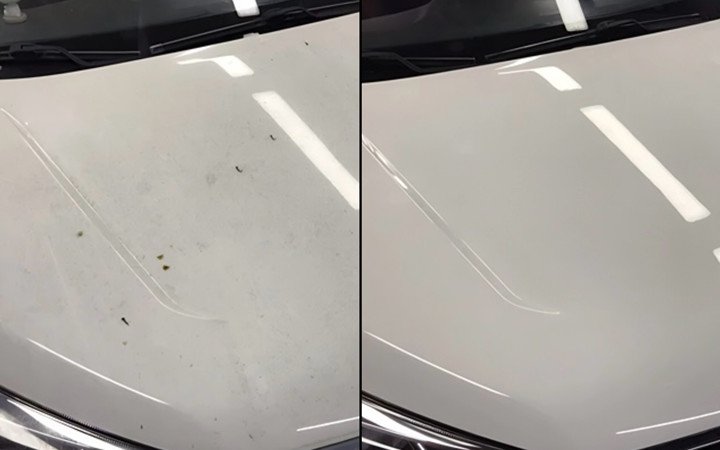
Collector car and classic vehicle restoration requires removal of old paint layers — sometimes six or more decades of repaints — without damaging thin body panels that are difficult or impossible to replace. Plastic media at 20–30 mesh strips paint from steel and aluminium panels without causing the heat distortion that occurs with chemical stripping or the warping risk of aggressive abrasive blasting at high pressure.
Urea 20–30 mesh · 50–70 psi · Pressure blast cabinetMilitary Vehicle & Weapons System Refinishing
Military ground vehicles, helicopter airframes, and naval vessel superstructures require periodic repainting as part of scheduled depot-level maintenance. Defence maintenance depots specify plastic blast media for composite and light alloy components under specifications including MIL-P-85891A, which governs plastic media properties for military maintenance applications.
Urea/Melamine 20 mesh · MIL-P-85891A · 50–75 psiMarine Composite Hull Maintenance
Racing yachts, patrol vessels, and pleasure craft with GRP or CFRP hulls require paint stripping for antifouling recoat or topcoat repair. Chemical stripping risks osmotic blistering on GRP; grinding risks laminate damage. Plastic blast media at 40–60 psi strips antifouling, primer, and gelcoat without exposing or damaging the fibre reinforcement.
Melamine 30–40 mesh · 40–55 psi · Test fibre exposure firstElectronics & Mould Tool Cleaning
Injection mould tooling, PCB stencils, and precision electronics housings accumulate residue that must be cleaned without dimensional damage. Fine plastic media (60–80 mesh) in a suction blast cabinet removes flash, residue, and contamination from mould cavities and precision surfaces without altering cavity dimensions or surface finish of the tool steel.
Melamine/Acrylic 60–80 mesh · Low pressure cabinet · Suction blastAerospace Structural Component Stripping
Wing spars, ribs, fuselage frames, and bulkheads in aluminium alloy or CFRP require recurring paint stripping for inspection under the coating system. Maintaining dimensional integrity of these fatigue-critical structures is paramount — plastic media is specified precisely because it cannot alter the dimensions or surface condition of the structure within any defined operating envelope.
Melamine 30–40 mesh · 45–65 psi · AMS 2441 compliantPros & Cons of Plastic Blast Media
✓ Advantages
- Zero substrate damage — the only blast media that strips coatings from composites and thin metals without profiling or abrading the surface
- No iron contamination — fully safe on stainless steel, aluminium, titanium, magnesium, and all composites
- No anchor profile created — substrate retains original surface condition post-stripping
- Eliminates chemical strippers — removes hazardous solvent and methylene chloride processes from the facility
- Three resin grades for tunable aggressiveness matching substrate sensitivity
- OSHA-compliant — no free crystalline silica
- Aerospace qualified — MIL-P-85891A, AMS 2441, Boeing BAC 5748, Airbus AIMS 09-00-001
✗ Limitations
- Cannot create anchor profiles — if a profile is required for a new coating system, additional blasting with a mineral abrasive is needed after plastic media stripping
- Slower stripping than aggressive abrasives — lower hardness = lower material removal rate vs Al₂O₃ or garnet at equivalent pressure
- Pressure-sensitive — over-pressure on composites causes irreversible fibre exposure damage
- Not effective on hard inorganic coatings — cannot remove hard anodise, thermal spray, or ceramic coatings
- Lower recyclability (3–10 cycles) — higher particle consumption than steel abrasives
- Higher cost per kg than garnet, crushed glass, or mineral abrasives — justified by substrate protection value in aerospace applications
- Not suitable for wheel blast machines — pressure blast or suction blast only
Plastic Blast Media vs Alternative Stripping Methods
| Method | Substrate Safety | スピード | Regulatory Burden | Best When |
|---|---|---|---|---|
| Plastic Blast Media | 素晴らしい | 中程度 | Low (no chemical permits) | Standard choice for composite and light alloy aircraft/automotive stripping |
| Aluminum Oxide Blast | Poor on composites | Fast | 低い | Carbon steel and alloy steel substrates where profile creation is also needed |
| Methylene Chloride Chemical Strip | グッド | Fast (soak) | Very high (EPA HAP, REACH, worker health) | Largely being replaced by plastic blast in most regulated jurisdictions |
| NMP / DBE Chemical Strip | グッド | Slow (long soak) | Moderate (less toxic than MeCl₂) | Where blast access is not possible; very complex geometries |
| Laser Ablation | 素晴らしい | Very slow & expensive | 低い | High-value, precision components where cost per part justifies capital investment |
| Wheat Starch / Corn Cob | Very good | Slow | 低い | Budget alternative for simple light-coat stripping on non-critical components |
Recyclability & Waste Management
Plastic blast media recyclability depends heavily on resin type (acrylic lasts longest; urea wears fastest), blast pressure (higher pressure increases particle fragmentation rate), and substrate hardness (harder substrates cause more media fracture). With a reclaim system incorporating screening and air classification, typical working life is 3–5 cycles for urea, 5–8 for melamine, and 7–10 for acrylic grade.
Spent Media Waste Classification
Spent plastic blast media from paint stripping operations is classified as a mixed waste comprising the plastic resin fragments plus the stripped paint particles. If the stripped paint contains lead-based compounds or hexavalent chromium primer (common on aircraft and military vehicles manufactured before 1980), the spent media must be characterised by TCLP testing and may require disposal as hazardous waste regardless of media type. This is not a property of the plastic media itself — it is a property of the stripped coating.
Spent plastic blast media from modern aircraft coating systems (post-1990 chromate-free primer and polyurethane topcoat) typically passes TCLP testing and is classified as non-hazardous solid waste. However, many MRO facilities treat all aircraft paint stripping waste as potentially hazardous as a precaution and for simplicity of waste stream management. Confirm with your environmental compliance officer before changing waste classification.
Safety & Regulatory Compliance
OSHA Crystalline Silica Compliance
Plastic blast media contains no silica in any form — the resin particles are entirely organic polymer. There is no crystalline silica exposure risk from the media itself. The primary respiratory hazard during plastic blasting is airborne paint dust from the stripped coating — which may contain regulated substances including lead, isocyanates (from polyurethane topcoats), chromates (from epoxy primers), or other coating-specific hazards depending on the age and specification of the painted component.
Lead Paint Hazard
Aircraft and military vehicles painted before approximately 1980 may have lead-based chromate primer still present beneath subsequent repaints. Blasting operations that disturb lead-containing coatings trigger OSHA’s Lead Standard (29 CFR 1926.62 for construction / 1910.1025 for general industry), requiring air monitoring, supplied-air respiratory protection, medical surveillance, and worker hygiene controls regardless of the blast media used. Always perform a paint chip analysis or XRF scan for lead before blasting any historic aircraft or vehicle.
Required PPE
- Supplied-air respirator (NIOSH Type CE): Required for all open blasting; essential for any lead or chromate paint stripping.
- Full blast suit with hood: Plastic particles at blast velocity cause laceration of exposed skin.
- Eye and face protection: Full blast helmet or face shield.
- Hearing protection: Required when blast noise exceeds 85 dB(A) at operator position.
For full safety guidance including ventilation, contained blast area design, and waste handling for lead-containing coatings, see our Abrasive Media Safety Guide: OSHA Standards & PPE Requirements.
Ordering Plastic Blast Media from Jiangsu Henglihong Technology
Henglihong plastic blast media is produced to MIL-P-85891A and AMS 2441 specifications with batch hardness testing and particle size distribution certification included in every shipment. Our melamine grade is the most commonly specified product for commercial aviation MRO paint stripping applications; urea grade covers the broader automotive and general maintenance market.
For first-time plastic blast media users, our technical team can provide guidance on grit size selection, blast pressure recommendations, and reclaim system configuration for your specific substrate and coating system combination. Contact us with your substrate material, coating system type, and production cycle requirements for a personalised recommendation.
よくある質問
What is plastic blast media used for?
Plastic blast media is used to strip paint and coatings from sensitive substrates — primarily carbon-fibre composites, glass-fibre composites, aluminium alloy, magnesium alloy, and titanium — without abrading, profiling, or dimensionally altering the substrate surface. Primary industries include commercial and military aircraft MRO, automotive restoration, military vehicle and weapons system maintenance, marine composite hull maintenance, and precision mould and tool cleaning.
What is the difference between urea, melamine, and acrylic plastic blast media?
The three resin types differ in hardness, density, aggressiveness, and recyclability. Urea formaldehyde (Mohs 3.5–4.0) is the hardest and most aggressive — fastest stripping, lowest media life, best for structural aluminium and GFRP. Melamine formaldehyde (Mohs 3.0–3.5) offers balanced performance and is the most commonly specified grade for commercial aircraft MRO and CFRP stripping. Acrylic / PMMA (Mohs ~3.0) is the softest and gentlest — longest media life, appropriate for magnesium alloys and very thin or sensitive laminates.
Will plastic blast media damage carbon fibre composites?
When used correctly — correct grit size (30–40 mesh), correct resin grade (melamine or acrylic), and correct pressure (30–55 psi) — plastic blast media does not damage CFRP. The risk of damage arises from excessive blast pressure, too coarse a grit size, or using the wrong resin type. Carbon fibre exposure results from removing too much of the surface resin layer and is the primary failure mode. Always test on a scrap panel representative of the production component at the proposed parameters before committing to production blasting of CFRP structure.
Can plastic blast media be used in a standard blast cabinet?
Yes — plastic blast media is compatible with standard pressure blast pots and suction blast cabinets. It is not compatible with wheel blast machines (impeller damage risk). For cabinet applications, ensure your dust collector is rated for the media volume and particle size, that the cabinet has a media reclaim classifier suitable for plastic particles (which are significantly lighter than mineral media), and that your nozzle diameter is appropriate for the grit size selected (minimum 3× particle diameter rule applies).
Does plastic blast media leave residue on the stripped surface?
Plastic blast media can leave fine resin dust on the stripped surface if reclaim and air wash are not effective. This residue must be removed before recoating — typically by compressed air blow-off followed by solvent wipe in accordance with the coating manufacturer’s surface preparation requirements. Most aerospace coating specifications (Boeing, Airbus, MIL-SPEC) require a post-blast surface inspection and cleaning step regardless of media type before primer application.
What aerospace specifications cover plastic blast media?
The principal specifications governing plastic blast media for aerospace applications are: MIL-P-85891A (US military, general plastic blast media properties); AMS 2441 (SAE Aerospace, plastic media blasting of aircraft surfaces); Boeing BAC 5748 (Boeing process specification for plastic media blast stripping); and Airbus AIMS 09-00-001 (Airbus process specification for aircraft paint stripping). When ordering for an aerospace MRO application, specify which process specification applies — our certification documentation confirms compliance with each.
Ready to Order Plastic Blast Media?
Urea, melamine, and acrylic grades in all commercial grit sizes — MIL-P-85891A and AMS 2441 certified. Technical support on grit selection and operating parameters included for all new accounts.
Request a Quote View All Abrasive Media Products →フィルター