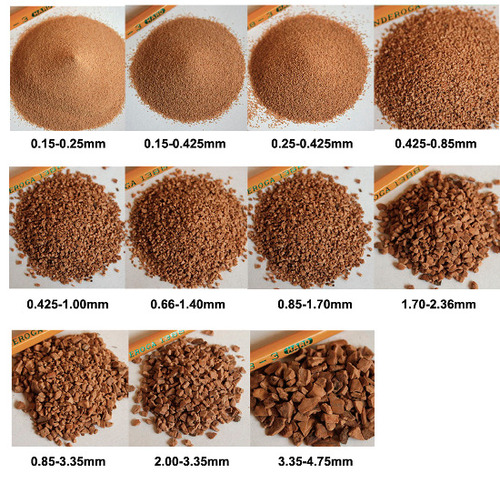
Stainless steel is easy to mark and surprisingly easy to contaminate during blasting. The best abrasive media for stainless steel finishing depends on the result you need: cleaning weld discoloration, removing scale, creating a uniform satin appearance, preparing for coating, or improving a cosmetic surface without changing dimensions. Glass beads, ceramic beads, and aluminum oxide can all work, but they behave very differently.
Quick selection guide
| ゴール | First media to evaluate | Why |
|---|---|---|
| Uniform satin or matte finish | Glass beads or ceramic beads | Rounded particles soften the impact and reduce deep directional scratches |
| Light cleaning and deburring | セラミック・ビーズ | Good coverage with controlled, reusable impact |
| Heavy scale, paint, or aggressive surface preparation | 酸化アルミニウム | Angular cutting action removes material faster |
| Food, medical, or appearance-sensitive parts | Dedicated non-ferrous media | Helps reduce iron transfer when the process is kept segregated |
Why media choice matters on stainless steel
Stainless steel finishing is not only about how fast a coating or oxide layer is removed. The media also affects surface profile, reflectivity, roughness, embedded particles, and corrosion performance. A media stream that contains steel fragments can leave iron on the surface and create rust staining later. For that reason, keep stainless-steel media separate from carbon-steel blasting work, clean the cabinet before use, and confirm the cleanliness requirement with the end customer.
Glass beads: the cosmetic finishing option
Glass bead blasting stainless steel is commonly used when the target is a consistent, low-profile satin or matte appearance. The rounded beads peen the surface instead of cutting deep grooves, so they are useful for equipment housings, fittings, weld areas, and decorative components.
Evaluate glass beads when you need:
- A softer visual transition around welds and edges.
- A uniform appearance across a large visible area.
- Light cleaning, deburring, or removal of discoloration.
Glass beads are not the best first choice for thick scale or heavy coatings. They can also fracture as they are recycled, so monitor dust, particle size, and the resulting finish. Use fresh or properly screened media when the appearance specification is tight.
Ceramic beads: controlled, clean, and reusable
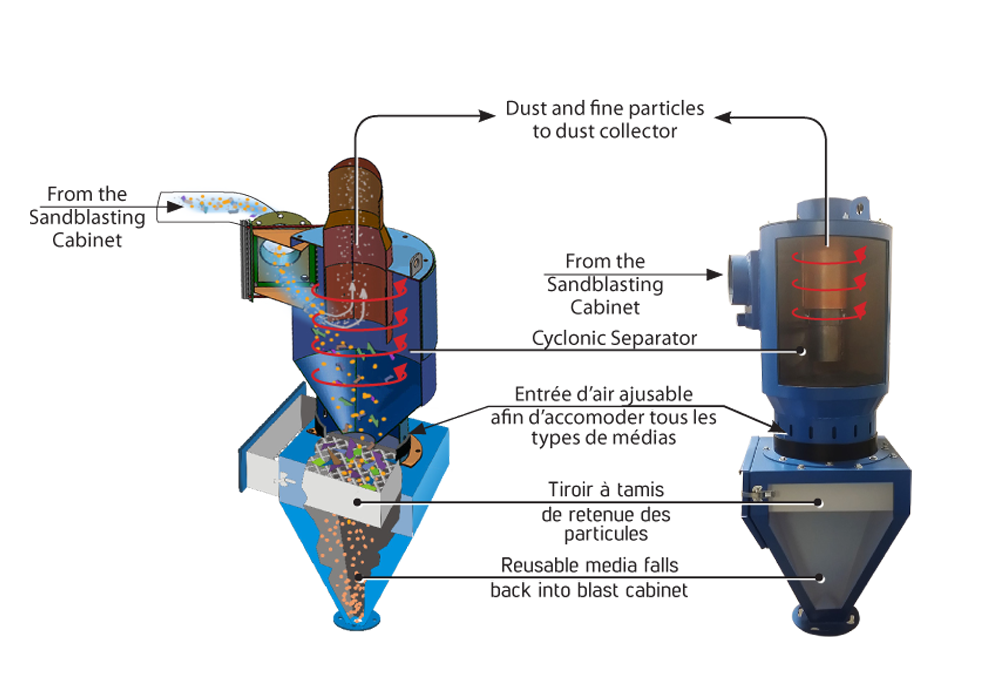
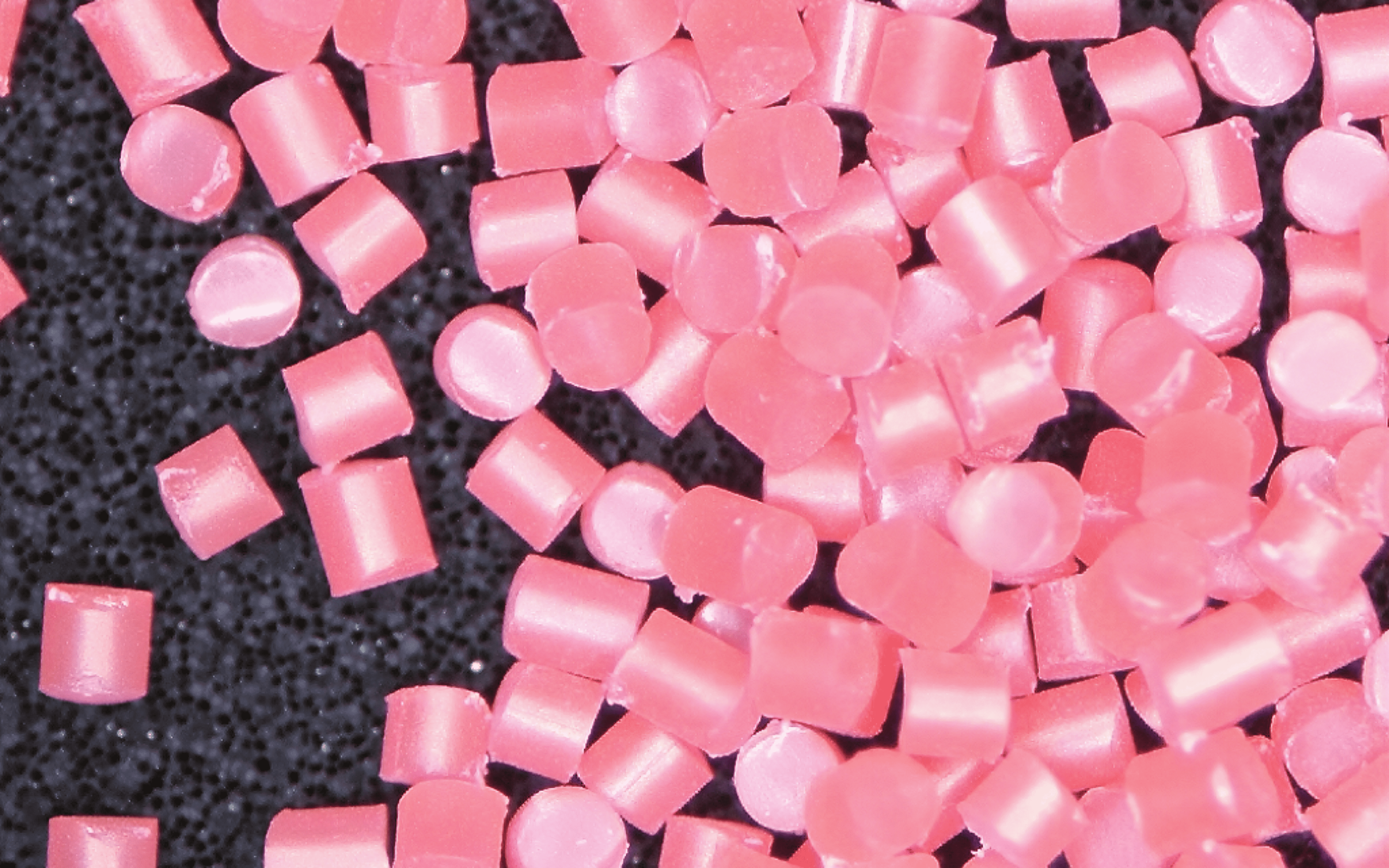
Ceramic bead blasting stainless steel is a strong option when you want a uniform surface with low embedment and stable media behavior. A spherical ceramic bead can cover complex geometry, including corners and recessed features, while producing a controlled texture. It is often evaluated for stainless components in automotive, medical, electronics, and general industrial applications.
Ceramic beads are a good fit when:
- The component has detailed geometry or thin sections.
- You need repeatable coverage rather than a highly aggressive cut.
- Non-ferrous contamination control is important.
- The line runs frequently enough for media life to affect operating cost.
HLH supplies ceramic media for cleaning, finishing, and shot peening. See the dedicated ceramic beads for surface finishing page for product details. Select the grade and size from a sample trial, then record pressure, flow, stand-off distance, angle, and exposure time in the work instruction.
Aluminum oxide: the aggressive preparation option
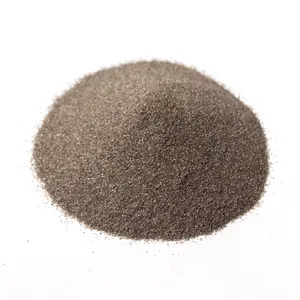
Aluminum oxide is angular and cutting. It is useful when stainless steel needs a stronger cleaning action, coating removal, or surface preparation before a subsequent process. Different grit sizes can change the cutting rate and the surface profile, so avoid choosing only by the lowest price per kilogram.
Use aluminum oxide when:
- Scale, paint, or heavy contamination must be removed efficiently.
- A defined anchor profile is required for a coating.
- The part can tolerate a more directional, textured surface.
After blasting, remove loose dust thoroughly and verify that the surface meets the coating or cleanliness specification. If the finished surface must remain cosmetic, a follow-up pass with rounded media may be required.
Five process controls that prevent rework
- Segregate media. Use a dedicated cabinet or validated cleaning procedure for stainless steel.
- Start with a test panel. Record the starting roughness and appearance before changing pressure or grit.
- Control the impact. Pressure, flow, nozzle angle, and stand-off distance all change the result.
- Inspect after cleaning. Look for embedded particles, discoloration, shadowing, edge rounding, and missed areas.
- Confirm downstream compatibility. Check passivation, coating, welding, or hygienic requirements before releasing the process.
A practical decision tree
If the main requirement is a consistent satin appearance, begin with glass beads or a fine ceramic bead. If you need a cleaner, longer-life media stream or have complex geometry, compare ceramic beads against your current glass grade. If the priority is rapid removal of scale or coating, test aluminum oxide first, then confirm that the resulting profile is acceptable. When the same part has both heavy contamination and cosmetic zones, use separate process stages rather than forcing one abrasive to do every job.
Frequently asked questions
Can I use the same media on stainless steel and carbon steel?
It is generally better to keep the media and equipment segregated. Cross-contamination can transfer iron to stainless steel and create staining or corrosion problems.
Which is finer: glass beads or aluminum oxide?
“Finer” depends on the selected size, but glass beads are rounded and usually create a softer texture. Aluminum oxide is angular and cuts more aggressively even at a similar nominal size.
How do I choose a grit or bead size?
Start from the required finish, geometry, and machine capability. Trial two adjacent sizes, measure the result, and keep the size that achieves the specification with the lowest rework and media consumption.
Talk to a stainless-steel finishing media specialist
HLH can help compare ceramic media, glass beads, and aluminum oxide for your stainless-steel part. Send the alloy, current surface condition, desired appearance or coating profile, equipment type, and monthly volume to request a sample and process recommendation.
フィルター