Abrasive Media for Automotive Restoration & Paint Stripping
Automotive restoration and paint stripping demand a level of precision that most industrial blasting applications do not: the substrate is thin-gauge sheet metal (typically 0.7–1.2 mm for modern vehicle bodywork), the geometry is complex with curves, flanges, and tight radii, and the tolerance for error is essentially zero — any media that warps a body panel, embeds particles in the substrate, or removes material unevenly will create a rework cost that exceeds the cost of the media many times over. Selecting the right abrasive media for automotive work requires understanding which materials can be safely removed, from which substrate, with which media, and at what operating parameters.
This guide covers media selection across the full automotive restoration application spectrum — from stripping entire vehicle bodies to cleaning cast aluminum components and preparing panels for primer. For the complete media overview, see the Abrasive Media Supplies Buyer’s Guide.
The Unique Challenges of Automotive Blasting
Three characteristics of automotive bodywork create challenges that are absent in most heavy industrial blasting:
- Thin-gauge material: Vehicle body panels are typically 0.7–1.2 mm mild steel or 0.9–2.0 mm aluminum alloy — thicknesses at which warping from localized heat buildup or impact stress is a real risk at higher blast pressures or with excessively hard media
- Complex geometry: Curves, pressed character lines, door shut faces, wheel arch lips, and sill sections require media that can access tight angles without concentrating impact energy at stress points
- Multi-layer coating systems: Vehicle factory coatings typically comprise electrocoat primer, filler primer, basecoat, and clearcoat — potentially four or more layers of different chemistry that may respond differently to blasting. Surface rust or previous repair work may add additional layers of filler, seam sealer, and repaint coatings on top
Media Types for Automotive Applications
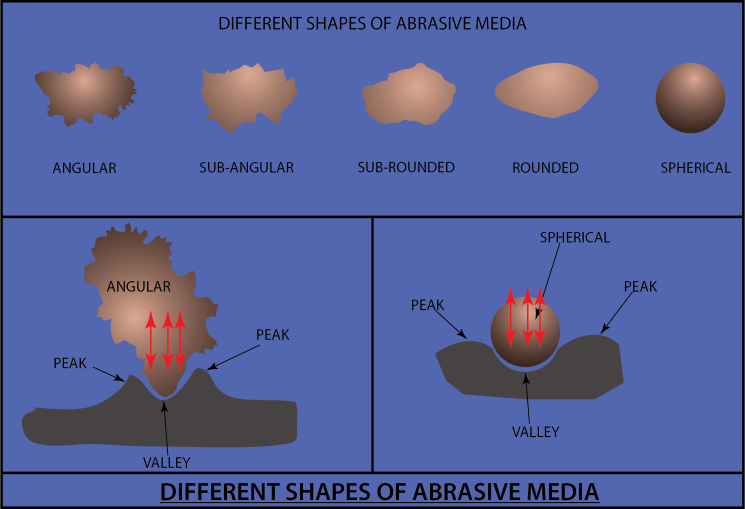
| メディア・タイプ | 硬度 | Substrate Safety | Strip Rate | Best For |
|---|---|---|---|---|
| 炭酸水素ナトリウム | 2.5 Mohs | Excellent (no distortion) | Slow | Light paint removal, chrome/glass-adjacent areas |
| Plastic Grit (Urea) | 3–3.5 Mohs | Very Good | 中程度 | Full paint strip on thin aluminum or delicate panels |
| Walnut Shell | 3.5–4 Mohs | グッド | 中程度 | Cleaning cast parts, light coating removal |
| Glass Beads (Class A–B) | 5.5 Mohs | Good on aluminum | Cleaning only | Cast aluminum brightening, peening, no paint strip |
| Garnet #80 | 7.5–8 Mohs | Moderate (care needed) | グッド | Steel body panels, full paint strip at low pressure |
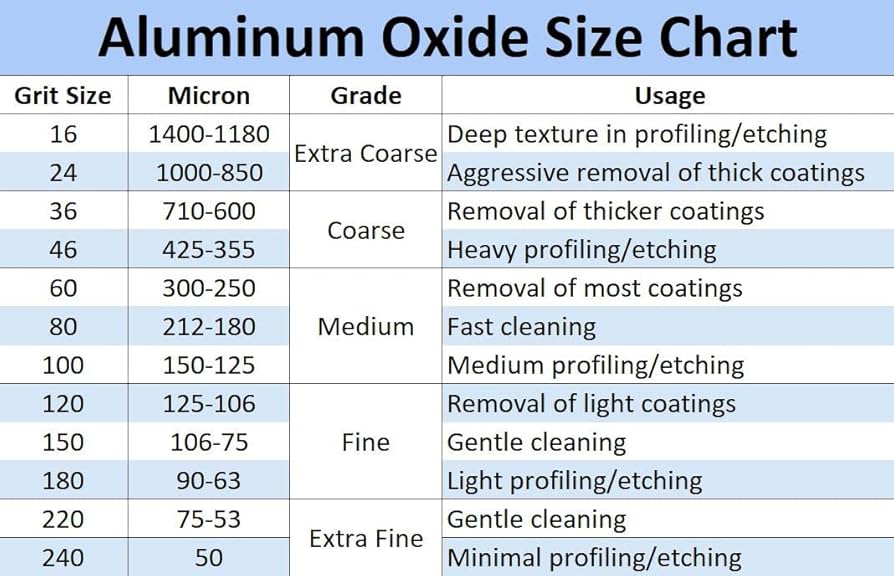
| Aluminum Oxide F 80 | 9.0 Mohs | 中程度 | Fast | Steel panels, aggressive rust removal |
Selecting by Substrate and Condition
Mild Steel Body Panels — Paint and Light Rust Removal
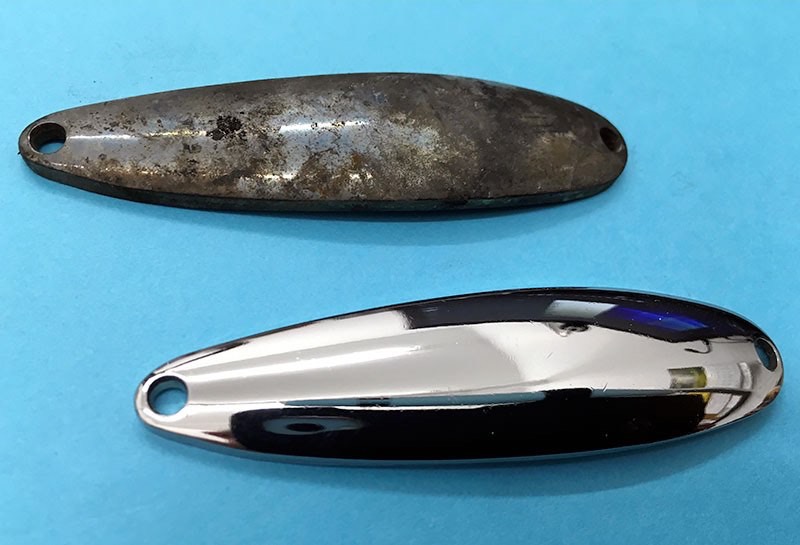
For removing paint and light surface rust from standard mild steel body panels, garnet #80 mesh at 40–60 psi through a fine nozzle (#4–#5) in a suction blast cabinet is a reliable approach that balances strip rate with substrate safety. The lower Rz profile produced by fine garnet (#80 mesh produces approximately 25–40 µm Rz on steel) is appropriate for the thin primer systems used in automotive work and does not create excessive surface roughness that would require heavy filler coats to hide. Aluminum oxide F 80 can be used for panels with more significant rust, but must be applied carefully on thin panels to avoid warping from the higher energy input.
Steel Panels with Heavy Rust or Filler
Panels with heavy rust, thick body filler, or multiple repaint layers require a more aggressive approach. Garnet #30/60 at 60–80 psi or aluminum oxide F 46–F 60 will remove these layers efficiently. The risk of panel distortion increases with these coarser media and higher pressures, so work in controlled, overlapping passes across the panel surface rather than dwelling in one area, and check panel temperature periodically — a panel that is warm to the touch should be allowed to cool before blasting continues.
Aluminum Body Panels
Aluminum body panels (common on modern vehicles and many classics) require significantly softer media than steel. Plastic grit (urea Type II) in 30–40 grit range at 30–50 psi is the safest choice for full paint strip from aluminum panels. Glass beads Class A–B at 40–60 psi can clean and brighten aluminum without any risk of distortion but will not remove intact paint effectively — they are appropriate for polishing bare aluminum or cleaning previously stripped panels before priming. For context on plastic abrasive media in general: Plastic Abrasive Media: Urea vs Melamine Grit.
Cast Aluminum Cleaning
Engine components — blocks, heads, intake manifolds, carburetors, valve covers, and brake calipers — are frequently cast aluminum or iron parts that need cleaning and brightening rather than paint stripping. Glass beads in Class A–B range at 40–70 psi are the standard for cast aluminum components in restoration work: they remove oxidation, casting flash, grease deposits, and old paint effectively while leaving the characteristic cast aluminum surface texture visible — a desirable result for show-quality restoration work where original appearance is important. Walnut shell grit in 12/20 mesh is an alternative for very delicate castings where even glass beads present too much risk of dimensional change to thin bosses or fins.
Operating Tips for Body Panel Blasting
- Always blast in a suction cabinet rather than open-blast for body panels — the controlled pressure and media recovery of a cabinet allows much finer process control than a pressure pot on open work
- Keep nozzle distance at 150–250 mm from the panel surface and maintain a consistent 45–60° angle to the surface — perpendicular blasting concentrates impact energy and increases distortion risk
- Use overlapping passes in one direction (like painting) rather than scrubbing back and forth, which creates irregular surface texture
- Seal seams, grommets, and any panel openings before blasting — media that enters body cavities can trap moisture and cause corrosion from the inside
- Apply primer or self-etching primer to bare metal within 2 hours of blasting to prevent flash rust, particularly in humid environments
よくある質問
Warping can occur if the media is too hard, the pressure is too high, or the dwell time in one area is too long. The risk increases with thinner panels (under 1.0 mm), aluminum alloy substrates (lower yield strength than steel), and coarser grit sizes. To minimize warping risk: use the softest media that achieves the required strip rate, keep pressure at the minimum effective level, work in overlapping passes without dwelling in one spot, and allow the panel to cool if it becomes warm to the touch. Thin-gauge aluminum panels (door skins, hood skins on modern cars) should only be blasted with plastic grit or sodium bicarbonate at very low pressures, or stripped chemically rather than by blasting.
Yes, but the media working mix must be changed between substrate types to avoid cross-contamination. Steel particles (from blasting steel panels) embedded in the working mix of a glass bead or garnet blast cabinet can embed in aluminum panel surfaces and cause galvanic corrosion after priming — a failure mode that may not be visible for months after the restoration is complete. Always purge the cabinet and media working mix thoroughly when switching between ferrous and non-ferrous work, or dedicate separate cabinets to each material type if the volume of work justifies it.
Automotive-Grade Abrasive Media from Henglihong
Glass beads, garnet, plastic grit, aluminum oxide, and walnut shell — all available for automotive restoration applications. Factory-direct pricing.
Get a Free Quoteフィルター