Glass Bead Abrasive Media: Applications, Benefits & Buying Guide
The complete guide to glass bead blasting and peening — why spherical media produces smooth finishes without creating a profile, how to select the right mesh size, and why glass beads are the standard solution for stainless steel, aerospace, and precision finishing work.
What Are Glass Bead Abrasives?
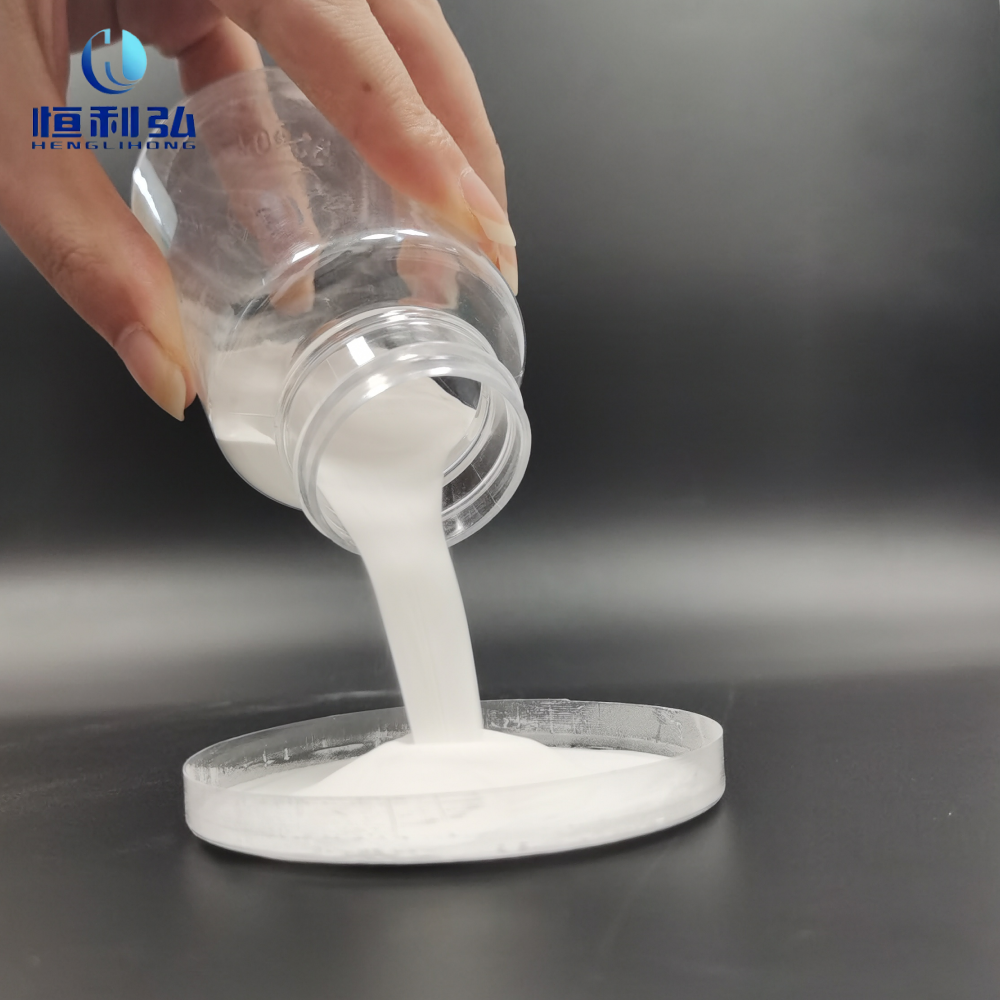
Glass bead abrasive media consists of perfectly spherical particles manufactured from lead-free soda-lime borosilicate glass. Raw glass is melted in a furnace, atomised into droplets, and allowed to solidify in free-fall — surface tension forming each droplet into a near-perfect sphere before it cools. The result is a smooth, hard, chemically inert abrasive whose shape sets it fundamentally apart from every angular abrasive in the industry.
Where angular abrasives — aluminum oxide, garnet, steel grit — cut into a surface and create peaks and valleys, glass beads peen: they strike with a controlled hammering action that compresses and smooths rather than cuts. The outcome is a bright, uniform, satin-matte finish with a shallow dimpled texture, accompanied by beneficial compressive residual stress in the surface metal.
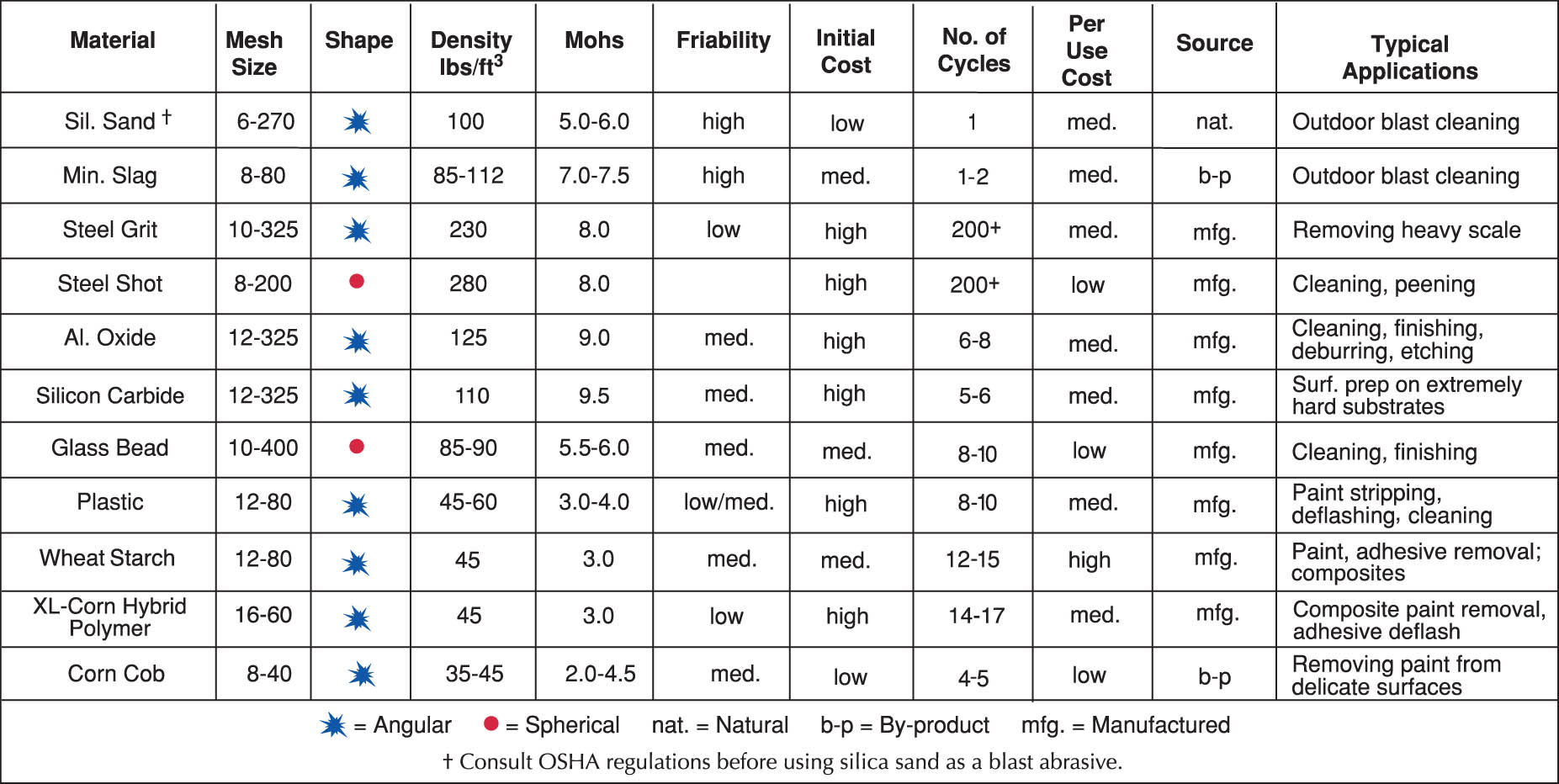
This combination of gentle surface action, compressive peening effect, zero iron contamination, and silica-free composition makes glass beads the media of choice when surface appearance, dimensional integrity, and material cleanliness cannot be compromised. For a full comparison with all other abrasive media types, see our Abrasive Media Comparison Chart.
Peening vs Cutting — The Fundamental Distinction
Understanding why glass beads produce a fundamentally different result from angular abrasives requires understanding the physics of particle impact. This is the most important concept for anyone considering glass beads for the first time.
- Round surface contacts workpiece tangentially — no cutting edge
- Energy transferred as compression — surface is pushed down, not cut away
- 結果 shallow dimpled satin texture
- Introduces compressive residual stress — improves fatigue resistance
- Minimal material removal — dimensions unchanged
- Low dust generation — better cabinet visibility
- Cannot create deep anchor profiles for heavy coatings
- Sharp edges contact surface at acute angles — cutting and shearing
- Energy transferred as shear — surface material removed or displaced
- 結果 rough anchor profile — peaks and valleys for coating adhesion
- Introduces tensile stress — can initiate fatigue at surface
- Measurable material removal — may alter critical dimensions
- Higher dust from particle fracture
- Required for SSPC-standard cleanliness and coating profile
Choose glass beads when the surface needs to be clean and conditioned rather than roughened for adhesion. If bare metal goes back into service without a coating, or receives only thin-film or anodizing treatment, glass bead peening delivers a superior result. If a structural epoxy, polyurethane, or zinc-rich primer goes on top, switch to an angular abrasive that creates the required anchor profile.
Key Technical Specifications
Henglihong glass bead abrasive media is manufactured from lead-free soda-lime borosilicate glass in compliance with MIL-G-9954A, AMS 2431, and ISO 11124-4 — the specifications required for aerospace, military, and precision industrial peening and finishing applications.
| パラメータ | Standard Grade | Premium Aerospace Grade | Test Method |
|---|---|---|---|
| Glass composition | Soda-lime silicate | Borosilicate (low-alkali) | X-ray fluorescence |
| Lead content | Lead-free — <0.01% | ICP-MS | |
| True density (g/cm³) | 2.45 – 2.55 | 2.48 – 2.55 | Pycnometer |
| Mohs hardness | 5.5 – 6.0 | 5.5 – 6.0 | Vickers indentation |
| Roundness (% spherical) | ≥ 80% | ≥ 90% (AMS 2431) | Optical imaging |
| Defect rate (hollow/cracked) | ≤ 5% | ≤ 2% (MIL-G-9954A) | Microscopic inspection |
| Mesh range available | 40 – 230 mesh | 60 – 325 mesh | ASTM E11 sieve series |
| Applicable standards | ISO 11124-4 · GB/T | MIL-G-9954A · AMS 2431 · SAE J827 | — |
| Crystalline silica | None — OSHA compliant | XRD analysis | |
Mesh Size Guide: Which Size Do You Need?
Glass bead mesh size controls the scale of the peening dimple pattern, aggressiveness of cleaning action, and brightness of the finished surface. Finer beads produce brighter, smoother finishes with shallower compressive stress depth; coarser beads clean more aggressively and generate deeper compressive stress. For peening applications governed by an Almen intensity specification, mesh size selection is driven by the arc height requirement.
| US Mesh | Approx. Diameter (µm) | MIL-G-9954A Size | Surface Result | Primary Applications |
|---|---|---|---|---|
| 40 – 60 | 420 – 250 | AGB 10 | Matte — moderate texture | Heavy rust removal on carbon steel, aggressive cleaning of cast iron and weldments |
| 60 – 80 | 250 – 180 | AGB 11 | Satin-matte — light texture | Automotive chassis prep, general steel cleaning, light peening of large components |
| 80 – 120 | 180 – 125 | AGB 12 / 13 | Satin — uniform, clean | Automotive body panels, stainless equipment cleaning, aluminum prep, general cabinet use |
| 100 – 150 | 150 – 106 | AGB 13 | Bright satin — fine, uniform | Stainless steel food & pharma equipment, architectural hardware, medical instrument finishing |
| 150 – 200 | 106 – 75 | AGB 14 | Bright — semi-reflective | Precision aerospace peening, titanium & Inconel conditioning, tooling deburring |
| 200 – 325 | 75 – 45 | AGB 15 / 16 | High-bright — near-mirror | Jewelry finishing, surgical implant conditioning, optical component prep, precision electronics |
Surface Finish Types by Mesh Size
The appearance of the finished surface changes dramatically across the glass bead mesh range. The three finish categories below represent the practical spectrum from coarsest to finest.
Matte / Uniform Matte
Visible dimple texture; clean, non-reflective. Effective rust and scale removal.
40–80 mesh · AGB 10–11Satin / Bright Satin
Fine, uniform texture with a soft sheen. Most requested finish for stainless and aluminium.
80–150 mesh · AGB 12–13High-Bright / Semi-Mirror
Very fine texture; near-reflective. For aerospace, jewelry, and medical components.
150–325 mesh · AGB 14–16Industrial Applications
Glass beads serve a distinct market segment defined by precision, appearance, and material sensitivity. The applications below represent primary uses across the four industries Jiangsu Henglihong Technology serves.
Food & Pharmaceutical Equipment Finishing
Stainless steel tanks, fittings, and process equipment must meet strict hygiene standards (Ra ≤ 0.8 µm in many food applications). Glass bead blasting at 100–150 mesh delivers a clean, hygienic satin surface without iron contamination that would compromise passivation.
Recommended: 100–150 mesh standard · Pressure blastAerospace Component Conditioning
Aluminum alloy, titanium, and Inconel components require surface conditioning with zero iron contamination and no dimensional change. Glass beads clean oxide layers and prepare surfaces for anodizing, bonding, or thin-film coating while maintaining critical tolerances.
Recommended: 100–200 mesh aerospace grade · AMS 2431 compliantAutomotive Body Panel Restoration
Sheet metal panels are too thin to tolerate angular abrasives. Glass beads at 80–120 mesh remove rust and surface oxidation while leaving the panel dimensionally intact — no warping risk and a uniform, clean surface for primer application.
Recommended: 80–120 mesh · Cabinet or pressure blastMedical Device & Implant Finishing
Surgical implants in titanium, cobalt-chrome, and stainless steel require surfaces meeting biocompatibility standards. Fine glass bead blasting at 150–230 mesh produces controlled textures compliant with ISO 10993 biocompatibility requirements.
Recommended: 150–230 mesh premium · ≥90% sphericalArchitectural Stainless & Aluminium
Handrails, facades, and decorative panels require a consistent satin finish achievable only with glass beads. Angular abrasives produce uneven scratching; glass beads deliver the uniform, diffuse appearance specified in architectural metalwork standards.
Recommended: 100–150 mesh · Consistent production batchesJewelry & Precision Metalwork
Gold, silver, platinum, and titanium jewelry receive glass bead finishing for a consistent professional satin texture without scratches from angular media. Fine mesh (200–325) in a suction cabinet delivers precise, repeatable results on intricate shapes.
Recommended: 200–325 mesh · Suction cabinet · Low pressurePrecision Deburring of Machined Parts
CNC-machined parts in aluminum, brass, and stainless steel require deburring of edge radiuses without altering the machined surface finish. Fine glass beads remove micro-burrs from bores and edges while leaving the surrounding finish intact.
Recommended: 100–170 mesh · Suction cabinet · Low pressureTooling & Mold Surface Conditioning
Injection molds and die casting dies benefit from glass bead treatment to remove EDM recast layers and produce a consistent surface texture in the cavity. Glass beads deliver controlled conditioning without abrasive embedment contamination risk.
Recommended: 120–180 mesh premium · Low pressure blastShot Peening with Glass Beads — Technical Overview
Shot peening is a controlled mechanical surface treatment where spherical particles impact a metal surface at sufficient velocity to induce plastic deformation of the surface layer. The primary engineering benefit is a deep layer of compressive residual stress that opposes the tensile stresses which initiate and propagate fatigue cracks under cyclic loading.
Glass beads are one of two primary media used in shot peening (the other being cast steel shot). Glass bead peening is specified where iron contamination from steel shot is unacceptable: on aluminum, titanium, magnesium, and stainless steel components, and wherever engineering specifications govern shot type, size, hardness, and coverage.
📐 Almen Intensity & Glass Bead Peening — What You Need to Know
Peening intensity is measured using the Almen strip test (SAE J443 / AMS 2430). An Almen strip — a standardised steel coupon — is blasted under production conditions and the resulting arc height (in thousandths of an inch) defines the peening intensity. Specifications call out target Almen intensity ranges for each component.
The fatigue life improvement from properly specified glass bead peening is well documented. Aluminium alloy components subject to cyclic bending and torsional loads show fatigue life improvements of 50–200% in controlled laboratory testing — which is why glass bead peening is specified for landing gear, control surfaces, wing attachment fittings, and structural fasteners on commercial and military aircraft.
Pros & Cons of Glass Bead Abrasive Media
✅ Advantages
- Smooth satin finish — no rough profile; ideal where appearance matters
- Compressive peening effect — improves fatigue life 50–200% in engineered applications
- Zero iron contamination — safe on stainless, titanium, and aluminium
- Silica-free — OSHA compliant; no crystalline silica respiratory risk
- 低発塵 — spherical shape produces fewer fines; better cabinet visibility
- Dimensionally gentle — minimal material removal; critical tolerances maintained
- Wide mesh range (40–325) — coarse cleaning to precision polishing in one media family
- Chemically inert — does not react with substrate or passivation layers
- Recyclable 3–5 cycles — lower per-cycle cost than single-use alternatives
❌ Limitations
- No anchor profile — cannot create roughness required for heavy-duty industrial coatings
- Lower hardness (Mohs 5.5–6) — less effective on heavy rust, thick mill scale, or hard deposits
- Breaks into sharp shards — degraded media must be reclaimed promptly to avoid scratching
- 3–5 cycle recyclability — lower than aluminum oxide (5–10×) or steel abrasives (100+×)
- Not compatible with wheel blast machines — glass particles damage impeller blades
- Higher cost per kg than garnet or crushed glass
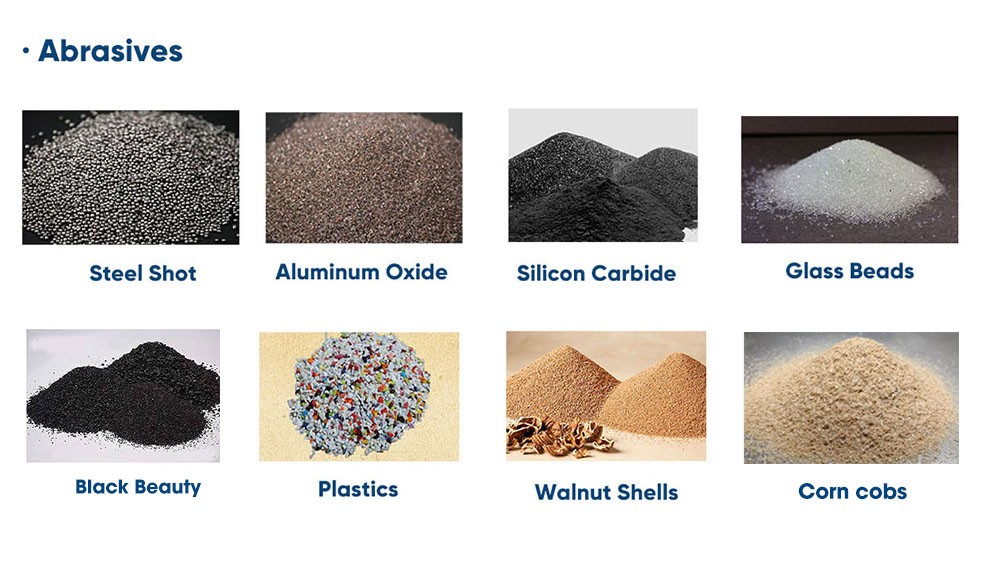
Glass Beads vs Other Abrasive Media
| Comparison | ガラスビーズ | Alternative | Choose the Alternative When |
|---|---|---|---|
| vs 酸化アルミニウム | Smooth peened finish, no profile, iron-free | Angular — deep anchor profile, faster rust removal | A coating requiring 1.0+ mil profile is applied; substrate is carbon steel not stainless |
| vs ガーネット | Smooth non-profiling peen action | Sub-angular — moderate profile, low dust | Surface profile is required for marine or industrial coatings |
| vs スチールショット | Iron-free; suitable for Al/Ti/SS | Denser, higher Almen intensity, 100+ cycle recyclability | Peening carbon or alloy steel where iron contamination is acceptable and high throughput required |
| vs プラスチック・メディア | Peening + surface conditioning; Mohs 5.5–6 | Very soft — strips coatings without any substrate impact | Task is paint stripping from composites or soft aluminium with zero surface modification |
| vs Corn Cob | Harder, more effective cleaning, recyclable 3–5× | Biodegradable, gentlest action, polishing in tumbling | Polishing gold, silver, or soft precious metals in vibratory tumbling where glass bead hardness is too aggressive |
Recyclability & Media Management
Glass beads achieve 3 to 5 effective blast cycles with a properly maintained reclaim system. Managing the media correctly through its lifecycle has a direct impact on surface finish consistency and cost per cycle.
The Breakage Problem — Why It Matters More for Glass Beads
Unlike angular abrasives where particle fracture creates fresh sharp edges (maintaining cutting action), broken glass bead fragments become sharp, irregular shards that scratch the surface — the exact opposite of the smooth finish glass beads are selected to produce. Maintaining media quality through effective reclaim is therefore more critical for glass beads than for most other media types.
Reclaim System Requirements
- Mechanical screening: Removes particles outside the working size range — both oversize contaminants and undersize fragments from breakage. Two-screen minimum sizing is recommended.
- Air wash classification: Removes fine shards and dust below the minimum acceptable particle size. This is the critical step — fine glass fragments are the primary cause of surface scratching on precision work.
- Visual quality monitoring: Periodically inspect media charge under low magnification. When broken/angular particles exceed approximately 15–20% of the charge, replace the working charge to restore finish quality.
Mixing different mesh sizes produces a non-uniform finish — larger beads leave visible coarse dimples among the fine texture of smaller beads. Maintain a single nominal mesh size per working charge, and replenish with the same specification media to maintain finish consistency across production runs.
Safety & Regulatory Compliance
OSHA Crystalline Silica Compliance
Glass beads manufactured from soda-lime or borosilicate glass contain no free crystalline silica — the glass matrix is amorphous (non-crystalline) silica, which is not regulated under OSHA’s crystalline silica standard (29 CFR 1910.1053). Henglihong glass beads are fully compliant with OSHA silica regulations. Note: this applies specifically to glass bead media — crushed silica sand is an entirely different product and remains heavily regulated.
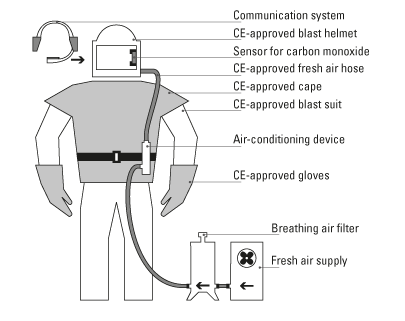
Required PPE During Blasting
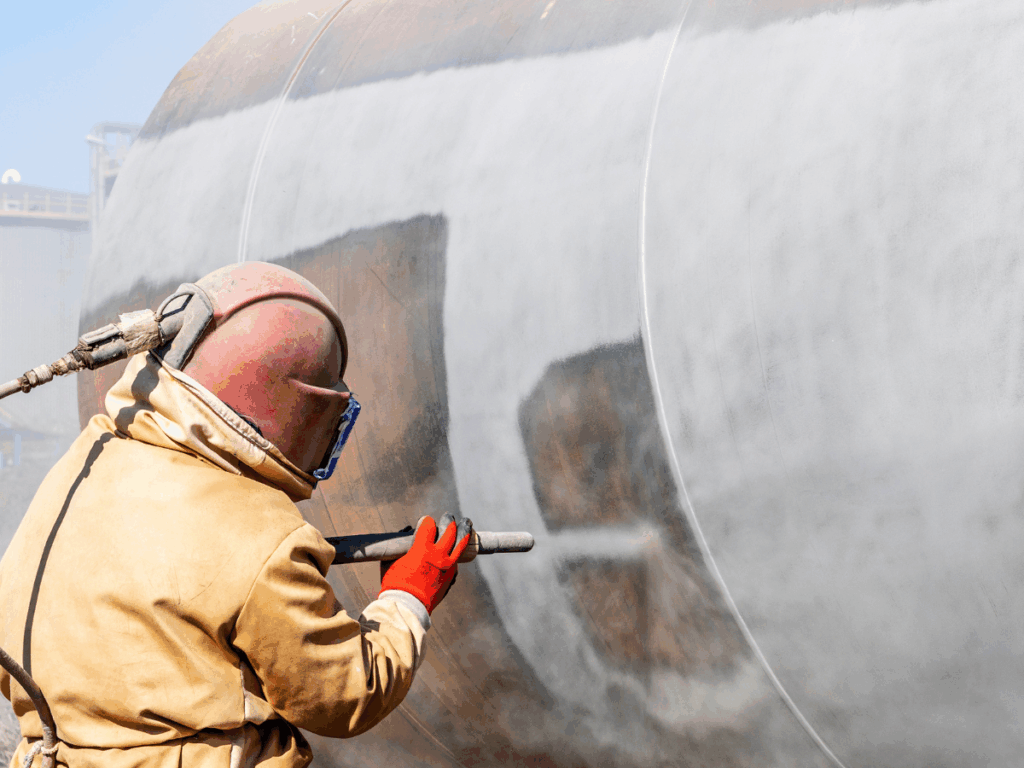
- Supplied-air respirator (NIOSH Type CE): Required for all open and semi-enclosed blasting regardless of media type, due to general airborne particulate and substrate contamination.
- Blast helmet / face shield: Particle rebound protection for eyes, face, and neck.
- Protective blast suit: Glass particles at blast velocity can lacerate exposed skin.
- Hearing protection: Required when blast noise exceeds 85 dB(A) at operator position.
For the full safety and compliance framework including ventilation, engineering controls, and disposal guidance, see our Abrasive Media Safety Guide: OSHA Standards & PPE Requirements.
Ordering Glass Beads from Jiangsu Henglihong Technology
Our glass bead production line runs continuous quality verification — every batch tested for particle size distribution, roundness percentage, defect rate, and chemical composition before release. Aerospace-grade lots are additionally certified to MIL-G-9954A and AMS 2431 with test documentation included in the shipment.
Custom mesh blends and non-standard size cuts are available for OEM and specialised peening specifications. Contact our technical sales team with your Almen intensity target and component material for a recommended mesh size and operating parameter guide.
よくある質問
What are glass beads used for in abrasive blasting?
Glass beads are used wherever a smooth, clean, satin-matte finish is required without creating a rough surface profile. Major applications include: stainless steel equipment cleaning and finishing in food, pharmaceutical, and architectural sectors; aerospace component surface conditioning and peening; automotive body panel restoration; medical device and implant finishing; jewelry and precision metalwork polishing; precision part deburring; and shot peening for fatigue life improvement on aluminium and titanium components.
What is the difference between glass bead blasting and sandblasting?
Traditional sandblasting uses angular abrasives that cut into the surface, removing material and creating a rough anchor profile. Glass bead blasting uses spherical particles that peen rather than cut — the surface is cleaned and conditioned without significant material removal, producing a smooth, satin finish with no anchor profile. Glass bead blasting is also OSHA-compliant (no crystalline silica) and safe on stainless steel and sensitive substrates.
What mesh size glass beads should I use for stainless steel?
For standard stainless steel equipment cleaning and satin finishing in food processing, pharmaceutical, or industrial applications, 100–150 mesh (AGB 13) delivers the most commercially requested result — a clean, bright-satin surface with fine, uniform dimple texture. For architectural stainless where a slightly more textured matte is acceptable, 80–100 mesh is common. For medical-grade work, specify 150–200 mesh premium grade with AMS 2431 certification.
Can glass beads be reused?
Yes — glass beads typically achieve 3 to 5 effective blast cycles with a reclaim system that screens oversize particles, classifies out fine shards, and replenishes the working charge. The critical management point is monitoring for broken/angular fragments — above approximately 15–20% breakage, the working charge should be replaced, as angular glass shards will scratch the surface and negate the smooth finish glass beads are selected to produce.
Are glass beads safe for blasting stainless steel?
Yes — glass beads are one of the safest media choices for stainless steel precisely because they contain zero iron and introduce no metallic contamination that could compromise the passive oxide layer. The peening action can also close micro-cracks in the surface, supporting passivation. Specify premium-grade glass beads at 100–150 mesh for stainless steel in regulated food or pharmaceutical applications.
What is the difference between standard and aerospace grade glass beads?
Standard industrial grade meets general dimensional and composition requirements — ≥80% spherical particles, ≤5% defect rate, ISO 11124-4 compliance. Aerospace grade is manufactured to tighter specifications: ≥90% spherical (AMS 2431), ≤2% defect rate, MIL-G-9954A compliance, and batch-specific Almen intensity qualification. For peening applications governed by an engineering drawing callout or aerospace process specification, only certified aerospace-grade media can be used.
Ready to Order Glass Bead Abrasive Media?
Standard industrial and AMS 2431-certified aerospace grades in all commercial mesh sizes — 25 kg bags to full container loads. COA and SDS documentation included with every shipment.
Request a Quote View All Abrasive Media Products →フィルター