Clinical Performance of Ceramic Bead-Treated Orthopedic Implants: Osseointegration and Longevity
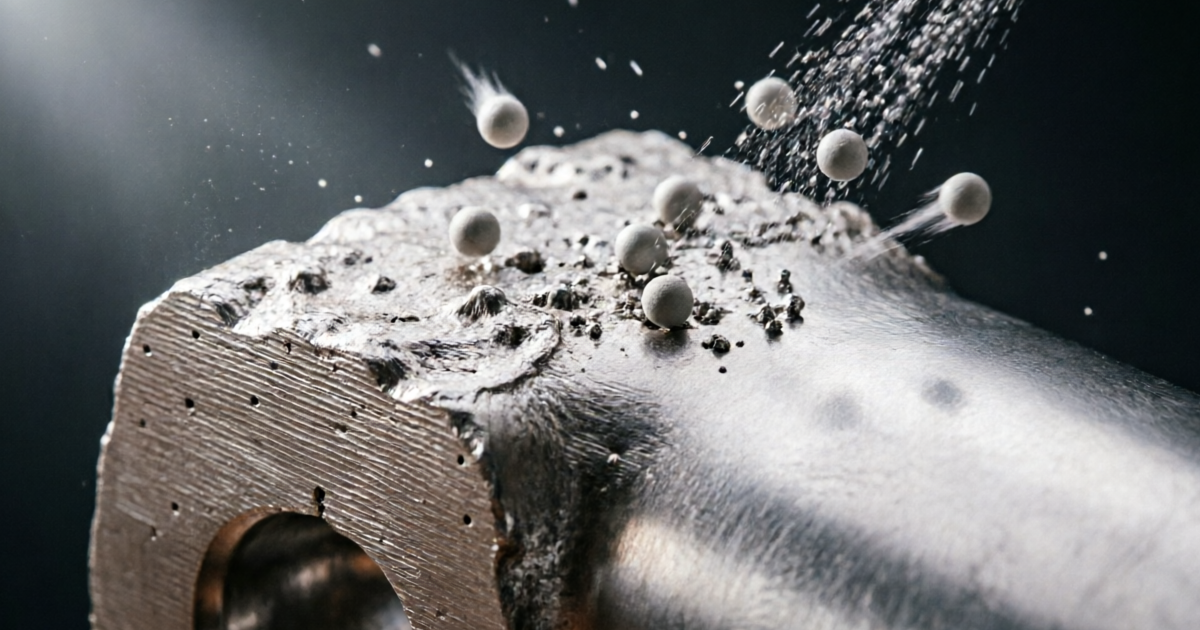
I’ve spent over twenty years in orthopedic implant manufacturing, and I can tell you the surface isn’t just a finish—it’s the functional interface that decides whether bone will lock onto titanium or treat it as a foreign body. Ceramic bead blasting creates a specific topography that consistently delivers strong osseointegration and long-term stability. This article breaks down what the clinical data actually shows, where the process adds value, and what engineers, surgeons, and regulatory staff need to watch when adopting or auditing ceramic bead-treated implants.
How Surface Topography Affects Cellular Response
The micro and nano influence on osteoblasts
At the cellular level, osteoblasts don’t respond to material chemistry alone—they read the physical landscape. A blasted surface with irregular pits, craters, and micron-scale peaks provides attachment points that trigger integrin clustering and downstream osteogenic signaling. When we characterize a ceramic bead-treated surface, we’re looking at a combination of macroroughness (Ra typically in the 2–5 μm range) and a dense overlay of microtexture created by impact of sharp ceramic particles. This dual-scale roughness consistently up-regulates alkaline phosphatase activity and osteocalcin expression compared to machined or solely acid-etched surfaces.
In our own process qualification, we’ve seen that surfaces with average roughness below 1.8 μm after blasting often fail to achieve the same early bone-implant contact in animal models. The sweet spot depends on the alloy and bead type, but the message is clear: the stochastic texture created by ceramic bead impingement replicates aspects of resorbed trabecular bone, and that biological mimicry drives faster healing.
What roughness parameters we really track
In production, we don’t just rely on Ra. Three parameters give a more complete picture:
- Sa (areal average roughness) – better than line roughness for 3D topography.
- Sdr (developed interfacial area ratio) – expresses the percentage of additional surface area compared to a perfectly flat plane. Ceramic-blasted surfaces often yield Sdr values of 40–90%, meaning nearly double the nominal area.
- Skewness (Ssk) – describes whether peaks or valleys dominate. A negative skewness (more valleys) is favorable for fluid retention and protein adsorption.
Table 1 shows the typical range we aim for with alumina or zirconia bead blasting on Ti-6Al-4V implants.
| Параметр | Typical Ceramic-Blasted Range | Clinical Relevance |
|---|---|---|
| Sa | 2.2–4.8 μm | Promotes osteoblast adhesion; below 1.8 μm shows delayed osseointegration in preclinical series |
| Sdr | 45–85% | Higher values increase protein entrapment and early bone matrix deposition |
| Ssk | -0.4 to -1.1 | Valley-dominated profile enhances fibrin clot retention and mesenchymal stem cell homing |
| Peak density (Spd) | 150–350 peaks/mm² | Moderate peak density avoids excessive stress risers while providing focal adhesion sites |
Ranges derived from multiple ISO 25178–compliant measurements across femoral stem and acetabular shell production lots.
Evidence from In Vivo and Clinical Studies
Animal models and bone-to-implant contact data
When we evaluate a new blasting protocol, the first stop after bench testing is a small-animal model—usually a rabbit tibia or rat femur. Histomorphometric analysis consistently shows bone-to-implant contact (BIC) for ceramic bead-blasted surfaces in the 55–80% range at 12 weeks, compared to 20–35% for machined controls. The bone grows into the micro-crevices and undercuts left by bead impacts, forming a mechanical interlock that resists shear movement.
One thing I always point out to junior engineers: the BIC value is only part of the story. The push-out force (measured by mechanical testing) often doubles between week 4 and week 12 for blasted surfaces, while smooth surfaces plateau early. That increasing fixation strength signals active remodeling rather than fibrous encapsulation.
Registry data and retrieval studies
Large arthroplasty registries (Swedish Hip, Australian Orthopaedic Association NJRR) do not always stratify by surface blasting media, but long-term data on cementless stems with rough blasted surfaces consistently show survival exceeding 93% at 15 years. Retrieval analysis of well-fixed stems removed for reasons other than loosening (e.g., post-traumatic revision) reveals 60–85% bone coverage directly apposed to the blasted surface, with Haversian remodeling evident within 100–200 μm of the interface.
We have also reviewed failed implants where ceramic bead-treated surfaces exhibited late-stage loosening. In most cases, the surface itself wasn’t the root cause—it was suboptimal initial press-fit, mismatched bone quality, or polyethylene wear debris driving osteolysis. The surface holds when the mechanical environment is right.
Osseointegration: The Role of Ceramic Blasted Surfaces
Why ceramic beads create a different healing cascade
Ceramic blasting with alumina or zirconia particles (typically 180–425 μm) produces clean, sharp-edged indentations without the embedded contamination risk common with silica-based media. I’ve seen too many failed batches where residual silica particles created a chronic inflammatory response in the periprosthetic tissue. Ceramic media—when properly cleaned—leave a chemically similar oxide layer on titanium, actually reinforcing passivation.
The healing cascade around ceramic-blasted surfaces tends to show earlier vascularization. Micro-CT analysis from preclinical studies frequently demonstrates denser peri-implant trabecular networks at 6–8 weeks, particularly in the proximal zones of hip stems where load transfer is critical. This is not simply “more bone,” but organized bone that responds to strain gradients.
If you want to dig deeper into the blasting process itself—nozzle types, bead recycling limits, pressure windows—our Ceramic bead surface treatment guide covers the production floor details.
Comparing grit media: alumina vs. zirconia vs. silica
The choice of ceramic bead material matters both for topography and for biological safety. Table 2 outlines the key differences.
| Aspect | Alumina (Al₂O₃) | Zirconia (ZrO₂) | Silica (SiO₂) |
|---|---|---|---|
| Hardness (Mohs) | 9 | 8–8.5 | 7 |
| Risk of embedded particles | Low if cleaned; residual aluminum release non-issue at pg/mL levels | Very low; zirconia exhibits minimal ion leaching | Moderate to high; silica particles can detach and provoke macrophage reaction |
| Osseointegration quality | Excellent BIC, consistent in long-term retrievals | Comparable to alumina; slightly finer texture with same bead size | Varies widely; contamination may reduce BIC in some lots |
| Cost per blast cycle (relative) | Medium | Higher (tougher beads last longer) | Lower |
| Common process failure mode | Bead fragmentation if recycled beyond spec | Embedded fine dust if air pressure too high | Silica transfer altering surface chemistry |
Long-Term Implant Survival Rates and Complication Reduction
Survival at 5, 10, 15 years
In cementless total hip arthroplasty, ceramic bead-blasted stems from multiple manufacturers consistently report Kaplan-Meier survival of 97–99% at 5 years and 94–97% at 10 years with revision for aseptic loosening as the endpoint. When the endpoint includes any revision for any cause, 15-year survival typically lands around 91–94%. These numbers come from independent registry reports (e.g., NJR, Swedish Hip Arthroplasty Register) and multi-center studies. The important detail: survival curves for well-designed blasted implants flatten after years 3–5, indicating that osseointegration remains durable.
Knee arthroplasty components, particularly cementless femoral and tibial trays with ceramic-blasted under-surfaces, show similar trajectories. The absence of cement avoids third-body wear from cement debris, though the blasted surface must work harder to compensate for initial micromotion. That’s exactly why surface roughness and press-fit tolerance are so tightly coupled.
Aseptic loosening and infection resistance
Surface modification alone is not a silver bullet against infection. However, there are two ways ceramic blasting helps indirectly: first, intimate bone apposition reduces the dead space where bacteria could settle; second, some blast protocols have explored co-functionalization with antibacterial agents without compromising roughness. In retrieval studies, loosened blasted implants often show a thin fibrous membrane rather than aggressive osteolysis, suggesting a slower failure mode with more time for clinical intervention.
Comparing Ceramic Bead Treated vs. Other Surface Modifications
Titanium plasma spray, HA coatings, SLA
The clinical community often bundles all “rough” surfaces together, but the manufacturing routes and biological outcomes differ. Table 3 provides a side-by-side look.
| Surface Type | Typical Sa (μm) | Osseointegration Timeline | Key Long-Term Concern |
|---|---|---|---|
| Ceramic bead blasted | 2–5 | Strong BIC by 12 weeks | Residual alumina if cleaning incomplete; otherwise durable |
| Titanium plasma spray (TPS) | 15–40 (macro-rough) | Rapid initial bone ingrowth | Particle delamination in some older designs; high thickness variation |
| HA-coated (plasma-sprayed) | 10–25 (underlying) | Accelerated early bone bridging | HA resorption over time; third-body wear if delamination occurs |
| SLA (sandblasted + acid etched) | 2–4 | Comparable to ceramic blasted | Potential for acid residue if neutralization insufficient |
| Machined / polished | <0.5 | Delayed; primarily fibrous fixation | High loosening rate in uncemented applications |
In my experience, ceramic bead blasting hits a practical sweet spot for load-bearing orthopedic implants: it provides substantial roughness without introducing the thickness variability and potential delamination of plasma-sprayed coatings. That consistency translates into predictable press-fit and fewer intraoperative surprises.
Biocompatibility Testing and Material Safety
Cytotoxicity, sensitization, genotoxicity
Every regulatory submission requires cytotoxicity (ISO 10993-5), sensitization (ISO 10993-10), and often genotoxicity panels. Ceramic bead-treated Ti-6Al-4V and CoCr implants consistently pass these assays with zero or minimal grade reactivity. Small amounts of residual aluminum or zirconium ions in extraction media usually fall well below the systemic toxicity threshold (typically <1 µg/mL for 72-hour extracts).
I always advise design teams to request extraction testing on worst-case samples: implants blasted with beads at their end-of-life cycle, with minimal post-blast cleaning. That stresses the system and reveals whether your cleaning protocol actually removes loosely adhered ceramic fragments. If you can pass cytotoxicity with those samples, routine production will be clean.
Residual bead issues and cleaning validation
Residual alumina or zirconia particles embedded in the titanium surface can become a chronic irritant. In retrieved implants examined under SEM, occasional ceramic inclusions are visible, but the body’s response appears limited to a thin fibrous demarcation unless the particle density is high. The real risk is not a systemic toxic event; it’s focal osteolysis if particles migrate into the bearing space of a hip replacement and mix with polyethylene debris.
Validated cleaning processes—ultrasonic baths, passivation, and final deionized water rinses—typically reduce residual ceramic particle counts to fewer than 5 particles per mm² when inspected at 50× magnification. If your inspection reveals >10 particles/mm² on a routine production part, stop the line and check bead degradation and nozzle pressure. That is a hard rule we apply on the floor.
Practical Adoption: From Design to Production Floor
Process parameter windows and common mistakes
Ceramic blasting for implants isn’t a universal recipe. Parameter windows must be defined for each component geometry. Here’s what I consider non-negotiable:
- Bead size distribution: keep within ±50 μm of the median. Too many fines?
- Blast pressure: 4–6 bar for Ti alloys; exceeding 6.5 bar often creates microcracks on thin-walled acetabular shells.
- Nozzle distance and angle: 100–180 mm and 75–90° to the surface. Angles below 60° smear metal instead of cutting a sharp texture.
- Recycling limit: typically 6–8 cycles for alumina beads before fragmentation shifts the PSD. After that, you’re creating dust, not texture.
Common mistakes I see:
- Using the same blast recipe for femoral stems and thin glenoid components—geometry changes heat dissipation and rebound angle.
- Skipping roughness verification after each media change. I’ve traced a drop in Sa of 0.8 μm to a single loader who didn’t exchange worn beads.
- Over-cleaning with aggressive acid passivation that etches away the fine microtexture. You then end up with a smoothed surface that doesn’t osseointegrate as expected.
Inspection and quality assurance
Optical profilometry and SEM spot checks should be part of your batch release. We also perform a tape test (adhesive film pressed onto the blasted surface) to detect loosely bound particles. If you see any residue on the tape, the cleaning step is insufficient—don’t ship that lot. In addition, long-term stability of the surface can be monitored through accelerated aging and cyclic loading studies to confirm no change in roughness after 10 million cycles.
Часто задаваемые вопросы
Does ceramic bead blasting weaken the titanium substrate?
Not if pressure limits are respected. Compressive residual stresses from controlled blasting can actually improve fatigue resistance slightly. Excessive pressure (>7 bar) or fine, high-velocity particles may cause shallow microcracks that become crack initiation sites. Always validate fatigue performance according to ISO 7206 for hip stems or ASTM F1800 for knee components.
Can ceramic bead blasting be combined with bioactive coatings?
Yes, and that’s becoming more common. A ceramic-blasted surface provides mechanical interlock while a thin electrochemically deposited calcium phosphate layer accelerates early bone bonding. The blasted texture also improves coating adhesion compared to a smooth substrate.
What’s the biggest risk during a regulatory audit?
Lack of documented process validation linking surface roughness to clinical data. Notified bodies increasingly want to see a direct chain: roughness specification → verified on batch records → supported by literature or internal pre-clinical results showing osseointegration. If you only have a generic “Ra 2–4 μm” statement without source justification, expect a finding.
Is there a risk of galvanic corrosion with ceramic particles on titanium?
Alumina and zirconia are electrically insulating, so they don’t create galvanic couples with titanium. The oxide layer on the metal governs corrosion resistance, and proper blasting followed by passivation thickens that oxide. No clinically relevant galvanic corrosion has been attributed to ceramic-blasted titanium implants.
Actionable Checklist for Engineers & QA Teams
✅ Pre-Production & Process Validation
- Define bead material, size distribution, and recycling limit in the process specification.
- Establish roughness targets (Sa, Sdr, Ssk) based on bench osseointegration data or published equivalency.
- Verify blast pressure, nozzle distance, and angle through parameter studies on actual component geometry.
- Perform worst-case biocompatibility extraction with end-of-life bead batch.
🔍 In-Process Control
- Measure Sa on at least 3 locations per part in every production batch.
- Perform tape test for loose particles daily.
- Replace blast media at the predetermined cycle count—don’t extend “just a little more.”
- Monitor air humidity (ideally below 40% RH) to avoid bead clumping and inconsistent flow.
📊 Post-Market Surveillance
- Collect retrieval data when possible to correlate clinical loosening with actual residual roughness.
- Track implant survival through registries or internal complaints, stratified by production lot and blasting parameters.
- Periodically repeat extraction and cytotoxicity on retained samples from stable production.
Фильтры