Best Abrasive Media for Surface Prep Before Painting & Coating
The long-term performance of any industrial or protective coating system is determined not by the quality of the paint or coating product alone, but by the quality of the surface beneath it. Even the most advanced epoxy or polyurethane coating cannot compensate for inadequate surface preparation — if the substrate is insufficiently clean, if the anchor profile is outside specification, or if the wrong abrasive media was used to prepare it, the coating will fail earlier than its designed service life, often catastrophically and in difficult-to-access locations where repair costs are maximized.
This guide addresses the specific abrasive media selection decisions required at the surface preparation stage for painting and coating — covering anchor profile requirements for each major coating family, the best abrasive media for each combination of substrate and coating system, and the most common surface preparation mistakes that lead to premature coating failures. See also the full media overview: Abrasive Media Supplies Buyer’s Guide.
Why the Anchor Profile Determines Coating Performance
An anchor profile — the microscopic peak-and-valley texture created on a metal surface by abrasive blasting — serves two functions in coating performance. First, it dramatically increases the true surface area of the substrate in contact with the coating: a surface with a 75 µm Rz profile has a true contact area 2–4 times greater than the same geometric area of a smooth surface, providing proportionally more surface for mechanical interlocking and van der Waals adhesion between coating and substrate. Second, the peaks of the profile act as mechanical keying features — the coating flows around them as it cures and grips them mechanically once hardened, resisting both lateral shear forces and perpendicular pull-off forces.
However, the relationship between profile depth and coating performance is not linear — it peaks within the specification range and deteriorates on both sides. A profile that is too shallow (below the coating manufacturer’s minimum) provides inadequate mechanical adhesion. A profile that is too deep creates problems at the profile peaks: if the coating is applied at the minimum specified film thickness, the highest profile peaks can perforate through the coating, leaving uncovered steel that becomes a rust initiation point. The correct abrasive media selection is what allows the blast operator to land consistently within the coating specification window, not merely above the minimum.
Profile Requirements by Coating Type
| Coating System | Min. Cleanliness | Profile Range (Rz) | Notes |
|---|---|---|---|
| Alkyd primer (atmospheric, mild) | Sa 2 / SSPC-SP 6 | 25–50 µm | Light-duty; profile less critical than cleanliness |
| Epoxy primer (atmospheric) | Sa 2.5 / SSPC-SP 10 | 40–75 µm | Most common industrial specification |
| Inorganic zinc silicate | Sa 2.5–Sa 3 | 40–70 µm | Max profile critical — peaks will cause topcoat problems |
| Two-pack polyurethane | Sa 2.5 | 40–80 µm | Flexible coating — wider tolerance on profile |
| Heavy epoxy (immersion service) | Sa 3 / SSPC-SP 5 | 60–100 µm | White metal, aggressive profile for bond strength |
| Coal tar epoxy (buried/immersed) | Sa 3 | 75–125 µm | Thicker film; deeper profile proportionally acceptable |
| Thermal spray zinc or aluminum | Sa 3 | 50–100 µm Rz | Profile critical for metallic spray bond; zero contaminants |
| Fusion-bonded epoxy (FBE, pipe) | Sa 2.5–Sa 3 | 40–75 µm | Applied to pre-heated pipe; immediate coating essential |
| Intumescent fireproofing | Sa 2.5 | 40–75 µm | Thick application; profile range is relatively forgiving |
Media Selection by Substrate and System
Carbon Steel — Atmospheric Epoxy Systems (Most Common Industrial Case)
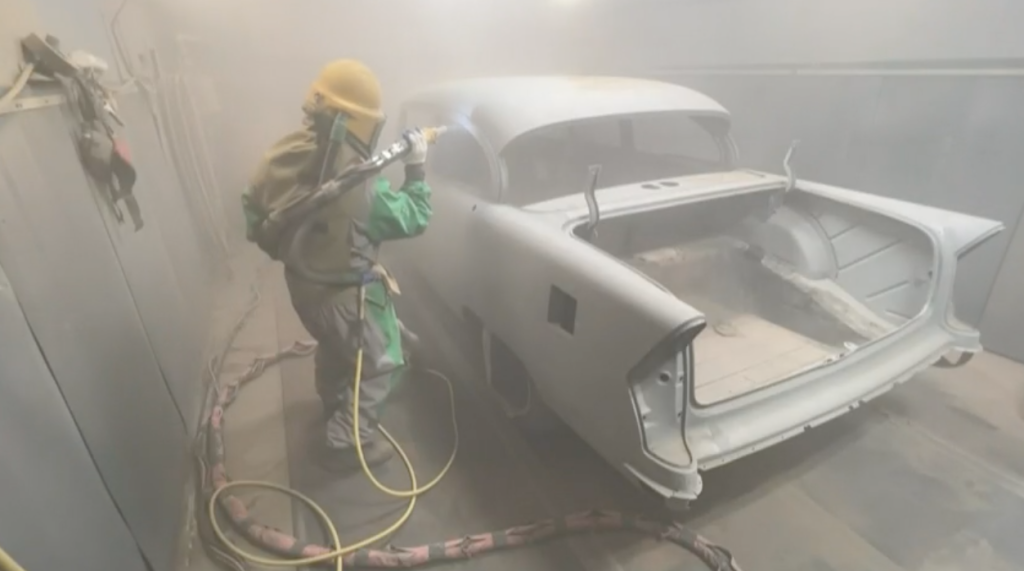
For the majority of structural steel painting projects specifying Sa 2.5 with Rz 40–75 µm, the two best media choices are garnet #30/60 in field blasting and steel grit GL 40 in shop blast rooms. Garnet #30/60 at 80–100 psi through a #6 nozzle consistently delivers Rz 45–70 µm on carbon steel with Sa 2.5 cleanliness in a single pass. Steel grit GL 40 in a wheel blast or pressure blast system produces Rz 50–80 µm with Sa 2.5–Sa 3 at production blast pressures — slightly aggressive for thin-film coatings, so confirm against the coating data sheet. For full garnet guide: Garnet Blast Media: Why Professionals Choose It.
Carbon Steel — Immersion and Buried Service (High-Performance Epoxy, FBE)
Service environments involving continuous liquid immersion (tank interiors, buried pipelines, submerged structures) specify Sa 3 white metal with profiles typically 60–100 µm. Steel grit GL 25 or GL 16 achieves these profiles reliably in pressure blast operations. For pipeline FBE, garnet #20/40 is an alternative for operators who prefer mineral media and need to meet tight scheduling on pipe yards where immediate FBE application after blasting limits the window for re-inspection.
Stainless Steel — Passive Layer Preparation
Stainless steel surfaces require blasting for coating adhesion or for stainless-to-stainless bonded joint preparation, but standard carbon steel blast media cannot be used — steel shot or grit will contaminate the stainless surface with iron particles that cause corrosion spots visible within weeks of application. White aluminum oxide F 46–F 80 (near-zero iron content) is the correct choice for stainless steel blasting, delivering an appropriate profile without iron contamination.
Aluminum Substrates — Primer Adhesion
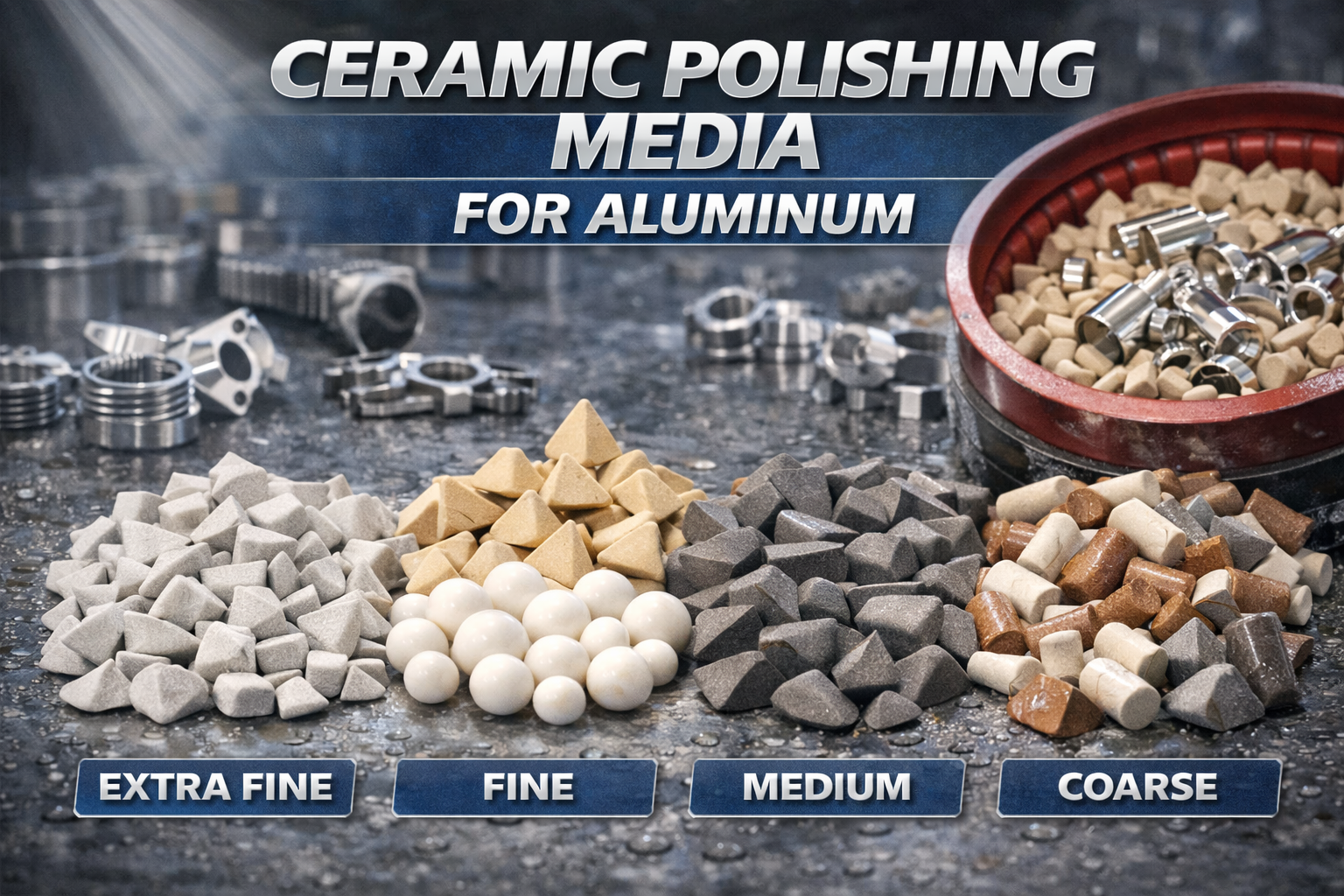
Aluminum structural components requiring primer adhesion blasting (aircraft structures, marine aluminum topsides, architectural cladding) must be blasted with non-ferrous media to avoid iron contamination. White aluminum oxide F 80–F 120 at 40–60 psi, or glass beads Class A–B for cosmetic and peening-only applications, are the correct choices. The fine grit range produces the shallow profile (15–30 µm) appropriate for the thin-film primer systems used on aluminum without risk of warping thin-gauge sheet.
Common Mistakes That Cause Coating Failures
- Using grit that is too coarse for the coating specification: Steel grit GL 16 on a project specifying Rz max 75 µm will frequently produce profiles of 100–130 µm, causing peak perforation in the coating system and early rust-through at the highest profile peaks
- Allowing flash rust before coating application: In humid environments, bare blasted steel can develop flash rust within 30–60 minutes. Flash rust creates a weak boundary layer between substrate and coating that reduces adhesion — even light flash rust (Sa 1 equivalent) on an otherwise Sa 2.5 blasted surface degrades coating performance significantly
- Ignoring soluble salt contamination: High chloride, sulfate, or nitrate levels on the surface before coating application cause osmotic blistering — moisture migrates through the coating film to the high-ion-concentration layer at the steel surface, creating blisters that detach the coating. Test with Bresle patch before coating and ensure total soluble salts are within specification
- Mixing media in the blast system: Residual coarser grit in a system that has been reloaded with finer media produces profile outliers that exceed specification. Always purge the blast system and nozzle before switching grit grades
- Blasting in unacceptable weather: Blasting when the substrate is within 3°C of the dew point causes instant moisture condensation on the blasted surface. Measure substrate and dew point temperature before any blast operation and stop if the margin is less than 3°C
Quality Control After Blasting
Surface quality after blasting must be verified before coating application. The minimum recommended quality control checks are:
- Visual cleanliness: Compare against ISO 8501-1 photographic reference standards — confirm the Sa grade meets specification
- Surface profile: Measure with a Testex Press-O-Film replica tape or electronic surface profile gauge — confirm Rz or Ra is within the coating specification window
- Soluble salt content: Bresle patch sampling per ISO 8502-6 / ISO 8502-9 — confirm total soluble salts are within specification (typically 20–50 mg/m² NaCl equivalent for industrial atmospheric service)
- Dust and contamination: Apply adhesive tape to the blasted surface and inspect under 10× magnification per ISO 8502-3 — confirm dust particle count and size are within acceptance criteria
- Substrate temperature: Confirm substrate is at least 3°C above dew point immediately before coating application
For a complete breakdown of how different abrasive media types achieve different profile depths, and how to select the right grit size for your specific coating specification, see: Abrasive Media Grit & Mesh Size Chart: Complete Reference Guide.
Часто задаваемые вопросы
It depends on the condition of the existing coating and the specification of the new system being applied. If the existing coating is firmly adhered, free of blistering and corrosion undercutting, and compatible with the new coating system (confirmed by the coating manufacturer), sweep blasting over the existing coating to create a surface profile can be an acceptable preparation method. This approach is common on large maintenance projects where full strip-to-metal would extend project duration and cost prohibitively. However, if there is any active corrosion beneath the existing coating, the existing coating contains lead or chromate pigments that require controlled strip procedures, or the new coating system is incompatible with the existing one, full removal to Sa 2.5 or Sa 3 bare metal is required.
Exceeding the maximum specified profile depth creates two problems. First, the coating film applied at the minimum specified dry film thickness may be insufficient to cover the highest profile peaks — which will either be barely covered by paint (creating rust initiation points) or will perforate through the film entirely. Second, a deeper-than-specified profile requires additional coating material to achieve the minimum film build at the valley of the profile, increasing coating consumption and project cost. If an over-profiled surface is discovered before coating application, consult the coating manufacturer: some systems can tolerate profile at the maximum limit with an increased prime coat application — others require the surface to be re-blasted with finer media, which is extremely expensive and time-consuming on large projects.
Coating Prep Abrasive Media from Henglihong
Garnet, steel grit, aluminum oxide, and glass beads for every coating substrate and specification. Factory-direct bulk supply with COA and SGS documentation per batch.
Get a Free QuoteФильтры