Aluminum Oxide Blasting Media: Properties, Grit Sizes & Best Uses
A complete technical reference for aluminum oxide (alumina) abrasive blasting media — from material science and grit size selection to surface profile data, reuse cycles, and industry applications.
What Is Aluminum Oxide Blasting Media?
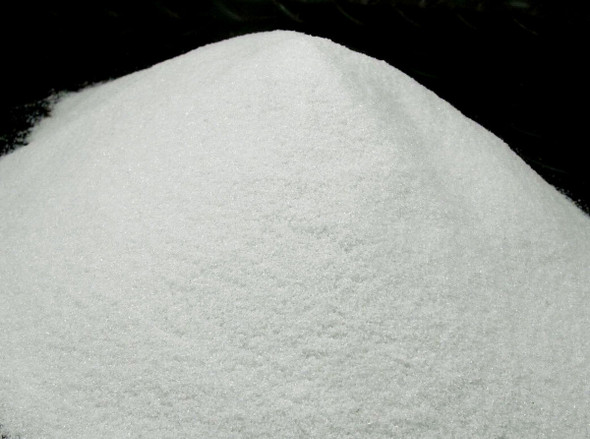
Aluminum oxide blasting media — also known as alumina grit or corundum abrasive — is a synthetic, high-hardness abrasive produced from bauxite ore. It is one of the most widely used abrasive blasting materials in industrial surface finishing, valued for its combination of extreme hardness, sharp angular fracture, chemical stability, and multi-cycle reusability.
With a Mohs hardness of 9 — second only to diamond and cubic boron nitride among commonly available materials — aluminum oxide cuts aggressively into metals, ceramics, and composites, producing the deep anchor profiles required for high-performance coating adhesion. Its chemical formula is Al₂O₃, and its crystalline structure (corundum) gives each fractured grain a new sharp cutting edge, making it self-sharpening as it breaks down during use.
Aluminum oxide is the go-to choice for surface preparation before thermal spray coatings, industrial epoxy and polyurethane paint systems, powder coatings, and hard chrome plating. It is also widely used for deburring precision-machined components, cleaning castings, and conditioning tool surfaces.
For a broader overview of how aluminum oxide compares to all other blast media types, see the Abrasive Blasting Media Complete Guide.
How Aluminum Oxide Blasting Media Is Made
Industrial aluminum oxide abrasive is manufactured through two primary processes:
The Bayer Process first refines bauxite ore into alumina (Al₂O₃) by digesting it in hot caustic soda solution, precipitating aluminum hydroxide, and then calcining it at high temperature to produce pure alumina powder. This powder is then used as feedstock for the fusion step.
Electric Arc Fusion melts the calcined alumina at temperatures exceeding 2,000 °C in a large electric arc furnace. The molten material is then cooled, crushed, and screened to the required particle size distribution. The crushing process naturally produces the sharp, angular grain morphology that gives aluminum oxide its aggressive cutting character.
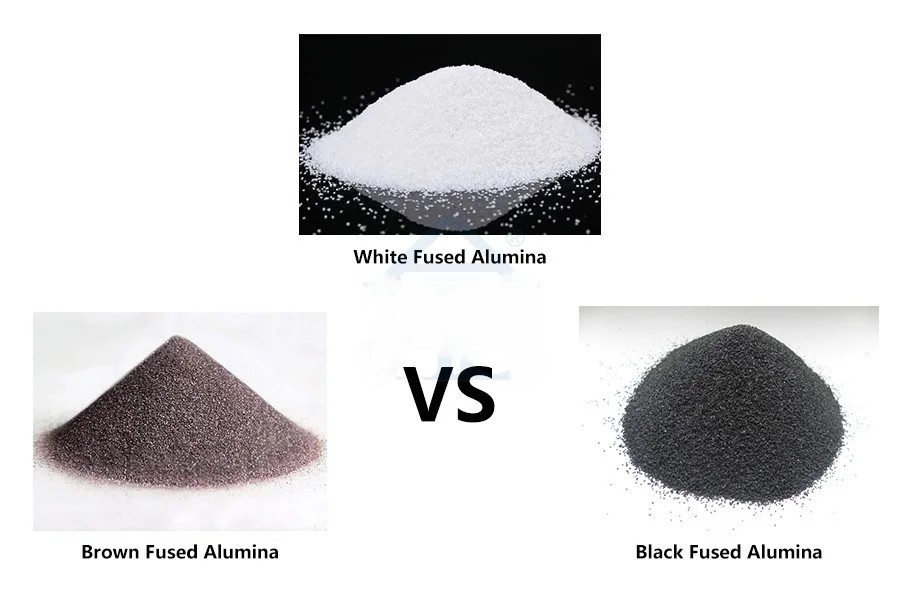
The purity level of the starting bauxite and the control of fusion conditions determine whether the finished product is classified as brown aluminum oxide (standard grade, ~95% Al₂O₃) or white aluminum oxide (high-purity grade, ~99.5% Al₂O₃). Jiangsu Henglihong Technology manufactures both grades under ISO 9001-certified quality systems with full batch chemical analysis documentation.
Key Physical & Chemical Properties
| Property | Brown Al₂O₃ | White Al₂O₃ |
|---|---|---|
| Chemical composition | Al₂O₃ ~94–96% | Al₂O₃ ~99–99.5% |
| Mohs hardness | 9.0 | 9.0–9.2 |
| Crystal structure | Corundum (α-Al₂O₃) | Corundum (α-Al₂O₃) |
| Насыпная плотность | 1.75–1.95 g/cm³ | 1.75–1.90 g/cm³ |
| Температура плавления | ~2,040 °C | ~2,050 °C |
| Форма частиц | Angular, blocky | Angular, slightly finer |
| Free silica content | <1% | <0.1% |
| Iron oxide content | 1–3% | <0.1% |
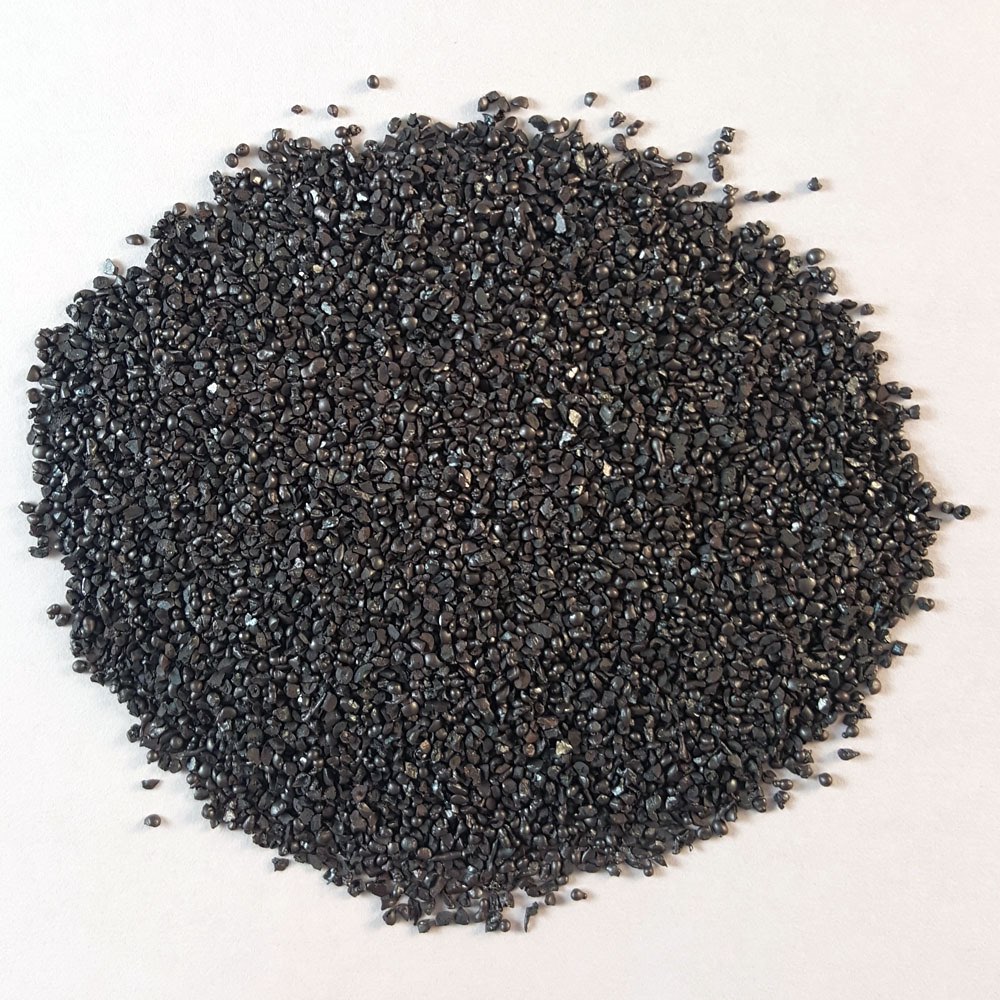
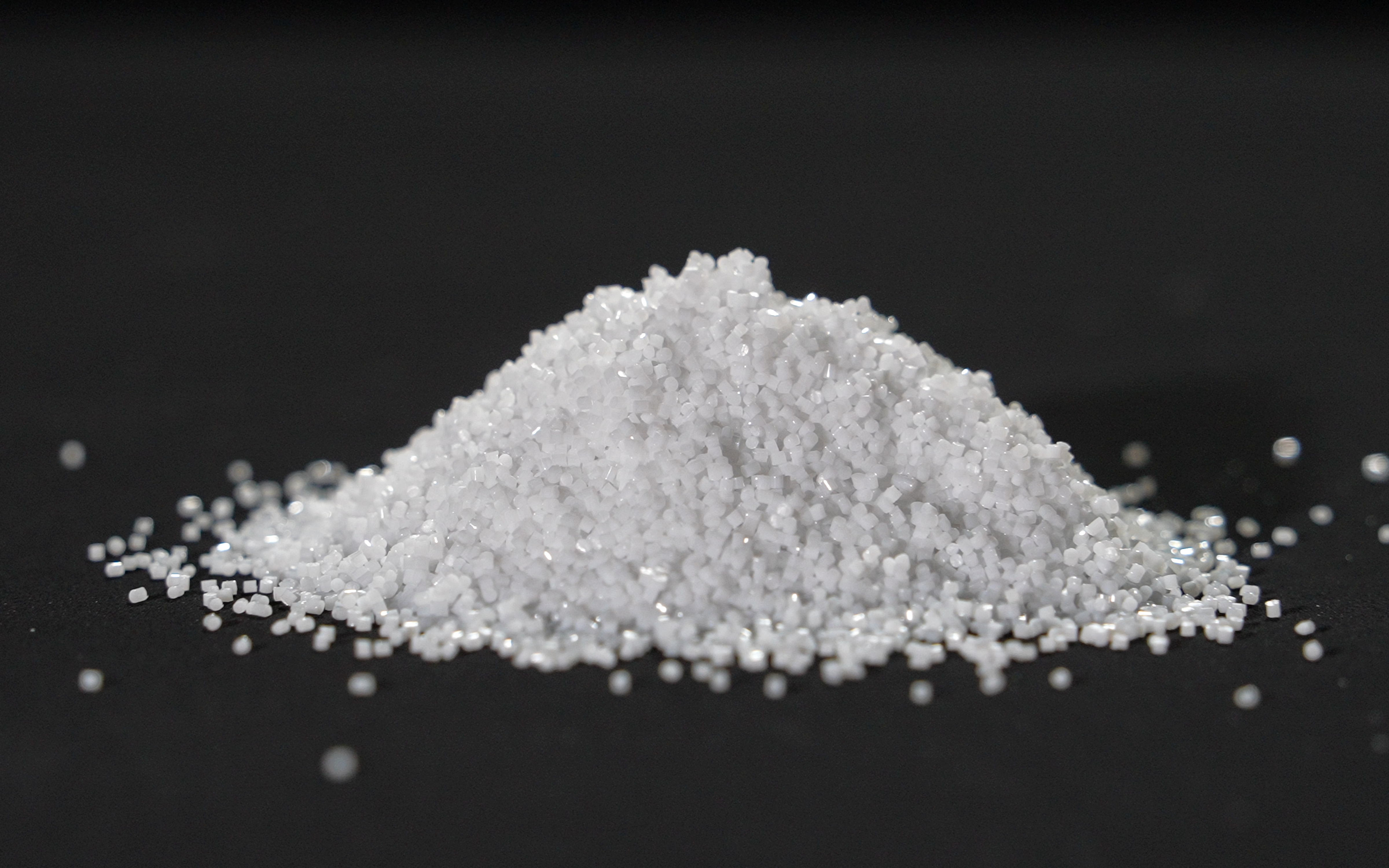
| Цвет | Brown / grey-brown | White / off-white |
| Typical reuse cycles | 4–8× | 4–8× |
Key performance characteristics that make aluminum oxide particularly suitable for blasting applications include its self-sharpening fracture behavior (each fracture exposes a new cutting edge), its chemical inertness (it does not react with most metals, acids, or bases under operating conditions), and its thermal stability (it retains hardness at elevated temperatures, making it suitable for blasting before thermal spray processes).
Brown vs White Aluminum Oxide: Which to Choose?
Both grades share the same corundum crystal structure and angular morphology, but differ in purity and consequently in specific application suitability.
Коричневый оксид алюминия
The industrial workhorse. Ideal for general steel blasting, coating preparation, deburring, and cleaning castings. The small amount of iron oxide in its composition makes it unsuitable for blasting stainless steel or non-ferrous metals where iron contamination cannot be tolerated. More cost-effective per kilogram than white grade.
White Aluminum Oxide
High-purity grade preferred for blasting stainless steel, titanium, aluminum alloys, and other non-ferrous substrates. Its near-zero iron content eliminates the risk of iron contamination causing rust staining or coating adhesion failure. Also preferred for precision optical, medical, and food-contact surface applications.
If the substrate is carbon steel and iron contamination is not a concern: use brown aluminum oxide — lower cost, equivalent cutting performance. If the substrate is stainless steel, non-ferrous metal, or a sensitive alloy: specify white aluminum oxide to avoid iron contamination and potential corrosion or adhesion issues downstream.
Grit Size Chart & Surface Profile Data
Aluminum oxide is available in an exceptionally wide range of particle sizes — from very coarse grit 12 through ultra-fine grit 1200 — making it one of the most versatile blast media in terms of surface finish control. The table below maps grit sizes to approximate surface profile depths and typical applications. For a full cross-standard conversion (FEPA, ANSI, JIS, MESH), refer to our Blasting Media Grit Size & Mesh Size Guide.
| Grit Size (FEPA) | Approx. Particle Size (µm) | Surface Profile Ra (µm) | Typical Application |
|---|---|---|---|
| F12 / F16 | 1,700–2,360 | 100–150+ | Very heavy mill scale, severe corrosion removal |
| F24 / F30 | 710–1,180 | 75–120 | Heavy rust, thick coating removal, anchor profiles for heavy coatings |
| F36 / F46 | 425–710 | 50–90 | General industrial coating prep (Sa 2.5), thermal spray bond coats |
| F60 / F80 | 212–425 | 30–60 | Standard coating prep, precision deburring, light rust removal |
| F100 / F120 | 106–212 | 15–35 | Precision parts cleaning, pre-plating surface conditioning |
| F150 / F180 | 63-106 | 8–18 | Satin finish preparation, fine deburring |
| F220 / F240 | 44–63 | 4–10 | Fine surface conditioning, lapping prep |
| F320–F1200 | 4–44 | <5 | Ultra-fine finishing, optical surface prep, precision cleaning |
For most heavy industrial protective coating systems (epoxy primers, zinc-rich coatings, thermal spray), a grit size of F36 to F80 aluminum oxide is specified, targeting a surface profile of 40–75 µm and a cleanliness grade of Sa 2.5 per ISO 8501-1. Always confirm with the coating manufacturer’s technical data sheet for the exact profile requirement of the specific coating system being applied.
Reusability, Reclaim & Cost Efficiency
Aluminum oxide is a recyclable blast media, typically yielding 4 to 8 reuse cycles depending on operating conditions. This multi-cycle performance gives it a meaningful cost advantage over single-use media such as crushed coal slag or mineral sands, while still offering significantly higher cutting performance per cycle.
Media breakdown during blasting produces two degradation products: fines (sub-specification particles that no longer contribute useful blasting action) and fractured particles that are smaller but still angular and sharp. The fines must be removed by the reclaim system to maintain blasting efficiency; the fractured particles can continue to perform useful work until they drop below the minimum effective size for the application.
An effective reclaim system for aluminum oxide typically includes a bucket elevator to return spent media, a cyclone separator или air wash classifier to remove fine dust and degraded particles, and a vibratory screen to confirm particle size distribution before the media re-enters the blast cycle. With a well-maintained reclaim system, effective per-cycle cost for aluminum oxide blasting is substantially lower than the unit purchase price per kilogram suggests.
For a full cost-per-cycle analysis comparing aluminum oxide against steel grit, garnet, and single-use media, see: Reusable vs Single-Use Blasting Media: Cost Analysis & ROI.
Industry Applications of Aluminum Oxide Blast Media
Thermal Spray & HVOF Coating Preparation
Thermal spray processes — including flame spray, arc spray, plasma spray, and HVOF (High Velocity Oxygen Fuel) — require a highly roughened substrate with a controlled anchor profile to achieve mechanical bonding of the deposited coating. Aluminum oxide grit, typically F36–F60, is the dominant media for this application worldwide due to its ability to generate the required profile without embedding metallic contamination that would compromise coating adhesion.
Industrial Protective Coating Preparation
Before applying epoxy, polyurethane, zinc-rich, or other industrial protective coatings to structural steel, pipes, pressure vessels, and fabricated assemblies, the surface must be blasted to a defined cleanliness (typically Sa 2.5 or Sa 3 per ISO 8501-1) and profile depth. Aluminum oxide grit is the standard choice for operations using portable blasting equipment or blasting cabinets.
Precision Deburring & Cleaning
CNC-machined components, die castings, and forged parts frequently carry burrs, flash, and surface contamination from the manufacturing process. Aluminum oxide in finer grit sizes (F80–F180) is used in automated blasting cabinets to deburr and clean these components without altering critical dimensions. Its hardness ensures efficient burr removal even on hardened tool steels.
Pre-Plating & Pre-Anodizing Surface Conditioning
Chrome plating, nickel plating, anodizing, and PVD coating processes all require a clean, activated surface. Fine aluminum oxide blasting (F100–F220) removes oxides, machining residues, and surface stresses, improving adhesion and uniformity of the subsequent surface treatment. White aluminum oxide is preferred for non-ferrous and stainless substrates in this application.
Stone, Glass & Ceramic Engraving
Beyond industrial metal blasting, aluminum oxide is widely used for engraving decorative patterns into stone (granite, marble), architectural glass, and ceramic tiles. Medium to fine grits (F80–F180) produce crisp, clean engraved lines with controllable depth.
Aluminum Oxide vs Other Abrasive Blasting Media
| Media | Hardness (Mohs) | Shape | Reuse | Cost/Cycle | Iron Contamination | Best For |
|---|---|---|---|---|---|---|
| Оксид алюминия | 9 | Angular | 4–8× | Low-Med | Brown: yes / White: no | Coating prep, thermal spray, deburring |
| Карбид кремния | 9–9.5 | Angular | 2–5× | Высокий | No | Ceramics, hardened steel, composites |
| Glass Bead | 5.5–6 | Spherical | 3–6× | Medium | No | Peening, decorative finish, stainless |
| Стальная крошка | 7–8 | Angular | 200–300× | Очень низкий | Yes | High-volume steel prep, shipbuilding |
| Гранат | 7–8 | Angular | 3–5× | Medium | No | Marine, eco-sensitive, low-dust |
Aluminum oxide’s key advantage over карбид кремния is significantly lower cost at comparable hardness levels, making it the economically rational choice for the majority of high-performance blasting applications. Silicon carbide is reserved for substrates that alumina cannot adequately process — primarily ceramics and the hardest tool steels. Compared to стальная крошка, aluminum oxide offers the critical advantage of zero iron contamination (white grade) and is the preferred choice wherever ferrous contamination would compromise the process or the end product.
For a full side-by-side comparison of all major media types, see: Abrasive Blasting Media Comparison Chart: Hardness, Profile & Cost.
Safety & Handling
Aluminum oxide is generally considered one of the safer industrial abrasives from a health standpoint. Its free silica content is less than 1% (brown grade) or less than 0.1% (white grade), placing it well below the threshold at which crystalline silica regulations trigger the most stringent engineering controls. It is chemically inert, non-flammable, and non-reactive with most industrial materials and cleaning agents.
However, all abrasive blasting operations generate airborne dust that can pose respiratory risks through nuisance dust inhalation, and adequate engineering controls remain essential:
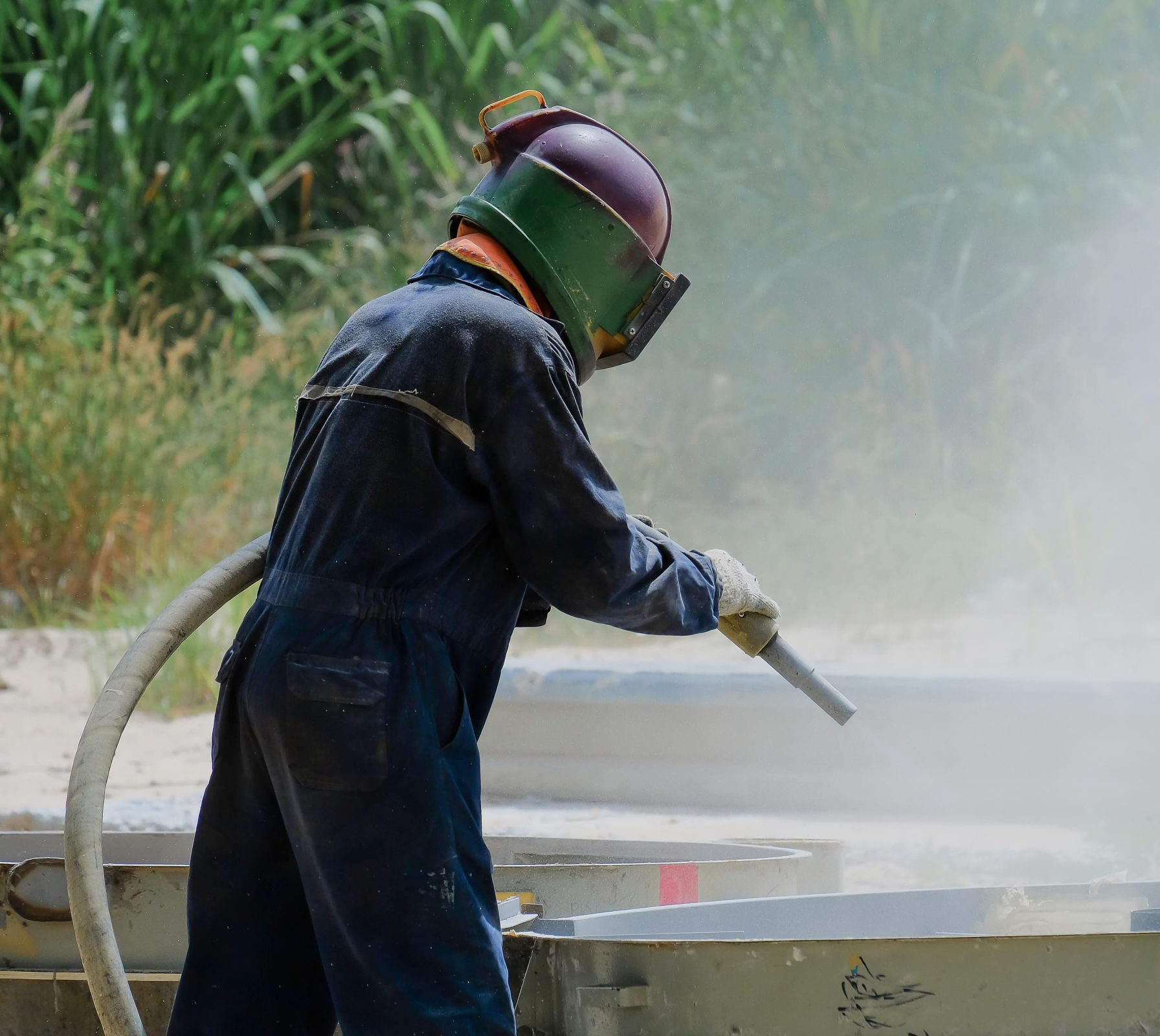
- Operators must wear NIOSH-approved supplied-air respirators (Type CE) or equivalent respiratory protection during open blasting operations.
- Enclosed blasting cabinets must be equipped with adequate dust collection and filtration, with filter maintenance performed on schedule.
- Work areas must be properly ventilated to prevent accumulation of fine dust beyond permissible exposure limits.
- Spent aluminum oxide must be disposed of in accordance with local solid waste regulations. In most jurisdictions it is classified as non-hazardous industrial waste, but this should be confirmed based on the substrate material blasted and any contaminants in the spent media.
For comprehensive blasting safety protocols including PPE selection, ventilation design, and regulatory compliance, see: Abrasive Blasting Media Safety: PPE, Ventilation & Dust Control.
Request Aluminum Oxide Blasting Media Samples
Jiangsu Henglihong Technology supplies both brown and white aluminum oxide in grit sizes from F12 through F220, with full chemical analysis certificates and SSPC-AB 1 compliance documentation. Available in 25 kg bags and 1,000 kg bulk jumbo bags for global export.
Get a Quote or Sample RequestЧасто задаваемые вопросы
Фильтры