Sand Blasted Finish vs Brushed Finish vs Polished: Side-by-Side Comparison
Three of the most common surface finishes on industrial metalwork — sand blasted, brushed, and polished — solve fundamentally different problems. This guide compares them across appearance, function, cost, and downstream compatibility.
Three Finishes, Three Problems Solved
Buyers frequently inherit a drawing that calls for “blasted,” “brushed,” or “polished” without knowing why one was chosen. The three are not interchangeable. Each was developed for a different downstream problem.
- Sand blasted exists primarily to create mechanical anchor for coatings, or to deliver a uniform non-directional matte appearance.
- Brushed exists primarily for aesthetics — a controlled directional grain that hides minor handling marks.
- Polished exists primarily for hygiene, optics, or premium cosmetic — a mirror surface with no recess for contaminants.
For the full specification framework around the blasted option, see the pillar guide on sand blasted surface.
Visual and Functional Comparison
| Attribute | Sand Blasted | Brushed | Polished |
|---|---|---|---|
| Texture direction | Random | Linear grain | None (smooth) |
| Typical Ra | 0.4 – 7.0 µm | 0.3 – 1.5 µm | 0.05 – 0.2 µm |
| Reflectance | Matte | Semi-matte to satin | Mirror |
| Hides fingerprints | Превосходно | Хорошо | Poor |
| Coating adhesion | Превосходно | Умеренный | Poor without etching |
| Hygiene cleanability | Умеренный | Умеренный | Превосходно |
| Cost (USD/m²) | 8 – 35 | 15 – 60 | 40 – 200+ |
When to Specify Sand Blasted
Sand blasted is correct when any of these applies:
- Coating is going on top. Epoxy, polyurethane, powder coat, zinc-rich primer, plasma spray — all require anchor pattern.
- Uniform matte with no directional grain is desired. Architectural facades, consumer electronics, signage.
- Complex geometry. Blasting reaches into corners and recesses where brushing wheels cannot.
- Cost matters. Per square meter, blasting is the cheapest of the three.
The complete roughness chart by media and grit maps the achievable visual outcomes.
When to Specify Brushed
Brushed (or “directional” / “satin” / “No.4” in stainless terminology) is correct when:
- Premium aesthetic with linear grain is desired. Stainless appliances, elevator panels, automotive trim, architectural cladding.
- Moderate reflectance is wanted — enough to read as “metal” but not enough for mirror reflections.
- Handling marks along the grain are acceptable, since the brushing direction visually absorbs them.
Brushed surfaces are produced by abrasive belts, wheels, or non-woven pads, not by blasting. The grain direction must be specified. Brushed finishes are difficult to coat because the directional grain provides minimal mechanical anchor.
When to Specify Polished
Polished finishes — Ra below 0.2 µm — are correct when:
- Hygiene is critical. Pharmaceutical, food contact, surgical applications often require Ra ≤ 0.4 µm to prevent bacterial colonization in surface valleys.
- Optical reflectance is required. Reflectors, decorative mirror finishes, optical hardware.
- Premium cosmetic with mirror appearance justifies the cost.
Polishing is the most expensive of the three by a wide margin because it is labor-intensive, generates significant scrap, and is difficult to automate on complex geometry.
If hygiene is the only driver, consider a fine glass bead blast at Ra 0.4–0.6 µm followed by electropolish. The combination delivers near-polish cleanability at a fraction of the cost. See our guide on sand blasted stainless steel finish grades, passivation, and hygiene standards.
Quick Selection Decision
If the part is going to be coated, the answer is almost always sand blasted. If the part is a visible architectural or consumer element with no coating, the answer depends on aesthetic intent: brushed for linear premium look, blasted for uniform matte, polished for mirror.
Cost considerations across regions and methods are quantified in our sand blasted surface cost guide.
Часто задаваемые вопросы
Is a sand blasted finish more durable than a brushed finish?
For coated applications, yes — the blasted profile delivers mechanical anchor that extends coating life. For uncoated decorative applications, both are similarly durable.
Can you brush over a sand blasted surface?
Yes, but it is unusual and usually defeats the purpose. The brushing removes the blasted profile and replaces it with directional grain, losing the anchor pattern benefit.
Why is polishing so much more expensive than blasting?
Polishing is labor-intensive, requires multiple progressive grit stages, and is difficult to automate on complex geometry. The labor difference accounts for most of the 5–10× cost gap.
Which finish hides fingerprints best?
Sand blasted at fine grit (Ra 0.4–0.8 µm) hides fingerprints best. Polished mirror shows every fingerprint. Brushed hides fingerprints moderately along the grain.
Can a polished surface be coated?
Polished surfaces require chemical or mechanical etching before coating, which effectively reverts them to a brushed or blasted state. Coating directly over polished surfaces typically delaminates within months.
Request an Abrasive Blasting Media Sample
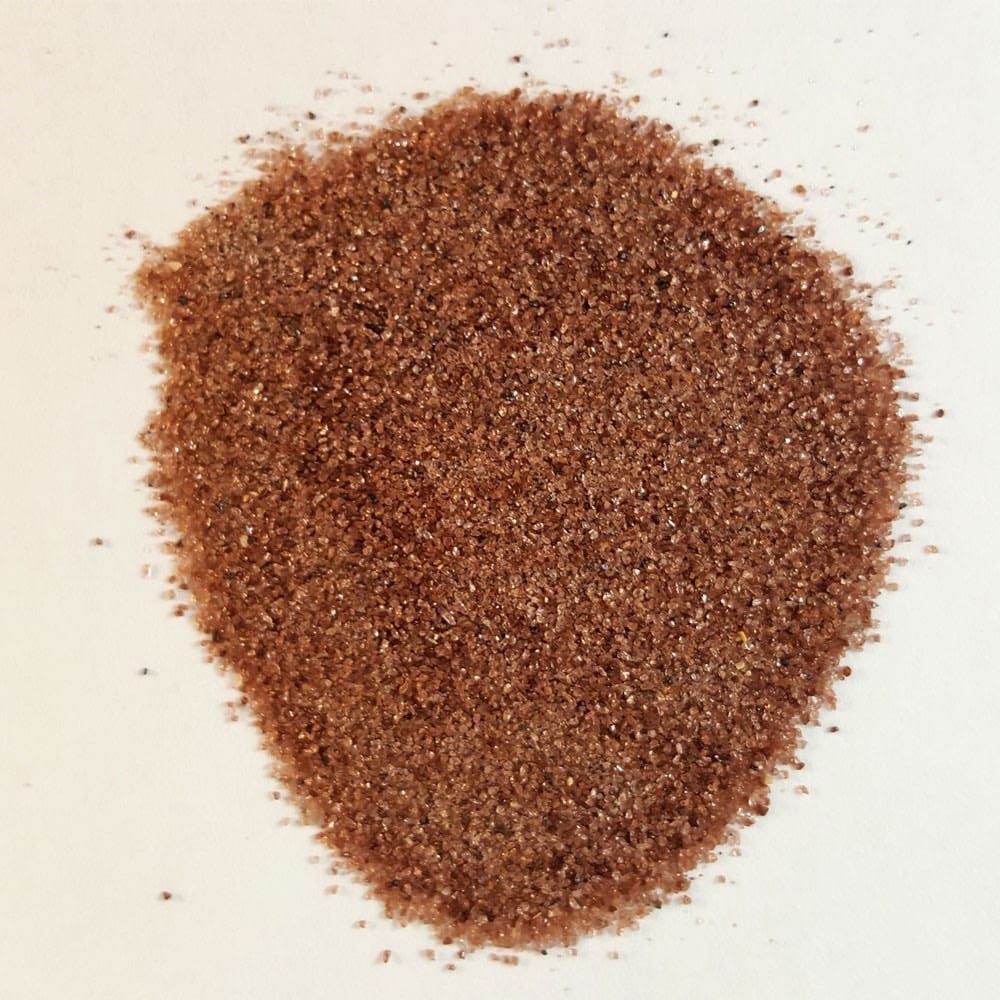
Jiangsu Henglihong Technology Co., Ltd. supplies certified aluminum oxide, garnet, glass bead, steel grit, and steel shot to global industrial buyers. Request a sample with full batch documentation for technical evaluation.
Request a Sample →Фильтры