Aluminum Oxide Abrasive Media: Grades, Grit Sizes & Applications
Aluminum oxide — Al₂O₃ — is the single most widely used engineered abrasive media in industrial blasting, lapping, surface finishing, and refractory manufacturing. With a Mohs hardness of 9.0 (exceeded commercially only by silicon carbide and diamond), it cuts through virtually any substrate at high speed, maintains sharp cutting edges across dozens of reuse cycles, and is available in a grit range that spans from 12-grit for aggressive profiling through 320-grit for precision lapping. From structural steel preparation to aerospace thermal spray conditioning, aluminum oxide abrasive media covers more application territory than any other single abrasive family.
This guide covers everything procurement managers and blasting engineers need to specify aluminum oxide correctly: the difference between brown and white grades, how grit size maps to surface profile outcomes, which applications each grade excels in, and how to evaluate bulk purchasing from a factory-direct supplier. For a broader overview of all abrasive media types, see the complete Abrasive Media Supplies Buyer’s Guide.
What Is Aluminum Oxide Abrasive Media?
Aluminum oxide (Al₂O₃), also known commercially as alumina or corundum, is a synthetic mineral abrasive produced by fusing bauxite ore in an electric arc furnace at temperatures above 2,000 °C. The molten mass is cooled, crushed, and screened to produce sharp angular particles with a consistent hardness of 9.0 on the Mohs scale — a hardness level that allows aluminum oxide to scratch and cut through nearly every commercially relevant substrate material, including hardened steel, glass, stone, ceramics, and most alloy compositions.
The angular, irregular fracture morphology of aluminum oxide particles is fundamental to its cutting performance. Each particle presents multiple sharp edges that bite into the substrate surface on impact, removing material efficiently while simultaneously creating the anchor profile needed for coating adhesion. As particles break down under repeated impacts, fresh cutting edges are exposed — a behavior that sustains cutting performance across many reuse cycles before the particle size distribution degrades enough to require replenishment or replacement of the working mix.
Aluminum oxide is produced in two principal commercial grades: brown aluminum oxide (BAO) and white aluminum oxide (WAO), distinguished primarily by purity, friability, and the applications each is best suited to. Both are available from Jiangsu Henglihong Technology Co., Ltd. in a full range of grit sizes to FEPA, ANSI, and ISO standards.
Brown Al₂O₃ vs White Al₂O₃: Key Differences
The decision between brown and white aluminum oxide is primarily driven by the purity requirements of the application, the substrate sensitivity to contamination, and the cost tolerance of the project. The two grades are not interchangeable in all contexts.
| Property | Коричневый оксид алюминия | White Aluminum Oxide |
|---|---|---|
| Al₂O₃ Purity | 94–96% | >99% |
| Key Impurities | TiO₂, SiO₂, Fe₂O₃ | Near-zero iron and titanium |
| Твердость по Моосу | 9.0 | 9.0 |
| Toughness | Higher (less friable) | More friable |
| Reuse Cycles | 50–100 cycles | 30–70 cycles |
| Unit Cost | Lower | Higher (+30–60%) |
| Contamination Risk | Low-medium (some Fe) | Minimal |
| Цвет | Brown/dark tan | White/cream |
| Primary Uses | General blasting, grinding wheels, refractory | Aerospace, thermal spray, medical, precision optics |
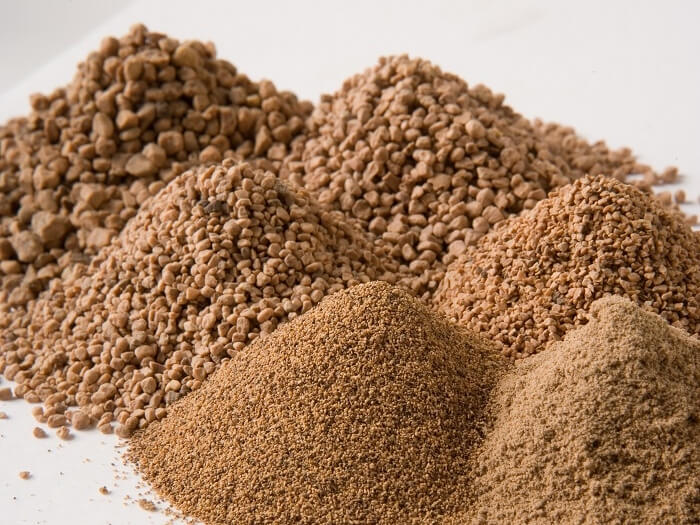
Brown aluminum oxide is the workhorse of the two grades. Its higher toughness — a result of the titanium oxide content that forms a tough crystal structure — makes it more resistant to particle fracture under impact, delivering more cycles per kilogram than white alumina in continuous blasting applications. For structural steel preparation, cabinet blast rooms, and general industrial surface conditioning, brown Al₂O₃ delivers excellent performance at the lowest cost per cycle in the aluminum oxide family.
White aluminum oxide sacrifices some toughness for extreme purity. With iron content below 0.05%, it is the specified choice wherever iron contamination of the blasted surface would compromise the subsequent process — thermal spray coating (where iron oxides in the bond coat reduce adhesion), aerospace component preparation (where surface contamination affects nondestructive testing reliability), and precision optical surface finishing (where any foreign particle can cause scratching of the substrate). The higher friability of white alumina also means it generates a finer, more uniform debris particle on breakdown, which can be an advantage in closed-loop reclaim systems with fine filtration.
Grit Sizes and Surface Profile Outcomes
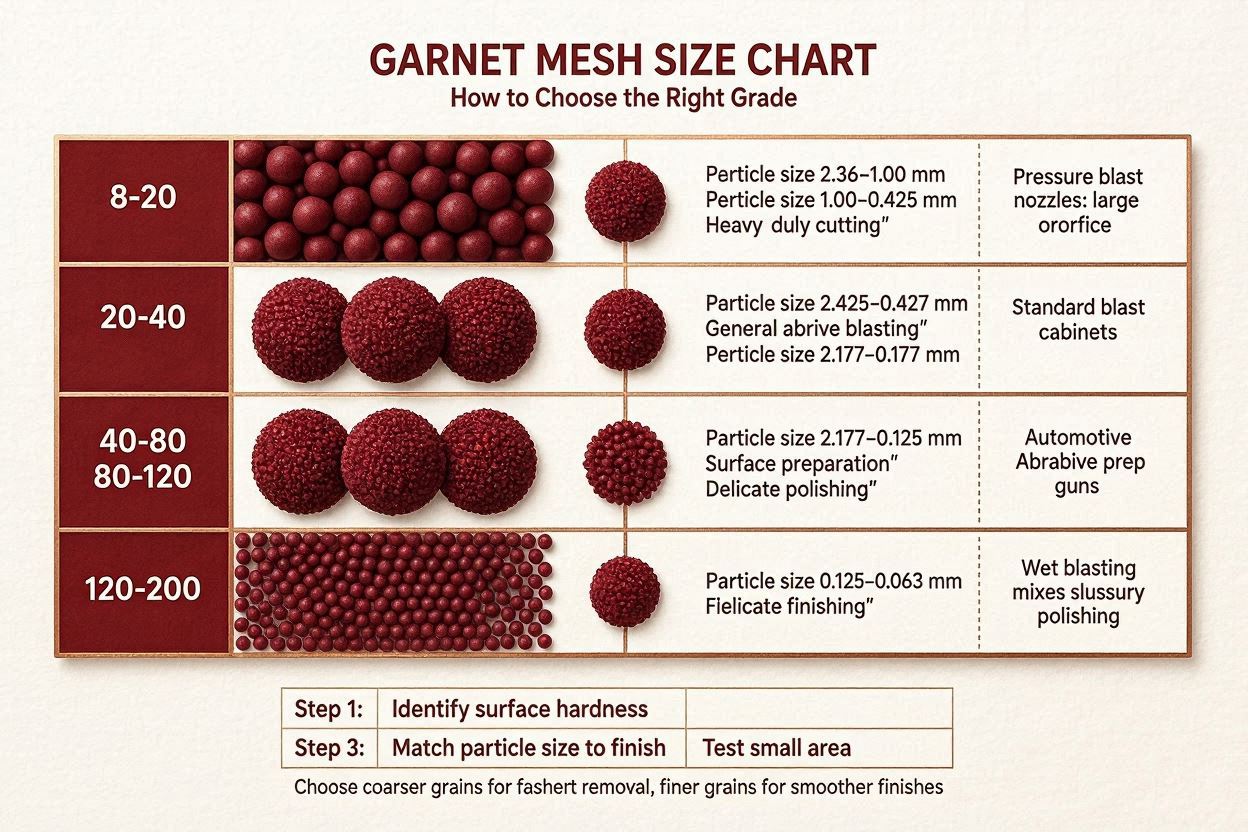
Aluminum oxide is available across the widest grit range of any single abrasive family — from 12-grit (approximately 1.7 mm mean particle diameter) used for aggressive stripping and heavy profiling, through 320-grit (approximately 36 µm) used for precision lapping and polishing preparation. Understanding how grit size maps to surface outcome is essential for correct specification.
| FEPA Grit | Mean Particle Size (µm) | Anchor Profile (Approx.) | Typical Application |
|---|---|---|---|
| F 12 | ~1,700 µm | 80–120 µm | Aggressive profiling, heavy rust/scale removal |
| F 16–F 24 | 1,000–1,200 µm | 60–90 µm | Heavy industrial prep, Sa 3 on thick plate |
| F 30–F 36 | 500–710 µm | 40–70 µm | Standard structural steel prep, Sa 2.5 |
| F 46–F 60 | 250–425 µm | 25–45 µm | General purpose blast, coating prep |
| F 80–F 100 | 150–212 µm | 15–30 µm | Aluminium, stainless, thin coatings |
| F 120–F 180 | 75–125 µm | 8–18 µm | Precision finishing, thermal spray prep |
| F 220–F 320 | 36–75 µm | <10 µm | Pre-polish, optics, semiconductor components |
Примечание: Anchor profile depth is influenced by blast pressure, nozzle distance, and substrate hardness in addition to grit size. The values above assume moderate pressure (80–90 psi) and standard nozzle distance on carbon steel of 200–250 HV hardness. Harder substrates will produce shallower profiles at the same grit size and pressure.
Core Industrial Applications
Abrasive Blasting and Surface Preparation
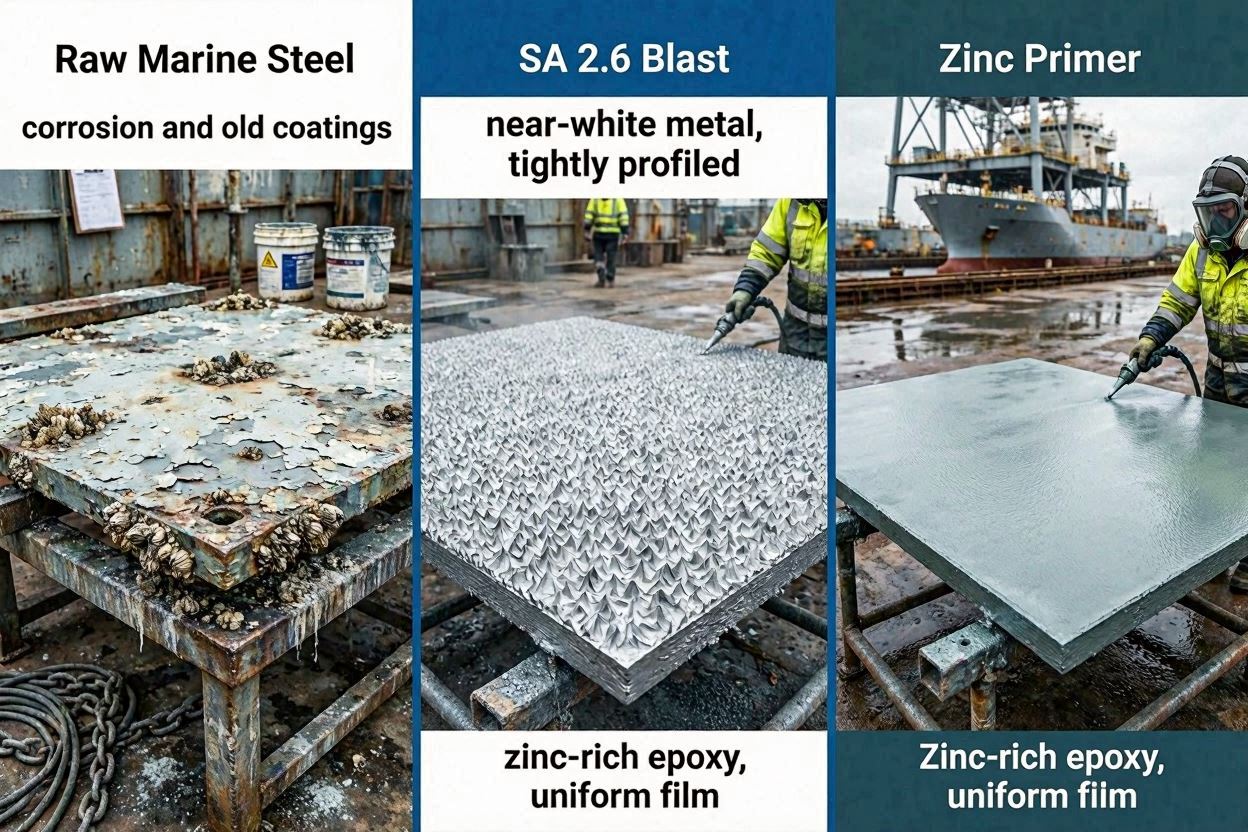
In pressure blast and cabinet blast systems, brown aluminum oxide in F 30–F 80 grit range is the standard choice for preparing carbon steel, stainless steel, aluminum alloys, and cast iron for industrial coating systems. The angular particle geometry produces a sharp, defined anchor profile that maximizes mechanical adhesion for epoxy, polyurethane, zinc-rich primer, and thermal spray coating systems. The combination of high hardness, consistent particle geometry, and 50–100 reuse cycles makes it one of the most cost-effective abrasive media supplies for closed-loop blast room systems.
Thermal Spray Substrate Conditioning
Thermal spray coatings — including plasma spray, HVOF, and arc spray — require substrate surfaces with extremely precise anchor profiles (typically Rz 50–100 µm for most bond coats) and zero iron contamination. White aluminum oxide in F 24–F 60 grit is the mandated abrasive in most thermal spray specifications for this reason. The near-zero iron content of white alumina ensures that the grit blast step does not introduce iron oxides that would appear as inclusions in the bond coat and reduce adhesion strength under thermal cycling.
Aerospace Component Preparation
Aluminum alloy airframe components, titanium structural parts, and composite-metal hybrid structures all require blasting media that cleans the surface without embedding particles, transferring iron contamination, or distorting thin-gauge material. White aluminum oxide in F 100–F 220 grit range, applied at low pressure through a suction cabinet, meets these requirements. The relatively soft nature of aircraft aluminum means that even moderate-grit Al₂O₃ achieves the target cleanliness and profile without the risk of mechanical distortion that angular metallic media would cause.
Refractory Grain and Abrasive Products
Beyond blasting, fused aluminum oxide grain is a primary feedstock for bonded abrasive wheels, coated abrasive belts, and refractory kiln linings. Brown alumina grain in F 12–F 80 grit is used as the abrasive in grinding and cut-off wheels for metalworking; white alumina grain in fine grit ranges is used in precision grinding and honing operations where freedom from contamination and consistent stock removal are critical.
Lapidary and Glass Polishing
White aluminum oxide in P 1200–P 2000 grit range (3–15 µm particle size) is used as a pre-polish abrasive in gemstone cutting and optical glass polishing, bridging the gap between rough silicon carbide grinding stages and final cerium oxide polish. Its controlled breakdown characteristic and predictable scratch depth make it a reliable pre-polish that conditions the surface for mirror-quality final polish without introducing deep scratches that a final polish step cannot remove.
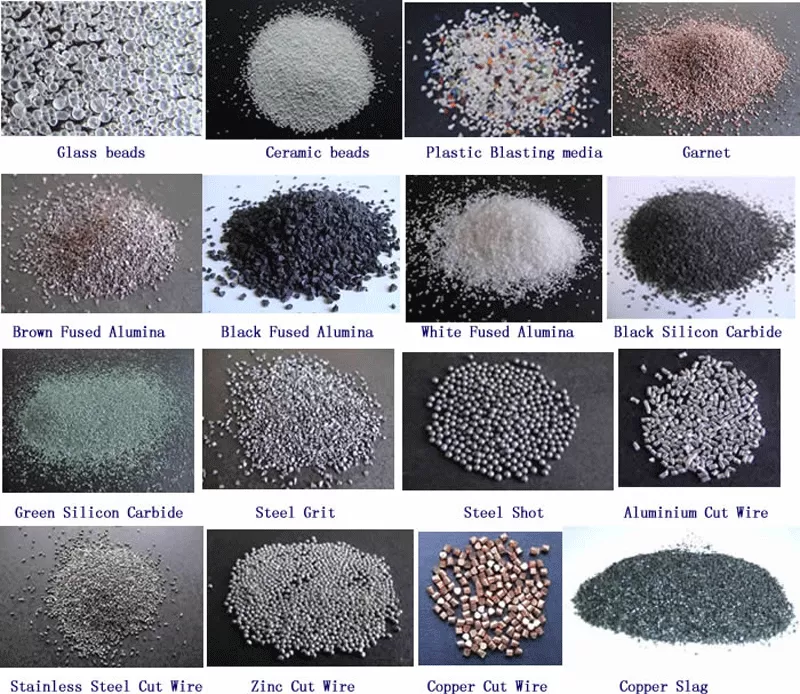
Aluminum Oxide vs Other Abrasives
| Media | Hardness (Mohs) | Reuse Cycles | Relative Cost | Best When Al₂O₃ Wins |
|---|---|---|---|---|
| Оксид алюминия | 9.0 | 50–100 | Medium | Balanced hardness, cost, and cycle count |
| Карбид кремния | 9.5 | 30–60 | Medium-High | SiC wins on very hard ceramics/glass; Al₂O₃ wins on TCO |
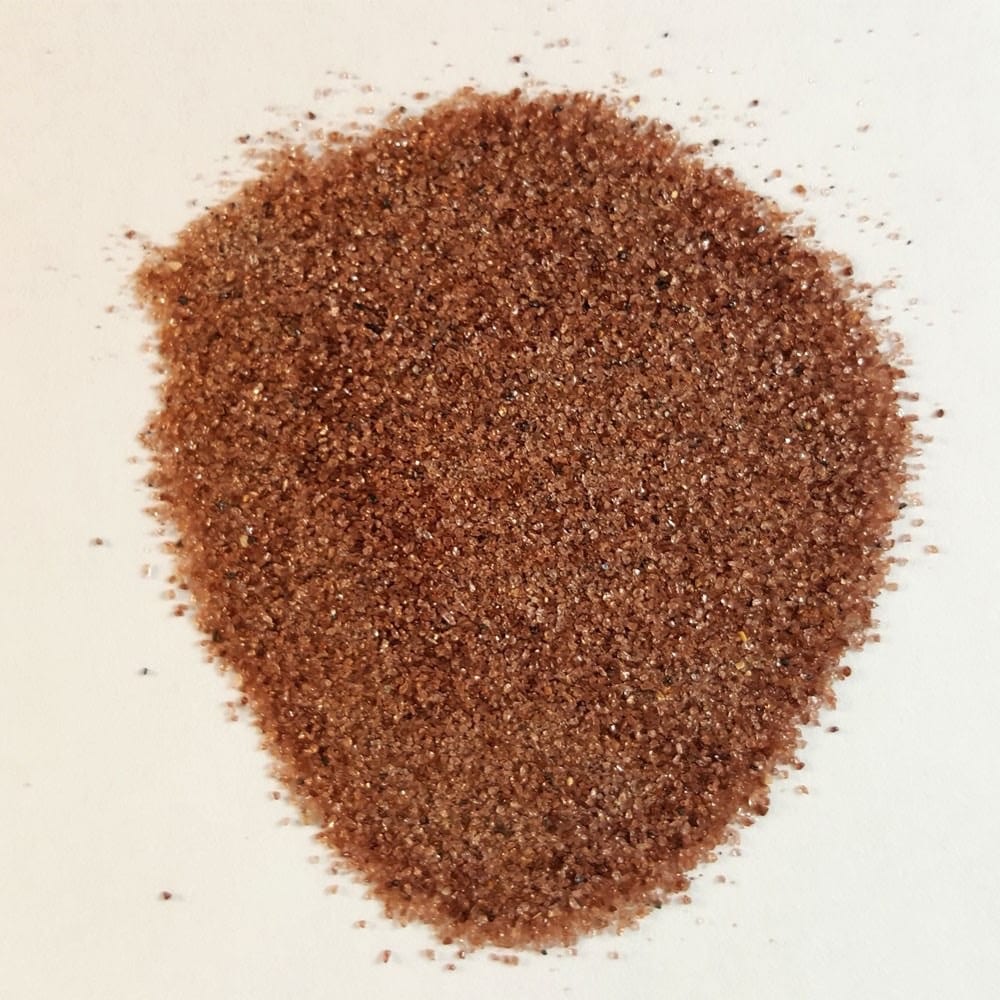
| Гранат | 7.5–8.5 | 5–10 | Low-Medium | Al₂O₃ wins on any high-volume recirculating system |
| Стальная крошка | 7–8 | Up to 2,000 | High unit cost | Steel wins on continuous wheel blast lines; Al₂O₃ wins where iron contamination is prohibited |
| Стеклянные бусины | 5.5 | 30–50 | Medium | Beads win for peening/smooth finish; Al₂O₃ wins for aggressive profiling |
The core competitive advantage of aluminum oxide over softer mineral abrasives (garnet, copper slag) is its dramatically higher reuse cycle count — 50–100 cycles vs 5–10 for garnet in equivalent blast conditions. Over the life of a production contract, this translates to 5–10× less media purchasing volume, which at any non-trivial production scale more than offsets the higher unit price. Against silicon carbide, aluminum oxide is typically 20–40% less expensive per kilogram while still covering the vast majority of industrial and precision blasting applications adequately. Only applications specifically requiring SiC’s 9.5 Mohs hardness — ultra-hard ceramics, fused glass carving — justify the premium. For more, see our direct comparison: Silicon Carbide Abrasive Media: The Hardest Grit for Precision Work.
Bulk Procurement and Specifications
When sourcing aluminum oxide abrasive media in bulk, the following specification parameters should be confirmed with any supplier before committing to a purchase order:
- Grade: Brown (BAO) or white (WAO) — specify which and confirm purity certificate
- Grit size standard: FEPA F-series (most common in industrial blasting), ANSI B74.12, or JIS R6001 — confirm which standard the supplier’s grading follows
- Size distribution: Request a laser diffraction particle size analysis (D10, D50, D90) for the specific grit designation ordered
- Al₂O₃ purity: Minimum 94% for BAO, minimum 99% for WAO; request Certificate of Analysis
- Iron content: For white Al₂O₃ in contamination-sensitive applications, specify maximum Fe₂O₃ content (typically <0.05%)
- Packaging: 25 kg woven PP bags or 1 MT FIBC bulk bags; confirm moisture sealing for long-distance sea freight
- Certifications: ISO 9001 QMS, SGS inspection reports, REACH compliance statement where required
Jiangsu Henglihong Technology Co., Ltd. supplies both brown and white aluminum oxide in F 12 through F 320 grit sizes, with full FEPA compliance documentation, COA, and SGS inspection reports available per batch. Factory-direct pricing is available for single-FCL and multi-FCL volumes. Request a quotation here.
Часто задаваемые вопросы
FEPA (Federation of European Producers of Abrasives) grit numbers for loose abrasive grain (the F-series) are defined by a combination of sieve sizes that the grain must pass through and be retained on. A higher FEPA F number means a finer particle. Mesh size (US standard) follows a similar logic — a higher mesh number means more wires per inch in the sieve, and therefore a smaller opening and finer particle. For example, FEPA F 46 corresponds roughly to US 40–50 mesh (particle size ~300–425 µm). Always confirm which sizing standard a supplier uses, as mix-ups between FEPA F and ANSI grit numbers at the same numerical value refer to different particle sizes.
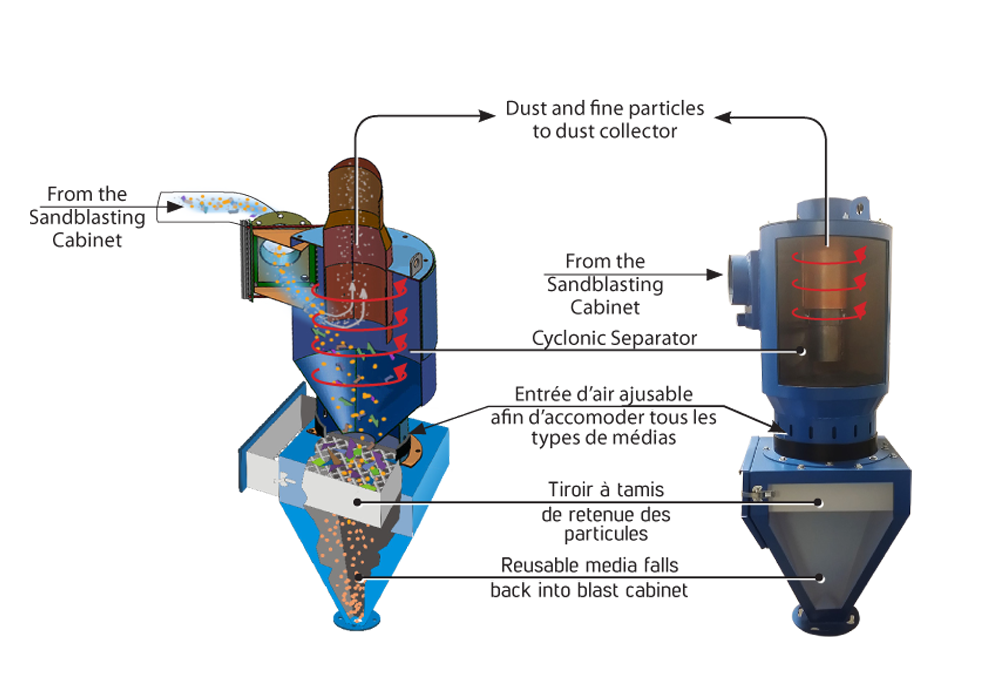
It can, but it is not ideal. Centrifugal wheel blast machines are optimized for metallic media (steel shot and grit) in the S-110 to S-780 size range. Aluminum oxide particles are significantly lighter than steel for the same particle size, which means they require a higher wheel speed to achieve equivalent velocity and surface impact energy. More critically, angular Al₂O₃ particles cause rapid wear of the impeller blades, paddles, and liners in wheel blast machines. For aluminum oxide, pressure blast or suction blast systems are the correct equipment choice. See our full equipment guide: Blast Media & Equipment Compatibility Guide.
Brown aluminum oxide in a well-managed recirculating cabinet blast system typically delivers 50–100 full reuse cycles before the working mix particle size distribution has degraded enough — through progressive particle fracture and fines generation — to noticeably reduce blast efficiency or fail to meet the surface profile specification. White aluminum oxide, being more friable, tends toward the lower end: 30–70 cycles. Actual reuse life depends heavily on blast pressure, nozzle angle, substrate hardness, and separator efficiency. Regular sieve checks of the working mix (every 500–1,000 operating hours) allow operators to monitor breakdown and top up fresh media before quality is affected.
No. Like all dry abrasive blasting operations, aluminum oxide blasting generates fine airborne dust that poses inhalation risks if engineering controls and personal protective equipment are not in use. Aluminum oxide itself is not classified as a carcinogen (unlike crystalline silica), but fine Al₂O₃ particles below 10 µm in diameter are respirable and can cause non-specific lung irritation with long-term repeated exposure. Blasting operations must use supplied-air respirators (not dust masks), adequate ventilation and dust collection, and comply with all applicable occupational health and safety regulations. The significant advantage of aluminum oxide over silica sand is the absence of crystalline silica hazard — Al₂O₃ contains no free SiO₂ and therefore does not carry the risk of silicosis.
Source Aluminum Oxide Abrasive Media Direct from Factory
Jiangsu Henglihong Technology Co., Ltd. supplies brown and white Al₂O₃ in F 12–F 320 grit, with COA and SGS reports per batch. Request factory-direct pricing for your volume.
Get a Free QuoteФильтры