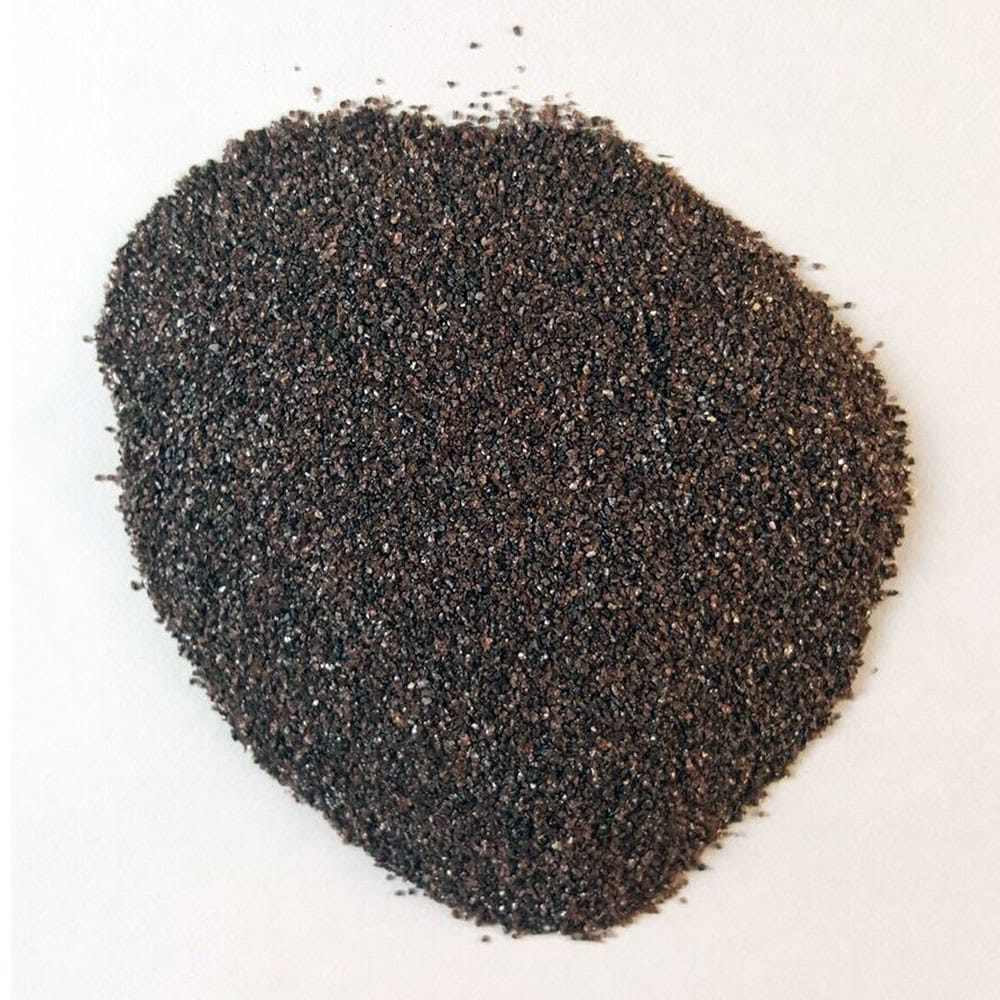
Walnut Shell Blasting Abrasive
The organic, biodegradable abrasive for delicate substrates. Walnut shell removes coatings, carbon deposits, and light contamination from fibreglass, wood, aircraft composites, and soft alloys without etching or dimensional change — ideal wherever mineral abrasives would cause irreversible damage.
What Is Walnut Shell Blasting Abrasive?
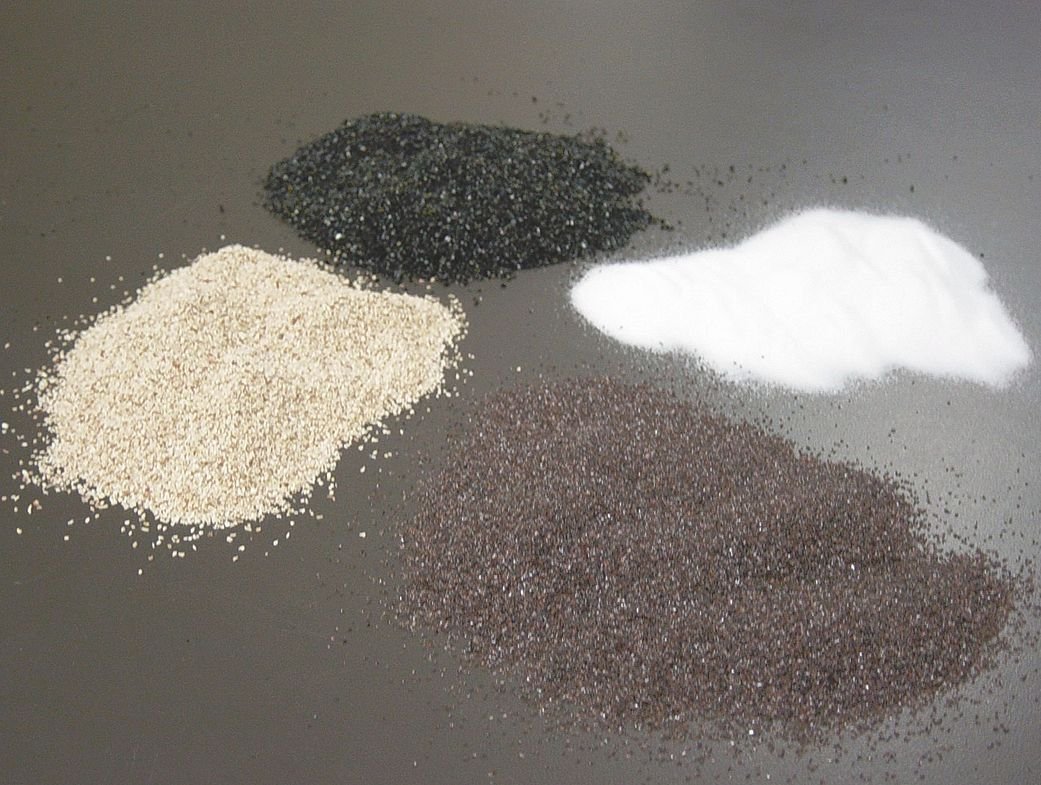
Walnut shell abrasive is produced by crushing and classifying the hard inner shells of black walnuts (Juglans nigra) into precise grit sizes for use in soft blasting applications. It is one of a family of organic, biodegradable abrasives that also includes corn cob, peach pit, and apricot shell — all sharing the characteristic of being significantly softer than any mineral abrasive, while still being harder and more effective than air cleaning or brushing alone.
With a Mohs hardness of 2.5–4 — comparable to calcite and softer than glass — walnut shell cannot etch or profile metals in the way that aluminum oxide, garnet, or steel grit do. Instead, it removes adhered surface contamination (paint, carbon deposits, rust bloom, light corrosion, adhesive residue) through repeated kinetic impact without cutting into the substrate beneath. This makes it uniquely suited for stripping paint from fibreglass boats, cleaning engine parts without removing base metal, decoating wooden aircraft components, and removing carbon deposits from turbine blades without altering their aerodynamic profile.
Walnut shell is also the standard abrasive for cleaning sensitive mould cavities in plastics manufacturing, where any residual mineral abrasive contamination would transfer to the finished part surface.
Technical Specifications
| Property | Value |
|---|---|
| Source Material | Black walnut (Juglans nigra) shell |
| Твердость по Моосу | 2.5–4.0 |
| Удельная плотность | 1.2–1.4 g/cm³ |
| Shape | Sub-angular, irregular |
| Profile Depth | Negligible (<0.3 mil) |
| Free Silica | Нет |
| Biodegradable | Yes — USDA biopreferred |
| Возможность вторичной переработки | 3–5 cycles in cabinet systems |
Walnut Shell Grades & Grit Sizes
| Grade | Mesh Range | Приложение |
|---|---|---|
| Coarse | 8–20 mesh | Heavy paint removal from fibreglass hulls, log home cleaning, heavy carbon deposits |
| Medium | 20–40 mesh | General paint stripping on automotive composites, engine parts cleaning |
| Fine | 40–80 mesh | Turbine blade carbon removal, precision mould cleaning, aircraft composite stripping |
| Very Fine | 80–150 mesh | Jewellery cleaning, electronics deburring, gentle surface activation |
Key Applications
Fibreglass & Composite Boat Hulls
Removing antifouling paint from fibreglass boat hulls without damaging the gelcoat beneath is one of walnut shell’s most important applications. Mineral abrasives at any practical pressure will abrade through the gelcoat; walnut shell removes the paint coating while leaving the substrate intact.
Aircraft Composite Stripping
Removing primer and topcoat from fibreglass and carbon fibre composite aircraft structures without fibre exposure or delamination. Walnut shell fine grade (40–80 mesh) is used in paint stripping booths to strip composite fairings, radomes, and secondary structures. For aluminium aircraft skin, see plastic blast media.
Wood & Timber Cleaning
Walnut shell is the preferred media for cleaning weathered log homes, deck boards, and timber structures — opening the wood grain, removing grey weathered fibres, and stripping old stain without raising excessive wood fibres or causing grain damage. See the wood surface blasting guide.
Engine & Turbine Carbon Removal
Walnut shell fine grade removes baked-on carbon deposits from engine intake manifolds, cylinder heads, turbine blades, and exhaust components without damaging precision-machined surfaces, hardened coatings, or sealing faces. A critical maintenance procedure in aviation MRO and performance engine rebuilding.
Pros & Cons
Преимущества
- Softest commercial blasting abrasive — will not etch or damage soft substrates
- Biodegradable and USDA biopreferred — minimal environmental disposal concerns
- No free silica, no heavy metals — OSHA and EU compliant
- Leaves no embedded media in soft substrates (aluminium, fibreglass)
- Available in wide grit range for precise finish control
Ограничения
- Cannot profile hard metals — unsuitable for coating adhesion preparation on steel
- Low recyclability (3–5 cycles) — relatively high media consumption rate
- Absorbs moisture — requires dry storage to prevent clumping and performance degradation
- Slower than mineral abrasives on heavily contaminated surfaces
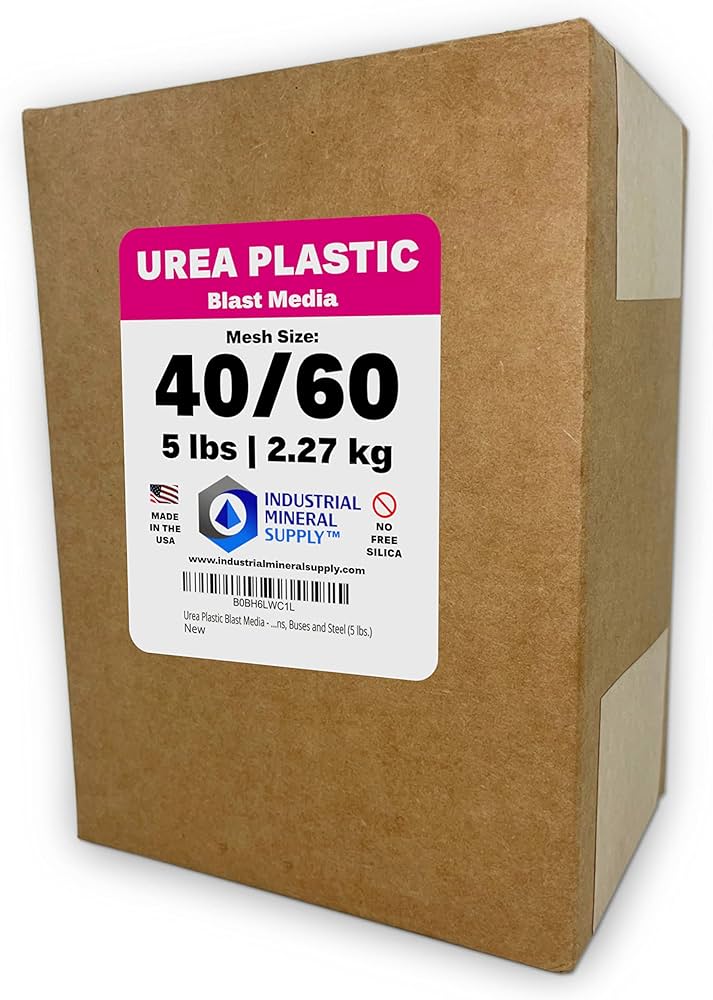
Walnut Shell vs Plastic Blast Media
Both walnut shell and plastic blast media occupy the “soft blasting” category, but serve different applications. Walnut shell (Mohs 2.5–4) is slightly harder than plastic media (Mohs 2–3.5), makes it marginally more effective on organic contamination like carbon deposits, and is biodegradable — a significant advantage in terms of disposal. Plastic blast media is more consistent in particle geometry and is the aerospace industry’s preferred choice for aluminium aircraft skin stripping because its precisely controlled hardness and density produces a more predictable, uniform stripping result on thin-gauge aluminium. For full details on plastic media, see the Plastic Blast Media guide.
ЧАСТО ЗАДАВАЕМЫЕ ВОПРОСЫ
Walnut shell itself is a natural, food-derived material with no toxic components. However, blasting use introduces contamination from the substrate being cleaned (paint, oil, rust) into the spent media. Spent walnut shell from industrial blasting applications should not be classified as food-safe. For cleaning food processing equipment with a media that leaves no residue, sodium bicarbonate (soda blast) is the preferred option.
Walnut shell can remove light surface rust (rust bloom, flash rust) from metal but cannot remove heavy rust, mill scale, or tightly adhered corrosion products. For rust removal with subsequent coating, a harder abrasive that also profiles the surface — such as оксид алюминия или гранат — is required to meet any recognised surface cleanliness standard (SSPC-SP 6 or above).
Source Walnut Shell Blasting Abrasive from Jiangsu Henglihong Technology
Coarse through very fine grades in 25 kg bags and bulk packaging. USDA biopreferred organic abrasive for sensitive substrate applications. Export to 40+ countries.
Фильтры