Steel Grit vs Steel Shot: Which Is Right for Your Operation?
A complete technical comparison of the two steel abrasive media types — angular grit for deep anchor profiles vs spherical shot for peening and scale removal — covering hardness grades, SAE size designations, profile depths, applications, and per-cycle economics.
Steel Abrasives — The Foundation of High-Volume Industrial Blasting
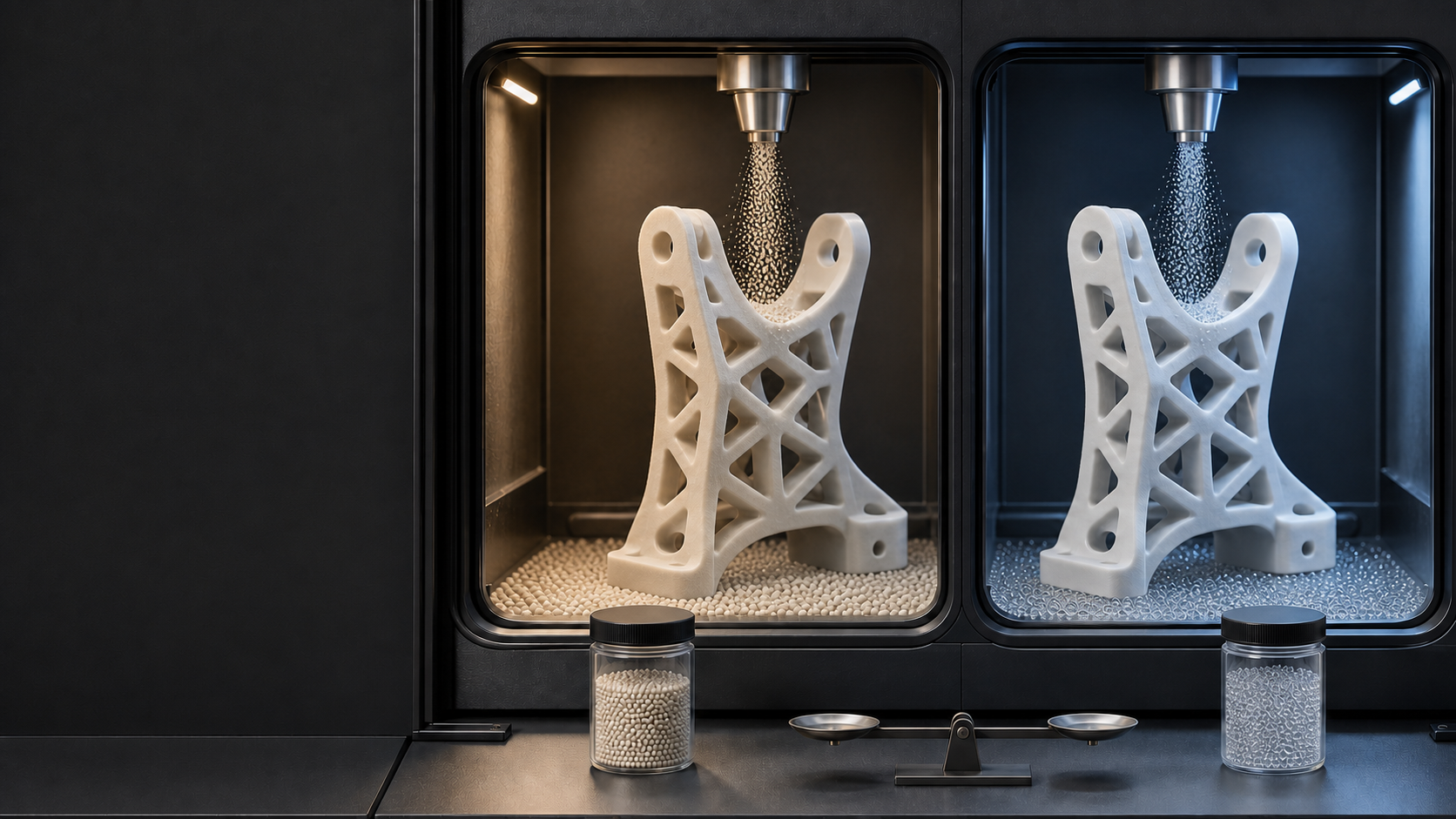
Steel abrasives — steel grit and steel shot — are the dominant blast media for high-volume production blasting in industries where the substrate is always carbon or alloy steel and throughput economics are the primary driver. At 100 or more blast cycles per media charge, their per-cycle cost is lower than any other abrasive by a wide margin. Their density (approximately 7.6 g/cm³) delivers higher kinetic energy at the blast surface than lighter mineral or synthetic abrasives, producing faster cleaning rates and more aggressive surface conditioning.
The critical decision for any steel abrasive user is not whether to use steel — in wheel blast production lines, it is almost always the right answer — but which steel abrasive to use. Стальная крошка и стальная дробь are manufactured from the same base material but have fundamentally different particle geometries, hardness grades, and surface action mechanisms. Choosing the wrong type for your application produces either inadequate surface profiles (shot used where grit is needed) or unnecessary substrate surface stress (grit where shot is sufficient).
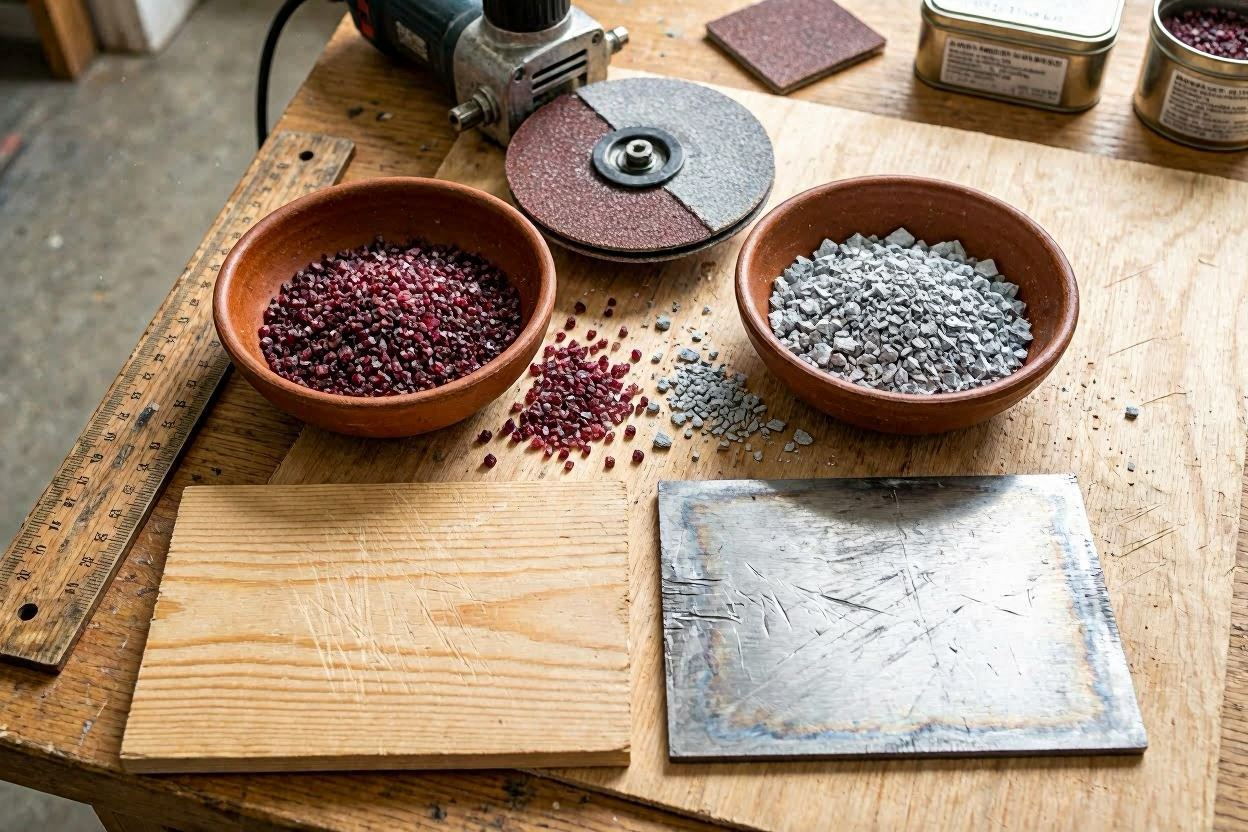
This page provides a complete technical comparison. For a broader overview of all blast media types including non-steel options, see our Abrasive Media Comparison Chart or our media selection guide.
Steel Grit vs Steel Shot — The Core Difference
- Manufactured by crushing steel shot and classifying the angular fragments
- Форма частиц: irregular, angular — sharp edges and points
- Surface action: cuts into the substrate like a chisel — creates peaks and valleys
- Результат: deep anchor profile (2.5–5.0 mil) required by high-build industrial coatings
- Твердость: HRC 55–66 (high-hardness grade) — harder than most substrates
- Primary application: coating adhesion preparation on structural steel, pipe, plate, and castings
- Возможность вторичной переработки: 100+ cycles in wheel blast system with reclaim
- Manufactured by atomising molten steel and solidifying droplets into spheres
- Форма частиц: round, spherical — smooth surface, no cutting edges
- Surface action: hammers the substrate like a ball-peen — compresses surface
- Результат: smooth dimpled texture with compressive residual stress layer (0.5–1.5 mil profile)
- Твердость: HRC 40–51 (standard grade) — tough rather than hard
- Primary applications: дробеструйное упрочнение for fatigue life, mill scale removal, descaling
- Возможность вторичной переработки: 100+ cycles in wheel blast system with reclaim
If you need a rough anchor profile to bond an industrial coating to steel, use стальная крошка. If you need to clean scale, strengthen a part against fatigue, or produce a smooth surface on carbon steel without a profile, use стальная дробь. Many high-volume operations run both in blended or sequential passes.
Full Technical Specification Comparison
| Параметр | Стальная крошка | Стальной выстрел |
|---|---|---|
| Manufacturing method | Crush & classify hardened steel shot | Atomise molten steel; spheroidise by surface tension |
| Форма частиц | Angular, irregular, sharp-edged | Spherical, smooth surface |
| Surface action | Cuts / shears into substrate (profiling) | Peens / compresses substrate surface |
| Hardness (standard grade) | HRC 55–60 | HRC 40–51 |
| Hardness (high-hardness grade) | HRC 60–66 | HRC 54–62 (conditioned shot) |
| True density (g/cm³) | ~7.6 (both types) | |
| SAE size range | G10 – G120 (coarse to fine) | S70 – S780 (fine to coarse) |
| Typical profile depth | 2.5 – 5.0 mil | 0.5 – 1.5 mil |
| SSPC cleanliness achievable | SP5 White Metal / SP10 Near-White | SP6 Commercial / SP10 (with adequate coverage) |
| Compressive residual stress | Low (cutting action introduces tensile) | High — key engineering benefit |
| Возможность вторичной переработки | 100+ cycles in wheel blast (both types) | |
| Per-cycle cost | Very low — lowest of any blast media at production scale | |
| Compatible equipment | Centrifugal wheel blast exclusively (both types) | |
| Suitable for stainless steel | No — iron contamination risk for both | |
| Suitable for aluminium / composites | No — both too heavy/aggressive for light alloys | |
| Applicable standards | SAE J1993 · ISO 11124-2 | SAE J827 · ISO 11124-3 |
Hardness Grades Explained
Both steel grit and steel shot are produced in multiple hardness grades, designated by Rockwell C (HRC) range. The hardness grade determines the balance between cutting aggressiveness, fracture resistance, and recyclability — and the correct choice depends on the substrate hardness, desired profile depth, and operating parameters of your wheel blast system.
Steel Grit Hardness Grades
| Grade | HRC Range | Typical Profile | Best Application |
|---|---|---|---|
| GL — Low Hardness | 40 – 51 | 2.0 – 3.0 mil | Softer substrates; longer media life priority; ductile iron castings |
| GM — Medium Hardness | 47 – 56 | 2.5 – 3.5 mil | General structural steel; standard industrial fabrication; most common grade |
| GH — High Hardness | 55 – 66 | 3.0 – 5.0 mil | Maximum profile for thick epoxy, thermal spray, or cathodic protection coating systems |
Steel Shot Hardness Grades
| Grade | HRC Range | Almen Intensity | Best Application |
|---|---|---|---|
| SL — Low Hardness | 40 – 51 | Low — A4–A10 | Mill scale and light rust removal; pipeline internal cleaning; general descaling |
| SH — High Hardness | 54 – 62 | Medium — A8–A20 | Shot peening for fatigue life improvement; harder substrate cleaning; automotive spring peening |
In steel abrasives, higher hardness increases cutting aggressiveness and profile depth but reduces media toughness — harder particles are more brittle and fracture faster under repeated impact. High-hardness steel grit (GH, HRC 60–66) will wear out faster than medium-hardness grit (GM) in the same wheel blast system, increasing media consumption and per-cycle cost. Choose the softest grade that achieves the required surface profile.
SAE Size Designations — Reading the Numbers
Steel abrasives use SAE (Society of Automotive Engineers) size designations rather than mesh or grit numbers. The numbering conventions differ between grit and shot in a way that frequently causes confusion:
- For steel grit (G-series): higher numbers = smaller particles. G10 is coarse; G120 is fine. This is the same convention as mineral abrasive grit numbers.
- For steel shot (S-series): higher numbers = larger particles. S70 is small; S780 is large. This is the opposite convention and is a frequent source of specification errors.
| SAE Size | Nominal Diameter (mm) | Typical Profile | Primary Use |
|---|---|---|---|
| G10 | 2.0 | 4.0–5.0+ mil | Maximum profile, very heavy scale |
| G14 | 1.7 | 3.5–4.5 mil | Heavy structural prep, thick coatings |
| G18 | 1.4 | 3.0–4.0 mil | Standard structural steel, bridges |
| G25 | 1.0 | 2.5–3.5 mil | General fabrication, pipe coating |
| G40 | 0.71 | 2.0–3.0 mil | Standard industrial — most common |
| G50 | 0.60 | 1.8–2.5 mil | Medium profile, standard epoxy prep |
| G80 | 0.43 | 1.5–2.0 mil | Fine profile, precision fabrication |
| G120 | 0.30 | 1.0–1.5 mil | Fine cleaning, thin coating systems |
| SAE Size | Nominal Diameter (mm) | Almen Intensity | Primary Use |
|---|---|---|---|
| S70 | 0.18 | Very low | Fine peening, small precision parts |
| S110 | 0.28 | Low — A4–A8 | Light scale removal, small components |
| S170 | 0.43 | Low-medium | General descaling, light peening |
| S230 | 0.58 | Medium — A8–A14 | Standard production peening — most common |
| S280 | 0.71 | Medium-high | Automotive springs, gears, general peening |
| S330 | 0.84 | High — A14–A20 | Heavy peening, large structural components |
| S460 | 1.17 | Very high | Large casting descaling, heavy forgings |
| S780 | 2.0 | Maximum | Maximum peening intensity, very large parts |
Surface Profile by Size & Type
The profile depth comparison below visualises the typical anchor profile range for key grit sizes (which produce profile) alongside the much shallower peening texture from equivalent shot sizes. Note the fundamental difference in range — grit creates the rough, coating-ready surface; shot creates the smooth, stress-compressed surface.
Profile Depth Range — Steel Grit (GH grade) vs Steel Shot (SL grade)
Applications: When to Choose Steel Grit vs Steel Shot
Structural Steel Fabrication (Grit)
Beams, columns, plate, and structural profiles for construction and industrial use require SSPC-SP10 or SP5 cleanliness with 2.0–3.5 mil anchor profile before zinc-rich primer or epoxy coating application. Steel grit G25–G40 in a wheel blast machine is the industry standard process for fabrication shop priming lines.
Grit: G25–G40 GM/GH grade · 2.0–3.5 mil profilePipe & Tube Coating Prep (Grit)
External pipe coating lines for FBE (fusion bonded epoxy), 3LPE, and liquid epoxy systems process pipe through automatic wheel blast machines using steel grit. The continuous, high-throughput process demands the recyclability and consistent profile that only steel grit delivers at acceptable per-unit economics.
Grit: G40–G50 GM grade · 2.0–2.5 mil · SSPC-SP10Casting Cleaning & Deflashing (Grit)
Iron and steel castings exit the foundry with sand, scale, and flash that must be removed before machining or coating. Tumble blast and spinner hanger machines using steel grit efficiently strip casting surface without the dimensional risk of manual grinding, at throughputs impossible with any manual process.
Grit: G18–G40 GM grade · Tumble blast or spinner hangerAutomotive Shot Peening (Shot)
Transmission gears, crankshafts, connecting rods, coil springs, and leaf springs are all routinely shot peened to extend fatigue life. Steel shot S230–S330 in production wheel blast machines delivers the Almen intensity and surface coverage required by automotive engineering specifications at the cycle times demanded by production volumes.
Shot: S230–S330 SL/SH · Almen A8–A20 · 98% coveragePipeline Internal Cleaning (Shot)
Pipeline interiors require scale, mill lacquer, and moisture removal before internal coating application. Steel shot in a pipe internal blast spinner delivers uniform cleaning action without the risk of pipe wall perforation from angular grit, and produces the mild surface texture (0.5–1.0 mil) specified by most internal pipe coating systems.
Shot: S170–S230 SL grade · Internal pipe blast spinnerForging & Casting Descaling (Shot)
Hot forgings and castings develop thick oxide scale during thermal processing. Steel shot descaling in tumble blast or spinner hanger machines efficiently strips scale through peening action without causing the dimensional loss or stress concentration that aggressive angular grit can produce on precision-toleranced forged surfaces.
Shot: S330–S460 SL grade · Tumble blastBlended Operations (Grit + Shot)
Many production wheel blast systems run blended media — a mix of grit and shot in specified ratios — to achieve a profile that is intermediate between pure grit and pure shot. Blending allows fine-tuning of the anchor profile and surface appearance to hit coating specifications that neither pure grit nor pure shot achieves on its own.
Common blend: 70% shot S230 + 30% grit G40 · 1.5–2.0 mil profileAerospace Fatigue-Critical Components (Shot)
Landing gear, wing attachment fittings, turbine disk attachment areas, and high-cycle fatigue-critical structural components on commercial and military aircraft are often specified for steel shot peening per AMS 2430 or MIL-S-13165. The compressive residual stress layer produced extends fatigue life by 50–300% in controlled testing on high-strength steel alloys.
Shot: S110–S230 SH grade · AMS 2430 · Almen intensity per drawingQuick Decision Matrix
Cost & Economics
Steel abrasives have the highest purchase cost per kilogram of any standard blast media, and the lowest cost per square meter of surface processed of any blast media. This apparent paradox is resolved by the 100+ cycle recyclability in a wheel blast system with reclaim — the economics of steel abrasives only make sense at production scale with a proper wheel blast machine and reclaim system. In a pressure pot or suction cabinet without reclaim, steel abrasives lose their economic advantage entirely.
🔷 Steel Grit — Cost Profile
⚪ Steel Shot — Cost Profile
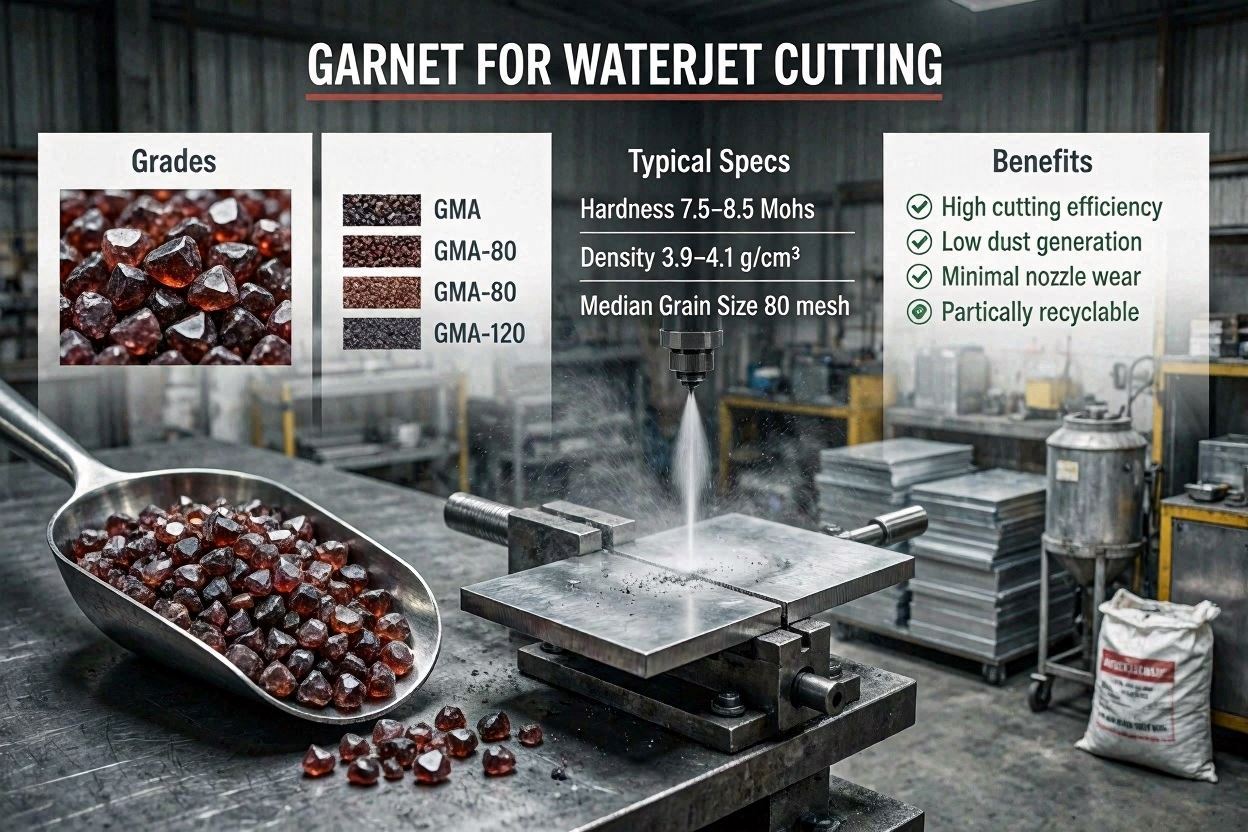
If you are considering steel grit or shot for use in a pressure blast pot or suction cabinet without a reclaim system, the economics do not favour steel abrasives. At single-use or low-cycle operation, оксид алюминия или гранат deliver better value. Steel abrasives justify their premium only in continuous-production wheel blast operations where the reclaim system recovers and recycles the media charge across hundreds of cycles.
Equipment Compatibility — Wheel Blast Only
Both steel grit and steel shot are exclusively compatible with centrifugal wheel blast machines. They are not suitable for use in pressure blast pots, suction blast cabinets, or wet blast systems. This is a hard constraint, not a preference.
Centrifugal wheel blast machines use a high-speed spinning impeller wheel to accelerate abrasive particles to velocities of 60–80 m/s through centrifugal force. The wheel and impeller components are engineered for the density, hardness, and impact characteristics of steel abrasives. Running mineral media (aluminum oxide, garnet) through a wheel blast machine causes rapid impeller wear and is not a viable substitution.
Key wheel blast equipment parameters for steel abrasives
- Wheel speed: 2,200–3,000 RPM typical — produces 60–80 m/s particle velocity
- Media flow rate: 120–450 kg/min depending on machine size and application
- Impeller material: Hardened high-chromium white iron or manganese steel — must be matched to abrasive hardness
- Reclaim system: Bucket elevator, screw conveyor, air wash separator, and screen classifier are all required components for steel abrasive reclaim
- Media charge volume: Typically 300–2,000 kg working charge depending on machine throughput
While small quantities of steel shot (not grit) can technically be used in large-diameter pressure blast nozzles, this is not a standard or recommended application. The density of steel abrasives causes rapid nozzle and hose wear at blast pressures, and the economics without a reclaim system are unfavourable. If you are operating pressure blast equipment, use aluminum oxide or garnet instead.
Safety & Regulatory Compliance
OSHA Crystalline Silica Compliance
Both steel grit and steel shot contain no crystalline silica and are fully compliant with OSHA’s crystalline silica standard (29 CFR 1910.1053 and 1926.1153). The primary airborne hazard during wheel blast operation is metallic dust from the substrate material and, if blasting old coated steel, potential heavy metal contamination from lead-based or chromate-containing paint systems. Respiratory protection requirements are governed by the substrate contamination profile, not the steel abrasive composition.
Iron Contamination of Sensitive Substrates
Steel abrasives must never be used on stainless steel, aluminium, titanium, magnesium, or composite substrates. The iron particles from steel abrasives embed in the surface of these materials and initiate corrosion at the contamination sites — a failure mode that may not be visible at the time of blasting but manifests as surface rusting or coating delamination in service. For non-ferrous substrates, specify white fused alumina or стеклянные бусины.
Required PPE
- Wheel blast operation (automated): Interlocked access doors prevent entry during blasting; standard industrial PPE during loading/unloading only
- Manual blast operations using steel media: Supplied-air respirator (NIOSH Type CE), blast helmet, full blast suit, hearing protection, steel-toed boots
For full safety and compliance guidance see our Abrasive Media Safety Guide: OSHA Standards & PPE Requirements.
Ordering Steel Grit & Steel Shot from Jiangsu Henglihong Technology
All Henglihong steel abrasives are manufactured to SAE, ISO, and GB/T standards with batch hardness testing and particle size distribution certification. Our production line covers the full range of GL, GM, and GH grit grades and SL/SH shot grades across all SAE sizes, with mixed size and blended media orders available for wheel blast operators requiring specific working charge specifications.
For wheel blast system commissioning support, media working charge specification, or troubleshooting guidance on surface profile consistency, our technical team provides application engineering support at no charge for new accounts.
Часто задаваемые вопросы
What is the difference between steel grit and steel shot?
Steel grit is angular (made by crushing steel shot) and cuts into the surface, creating a deep anchor profile of 2.5–5.0 mil required for industrial coating adhesion. Steel shot is spherical (made by atomising molten steel) and peens the surface, creating a shallow compressive texture of 0.5–1.5 mil that improves fatigue resistance without building a coating profile. Both are used exclusively in centrifugal wheel blast machines and recycle 100+ times. Choose grit for coating preparation; choose shot for peening, descaling, and cleaning without profile.
What do the SAE size numbers mean for steel grit and steel shot?
For steel grit (G-series): higher numbers mean smaller, finer particles. G10 is coarse (2.0 mm); G120 is fine (0.30 mm). For steel shot (S-series): higher numbers mean larger particles — the opposite convention. S70 is small (0.18 mm); S780 is large (2.0 mm). This difference in convention is a common source of specification errors. Always confirm particle size in millimetres against the relevant SAE or ISO standard rather than relying solely on the designation number.
Can I use steel grit or shot in a pressure blast pot?
Not in any standard or recommended application. Steel grit and steel shot are designed for centrifugal wheel blast machines. Their high density (~7.6 g/cm³) causes rapid nozzle wear in pressure blast systems, and without a reclaim system, the economics are unfavourable compared to mineral alternatives. For pressure blast and suction blast applications requiring aggressive profile creation, use aluminum oxide. For low-dust or marine applications, use garnet. Reserve steel abrasives for wheel blast production lines with a full reclaim system.
What hardness grade of steel grit should I use?
For most general structural steel fabrication requiring a 2.0–3.0 mil anchor profile, GM grade (HRC 47–56) is the standard and most cost-effective choice — it balances cutting aggressiveness with media longevity. Use GH grade (HRC 55–66) when your coating specification requires profiles above 3.0 mil, such as for high-build epoxy, thermal spray, or cathodic protection systems. Use GL grade (HRC 40–51) for softer substrates or when maximum media life is the priority in low-profile applications.
How do I calculate how much steel abrasive I need?
For an initial wheel blast system working charge: most machines specify an operating media charge weight in their documentation, typically 300–2,000 kg depending on machine size. For ongoing consumption, plan for 5–10% replenishment per cycle to compensate for particle fracture and system losses. For a new installation, order the full initial charge plus 3 months of anticipated replenishment. Contact our technical sales team with your machine make, model, and estimated monthly throughput for a specific quantity recommendation.
Can steel grit or shot be used on stainless steel?
No. Both steel grit and steel shot contain iron, and iron particles embed in stainless steel surfaces on impact, creating corrosion initiation sites that compromise the stainless passivation layer. This contamination may not be immediately visible but manifests as surface rusting or coating delamination in service. For stainless steel surface preparation, specify white fused alumina (WFA) at the appropriate grit size, or glass beads for finishing applications. See our media selection guide for full substrate compatibility guidance.
Ready to Order Steel Grit or Steel Shot?
Full range of GL/GM/GH grit grades and SL/SH shot grades across all SAE sizes — 25 kg bags to full container loads. Hardness certification and SAE size analysis included with every shipment.
Request a Quote View All Abrasive Media Products →Фильтры