Pumping Ceramic Glazes and Mass Finishing Compounds: The Right Pump for Fine Abrasive Slurries
Ceramic glaze compounds and mass finishing slurries present a pumping challenge that is fundamentally different from the high-volume, coarse-particle applications that dominate most abrasive pump literature. The particles are fine—typically sub-500 micron—and the carrier fluid contains organic compounds, colorants, or burnishing agents that cannot be contaminated by metal pump components. Yet these fine particles are often hard (feldspar, quartz, zirconia, alumina are common glaze ingredients) and occur at concentrations sufficient to cause meaningful pump wear over time. The combination of fine particles, product purity requirements, and variable viscosity (many glazes are thixotropic) makes pump selection genuinely non-obvious.
For the full pump selection framework, see: Pumps for Abrasive Media: The Complete Selection & Buying Guide.
1. Ceramic Glaze and Mass Finishing Slurry Characteristics
Ceramic glazes are water-based suspensions of mineral particles—typically feldspar (Mohs 6), silica (Mohs 7), kaolin (Mohs 2–3), alumina (Mohs 9), and various colorant oxides—in carefully controlled proportions with organic binders, deflocculants, and water. Specific gravity ranges from 1.4 to 1.8 g/cm³ (40–65% solids by weight in many application glazes). Many glazes are thixotropic—they exhibit high apparent viscosity at rest but thin significantly when stirred or pumped.
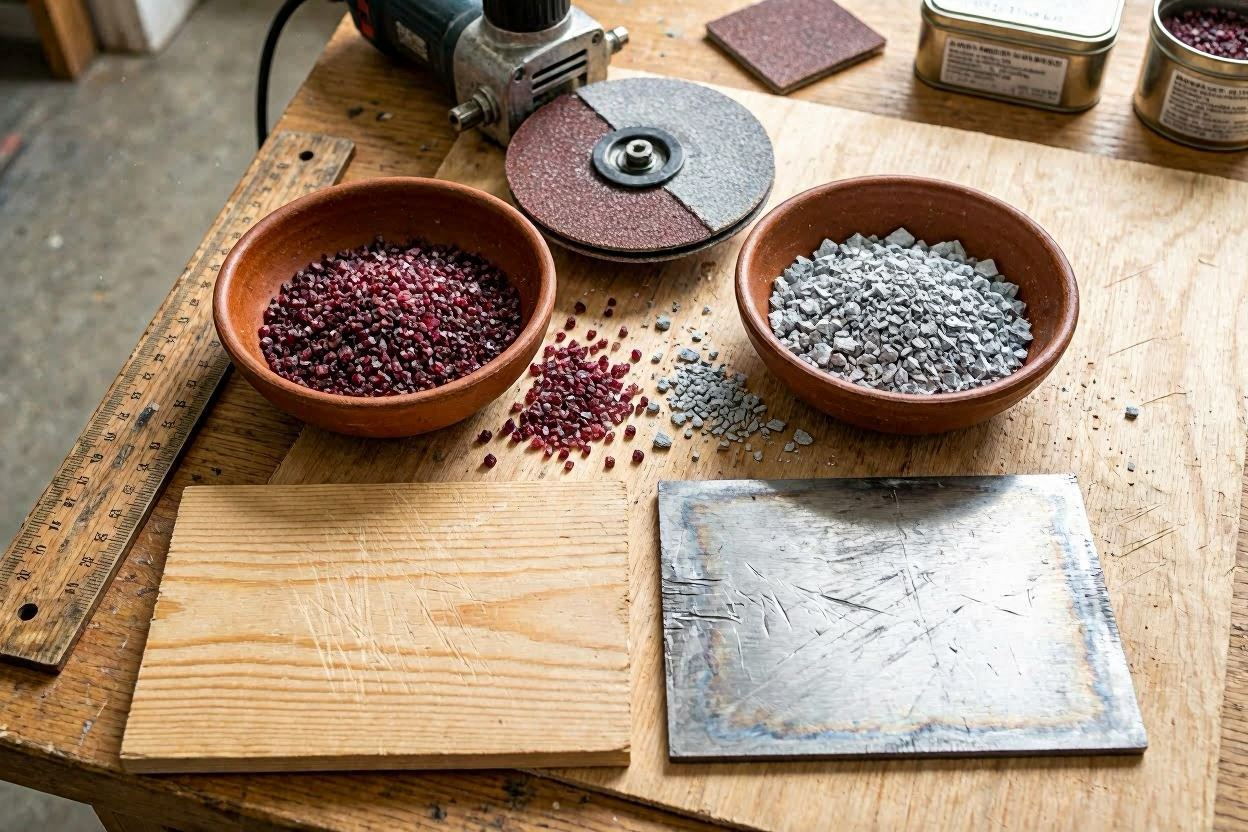
Mass finishing compounds—used in barrel tumbling, vibratory finishing, and centrifugal disc finishing to burnish, deburr, or clean metal and plastic components—consist of abrasive ceramic media (alumina or SiC chips, Mohs 9), water, surfactants, and corrosion inhibitors. The abrasive ceramic chips are coarser than glaze particles (typically 0.5–5 mm), moderately concentrated (15–30% v/v), and highly abrasive.
The critical distinction between the two: ceramic glazes require contamination-free pumping (metal contamination affects glaze color and surface quality); mass finishing compounds have coarser, harder particles that require more robust pump wear resistance.
2. Unique Pumping Challenges
- Thixotropy — viscosity depends on shear rate: Many ceramic glazes have apparent viscosities of 500–5,000 cP at rest but thin to 100–500 cP under pump shear. This means the pump must be capable of starting against the high static viscosity while operating efficiently at the lower dynamic viscosity. Centrifugal pumps may not be capable of starting against the high static viscosity of resting glaze; positive displacement pumps start effectively regardless of static viscosity.
- Particle settling: Fine-particle glazes settle rapidly when flow stops. If a pump is shut down without flushing, glaze settles in the pump body and solidifies during extended idle periods, potentially causing blockage on restart. This requires careful startup procedures and ideally a clean-water flush at every planned shutdown.
- Hard particle contamination: Even in nominally “soft” glaze formulations, occasional hard particle inclusions (quartz or feldspar grinding media fragments) at Mohs 7+ can cause disproportionate pump wear. A suction strainer is essential.
- Color contamination from metal pump components: Iron oxides from corroding or abrading metal pump components can contaminate white or light-colored glazes, causing color defects in fired ware. PVDF, polypropylene, or peristaltic pumps (where no metal contacts the glaze) are typically required for white and pastel glaze applications.
- Precise metering requirements: In automated glaze application systems (spray booths, curtain coaters, disc coaters), glaze flow rate must be precisely controlled to achieve consistent coating thickness. Pulsating flow from AODD pumps can cause glaze thickness variation unless a pulse dampener is installed.
3. Recommended Pump Types
AODD Pumps (Polypropylene or PVDF Body)
AODD pumps in polypropylene or PVDF construction are the most widely used pump type for ceramic glaze and mass finishing compound transfer. They are self-priming, handle variable viscosity well, tolerate the particle content of both applications, can be reversed for back-flushing, and require no electricity (useful in humid kiln-room environments where electrical safety is a concern). For white and light-colored glazes, PVDF body pumps avoid iron contamination. The primary limitation is pulsating flow — a pulse dampener is recommended for precision metering applications.
Peristaltic Pumps
Peristaltic pumps are the preferred choice for precision glaze metering in automated application systems. Their positive displacement, pulsation-reduced design (with appropriate dampener) delivers consistent flow per revolution, allowing accurate coating thickness control. Zero metal contact eliminates contamination risk. Hose materials are available in configurations compatible with glaze chemistry (natural rubber, EPDM). The main limitation is lower maximum flow rate compared to AODD for bulk transfer applications.
Progressive Cavity Pumps
For high-viscosity ceramic compounds and slip casting slurries where smooth, pulsation-free flow is essential and glaze viscosity is consistently high (above approximately 500 cP at operating shear rate), progressive cavity pumps provide the best performance. They handle the thixotropic nature of ceramic slip naturally and deliver metered, consistent output. Specify a food-grade or ceramic-compatible stator elastomer where product contamination is a concern.
Avoid Gear PumpsGear pumps are sometimes considered for glaze transfer because they are familiar in fluid handling applications. They are not suitable for ceramic glaze — the abrasive hard mineral particles in the glaze rapidly wear the tight gear-tooth-to-casing clearances, causing dramatic loss of volumetric efficiency within hours of operation. See our detailed assessment: Are Gear Pumps Suitable for Abrasive Liquids?
4. Selection Parameters Specific to Ceramic and Mass Finishing Applications
- Product purity requirement: White or light glazes → PVDF or PP body pump (no iron contact); standard glazes → polypropylene AODD adequate; mass finishing compounds → stainless or polymer body acceptable
- Viscosity at operating temperature and shear rate: Measure at the actual pump shear rate (not at rest) to determine whether centrifugal is viable or PD is required. Many glazes that appear very viscous at rest are pump-able with PD pumps without difficulty.
- Particle hardness: For feldspar/silica-based glazes (Mohs 6–7), rubber and polypropylene AODD components perform adequately at moderate concentrations. For alumina or zirconia-containing glazes (Mohs 9), peristaltic with appropriate hose material is recommended.
- Flow metering precision: If glaze application thickness must be controlled to ±5% or better, use peristaltic or PC pump. If bulk transfer only, AODD is simpler and less expensive.
- Flush capability: Specify reversible or flush-capable pump configurations. Ceramic glaze left standing in a pump hardens rapidly — the ability to reverse-flush with water at shutdown is critical for reliable operation.
5. Maintenance Considerations
- Mandatory end-of-shift flushing: Flush all glaze from the pump, hoses, and lines with clean water at every planned shutdown. Ceramic glaze that dries in a pump can form hard, adherent deposits that are very difficult to remove without disassembly.
- AODD ball check valve inspection (weekly): Glaze particles can build up on check valve ball seats, causing seating failure. Inspect weekly and clean any build-up promptly.
- Hose wear monitoring (peristaltic, monthly): Check hose for hardened glaze deposit on outer surface (indicates internal leakage through micro-cracking) and wall thinning.
- Strainer cleaning (daily): A fine mesh suction strainer (typically 2–5 mm opening) prevents hard glaze lumps and agglomerated particles from entering the pump. Clean at start of each shift.
For the full abrasive pump maintenance framework, see: Abrasive Media Pump Maintenance Guide.
Часто задаваемые вопросы
Certified Abrasive Media for Industrial Finishing Applications
Jiangsu Henglihong Technology Co., Ltd. supplies steel shot, stainless steel shot, glass beads, and aluminum cut wire shot for mass finishing, shot peening, and surface preparation applications — with documented particle size distribution and hardness to ensure consistent, predictable performance in your pump and finishing systems.
Request Finishing Media Quotation →Фильтры