Plastic Media vs Walnut Shell: Which Is Better?
Plastic blast media and walnut shell grit are the two most commonly considered “gentle” abrasives for stripping coatings from sensitive substrates — and the comparison between them comes up constantly among automotive restorers, aerospace maintenance technicians, mold cleaners, and anyone choosing between them for the first time. Both are softer than mineral abrasives. Both remove paint without the substrate damage risks of silica sand or aluminum oxide. Both can be used in standard pressure blast equipment. On the surface, they seem interchangeable.
They are not. The differences in hardness, moisture sensitivity, contamination behavior, regulatory classification, and reusability are significant enough that the correct choice for one application is definitively the wrong choice for another. Choosing walnut shell for an aerospace aluminum structure can introduce organic contamination that causes anodize adhesion failures. Choosing plastic media for a wet gun-barrel cleaning application wastes money on a media specification far beyond what the application requires. Getting this choice right matters — and this guide gives you the complete technical basis to make it correctly.
This comparison covers every dimension that separates these two media types: physical properties, blast performance characteristics, substrate compatibility, moisture behavior, cost and reusability economics, regulatory considerations, and specific application recommendations. The goal is not a generic “plastic media wins” conclusion but an honest, application-specific answer to the question operators actually face in practice.For a broader overview of the full plastic media category, see: What Is Plastic Media? The Complete Guide.
At a Glance: What Each Media Is
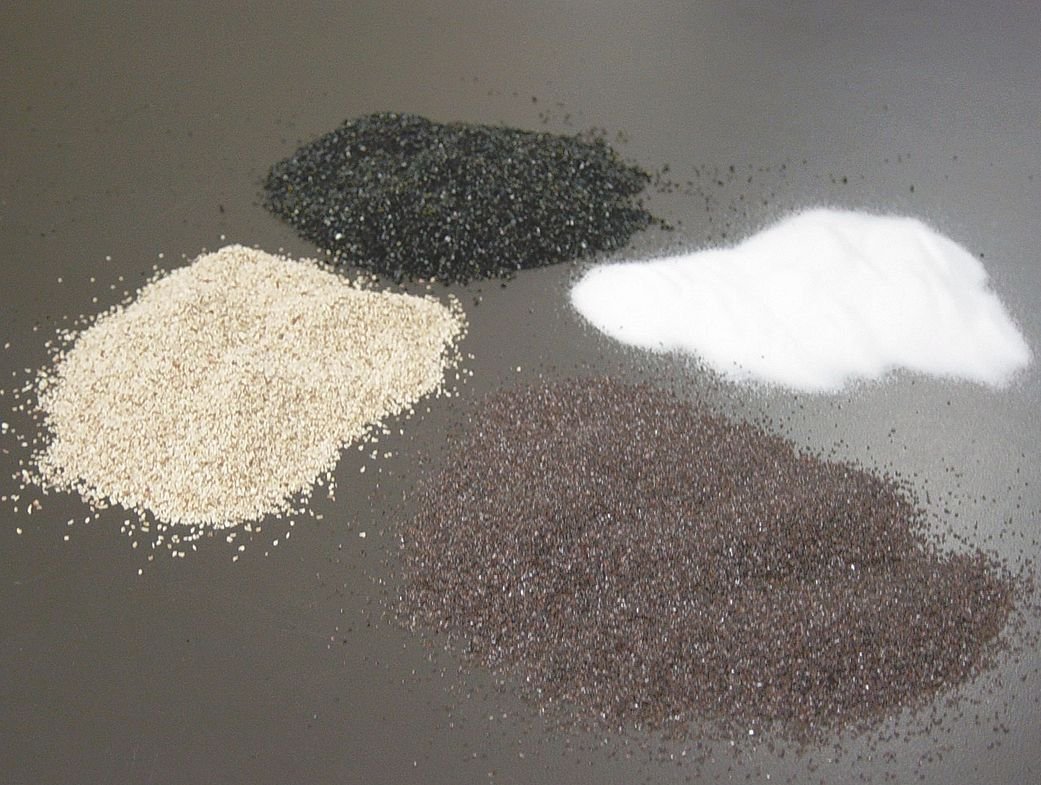
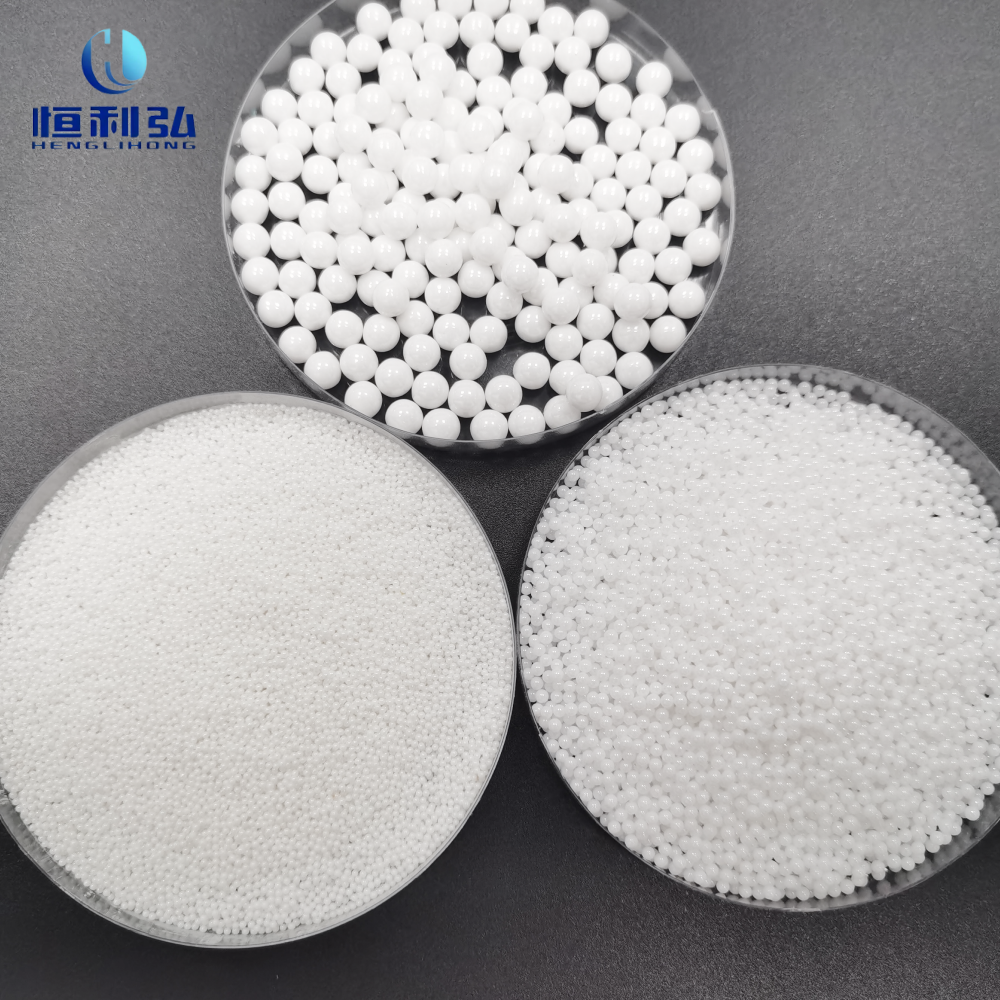
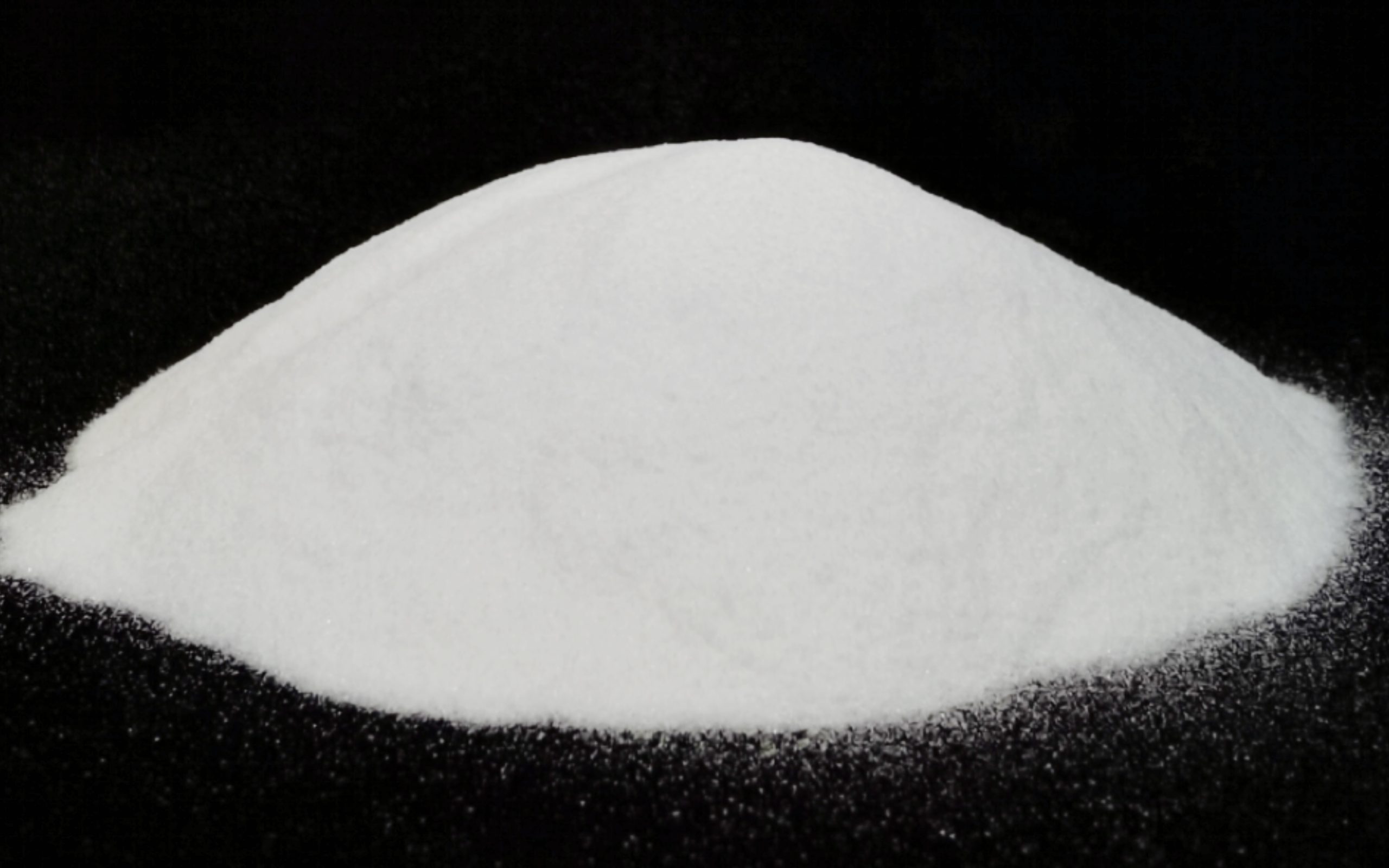
Plastic blast media is a precision-manufactured thermoset polymer abrasive produced in three primary chemistries: urea formaldehyde (Type II), melamine formaldehyde (Type III), and acrylic/PMMA (Type V). Each type is manufactured from controlled polymer feedstocks, ground or shaped to specified particle geometries, and classified to tight mesh tolerances. Physical properties — hardness, density, moisture content, pH — are tested and documented per MIL-P-85891A for aerospace and defense applications, and to equivalent commercial specifications for industrial use. The consistency of the manufactured product is its defining characteristic: every bag of Mesh 20 Type II urea from a qualified supplier has essentially the same particle size distribution, hardness, and chemical composition as the last.
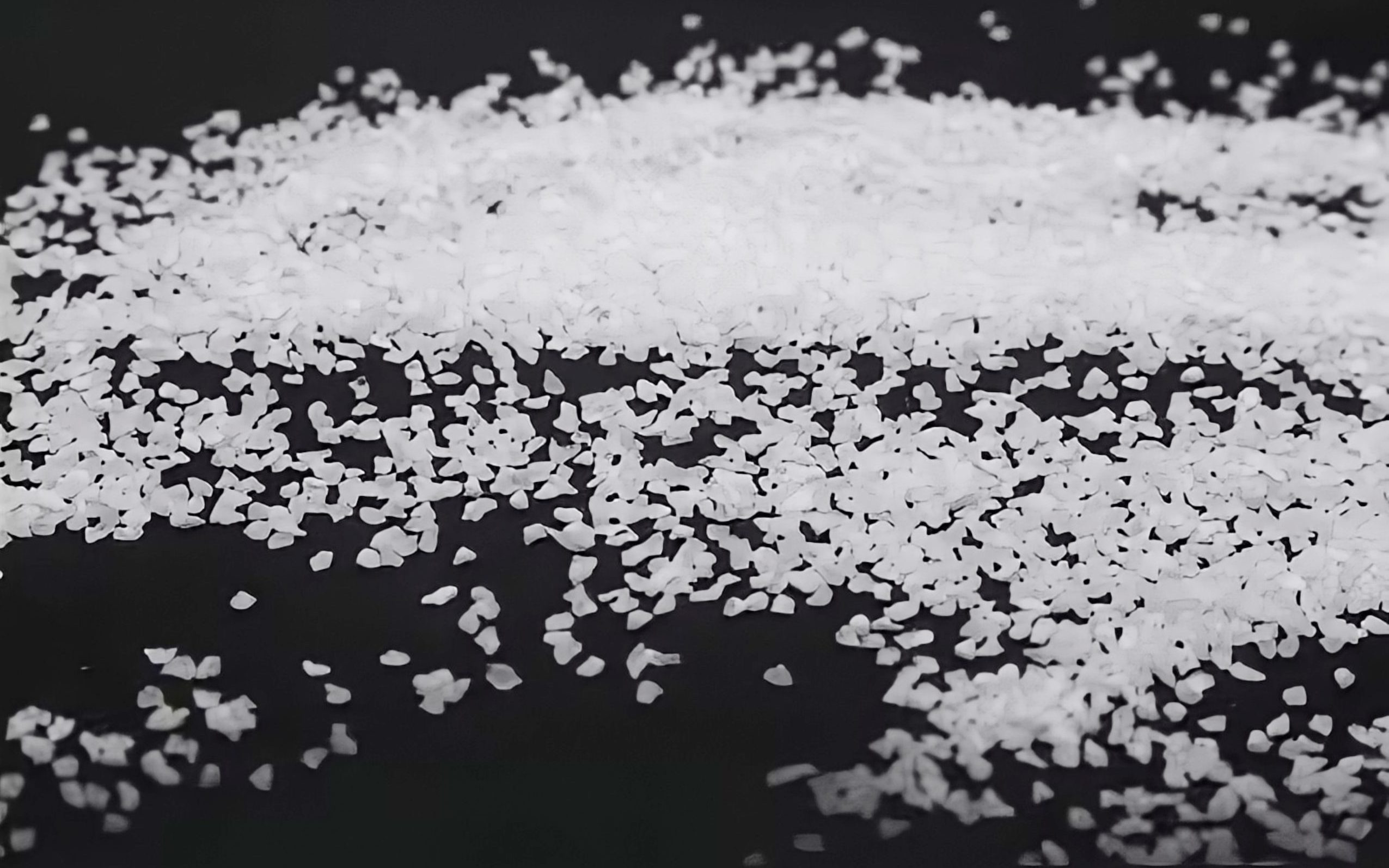
Walnut shell grit is produced by crushing, drying, and classifying the hard shells of English walnuts (Juglans regia). The shell is ground to angular particles, sized by screen classification to standard mesh grades (typically Mesh 8 through 40/50), and dried to controlled moisture content before packaging. Walnut shell is a naturally occurring organic material — its properties are fundamentally agricultural. Hardness, particle shape, and density are consistent within a species and grade, but less tightly controlled than engineered plastics. The product varies by growing region, harvest season, and processing quality.
Physical Properties Head-to-Head
Performance Comparison Across Key Dimensions
Substrate Compatibility: Where Each Excels and Fails
| Substrate | Пластиковые носители | Walnut Shell | Recommended Choice |
|---|---|---|---|
| Aluminum aircraft structure (2024, 6061, 7075) | ✅ Excellent — full aerospace process specification support; zero organic contamination; qualifiable per Almen strip test | ⚠️ Acceptable at low pressures but lacks MIL-spec traceability; tannin residue risks anodize adhesion issues; not approved in most aerospace process specs | Пластиковые носители |
| CFRP / composite aircraft structure | ✅ Type V acrylic is the only approved media for CFRP depainting in most aerospace NDI protocols | ❌ Not appropriate — insufficient specification control; organic contamination risk; no qualified aerospace process data for composite depainting | Plastic Media (Type V only) |
| Automotive steel body panels | ✅ Excellent — consistent parameters; clean substrate for primer; reclaim economical at production volume | ✅ Good — effective at moderate pressures; acceptable for hobby/restoration use where MIL-spec not required; lower initial cost | Пластиковые носители for production; walnut acceptable for occasional restoration |
| Injection molds and die casting tools | ✅ Excellent — Type V acrylic preserves polished cavity Ra; zero organic residue that could affect mold release or part surface | ❌ Not recommended — organic tannin residue in cavity; hardness variability affects Ra consistency; no established process qualification for mold cleaning | Plastic Media (Type V) |
| Firearms (external bluing removal, barrel cleaning) | ✅ Effective; zero contamination; good surface profile for re-bluing or Parkerizing | ✅ Traditional and effective for firearms cleaning; well-established in gunsmithing; gentle on external wood or synthetic stock components | Either — walnut shell has strong traditional application here; plastic media preferred for any subsequent regulated finish |
| Wooden surfaces (furniture stripping) | ⚠️ Works at very low pressures but can raise wood grain aggressively; no organic compatibility advantage | ✅ Better fit — organic-compatible; lower Mohs when moist (protective on soft wood); traditional media for wood refinishing | Walnut Shell |
| Painted brick / masonry | ⚠️ Too aggressive for soft brick; acceptable for dense concrete at higher pressures | ✅ Better for soft brick — lower effective hardness, especially when slightly moist; less substrate erosion risk on porous masonry | Walnut Shell for soft brick; plastic for dense masonry |
| Boat hull (fiberglass) | ✅ Excellent — consistent results; clean surface for gelcoat or antifouling | ✅ Acceptable — effective for antifouling paint removal; lower cost per square foot; tannin residue from walnut must be washed before gelcoat application | Пластиковые носители preferred; walnut shell acceptable if thorough post-blast wash is performed |
| Electronics / IC packages | ✅ Type V acrylic specifically qualified for electronics deflashing; fine mesh to 80 | ❌ Not appropriate — organic debris embeds in fine contact features; no fine enough mesh grade; no aerospace/electronics qualification | Plastic Media (Type V only) |
Moisture Sensitivity: A Critical Difference
Moisture sensitivity is the single most operationally significant difference between plastic blast media and walnut shell grit — and the one most likely to produce inconsistent results in real-world shop environments where humidity is not controlled.
- Thermoset polymer structure resists moisture absorption — typically <1–2% weight gain even at 90% RH
- Hardness essentially unchanged by moisture — Mohs hardness is a function of the polymer cross-link density, not hydration state
- Clumping can occur at very high moisture (above ~3% by weight) — manifests as flow irregularity in the blast pot
- MIL-P-85891A specifies maximum moisture content of 1.0% for Type II urea — testable with simple gravimetric method
- Storage requirement: keep sealed in original bags until use; store above floor level in a dry area; do not store near steam lines or water sources
- Recovery from wet storage: dry at 100–120°F for 2–4 hours; full properties restored
- Lignocellulosic (wood-based) structure absorbs moisture readily — 8–15% weight gain at moderate humidity levels (60–80% RH)
- Hardness decreases measurably as moisture increases — Mohs hardness can drop 0.5–1.0 units when thoroughly wet, reducing strip rate by 20–35%
- Clumping occurs at much lower moisture levels than plastic media — wet walnut shell bridging in blast pots is a common operational problem
- No military specification moisture limit — commercial grade variations can enter the market at inconsistent moisture content
- Storage requirement: sealed containers; climate-controlled storage strongly preferred; use within 6 months of manufacturing date
- Mold risk: moist walnut shell in warm conditions (>75°F, >60% RH) can develop mold within 48–72 hours — making it unusable and potentially an occupational health hazard
- Recovery from wet storage: dry at 120–140°F; however, repeated wet/dry cycles degrade particle integrity faster than plastic media
Contamination Behavior and Surface Cleanliness
The contamination profiles of these two media types are fundamentally different, and the practical implications depend entirely on what the blasted surface will be used for.
Plastic Media Contamination Profile
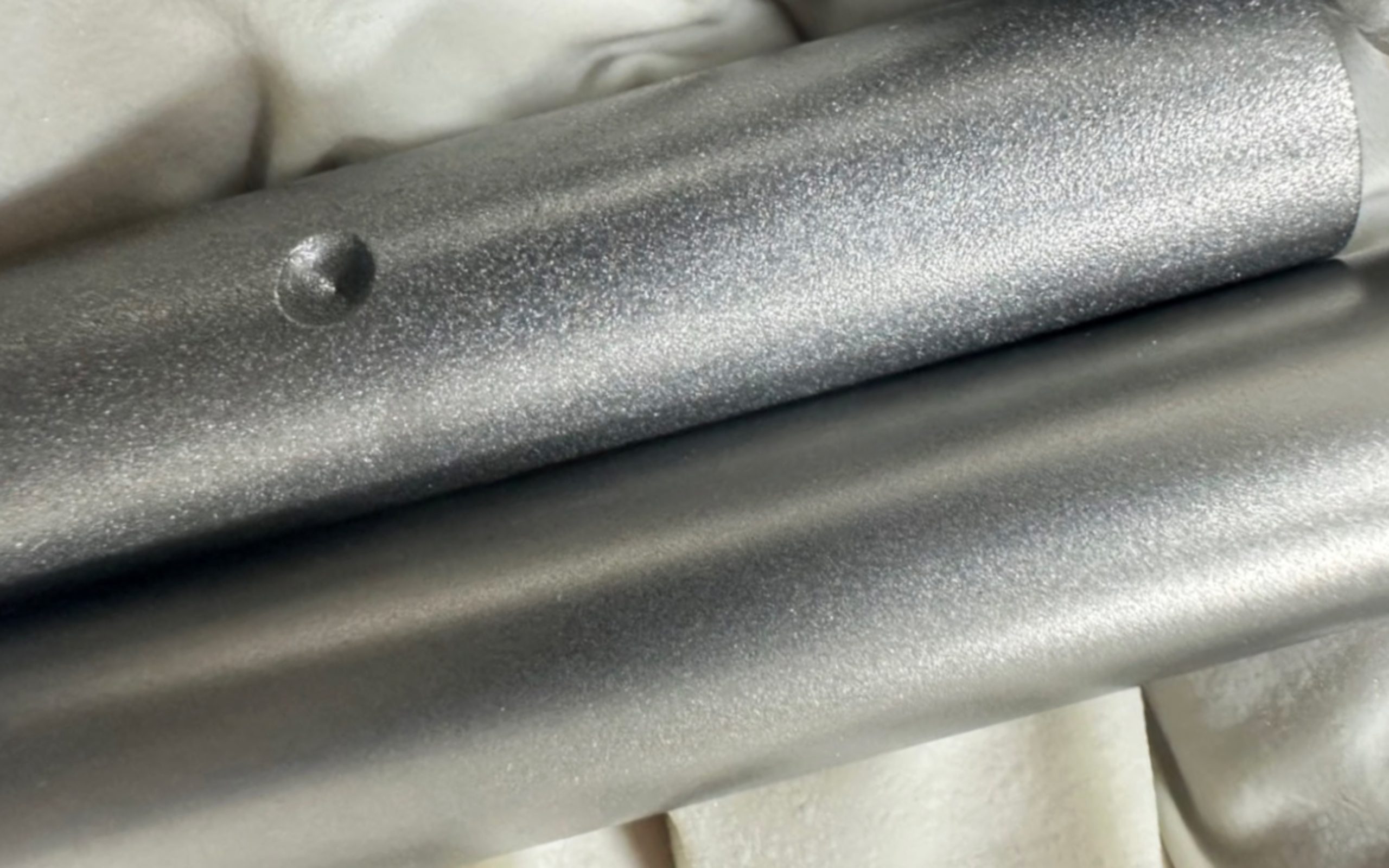
Plastic blast media leaves an inert polymer substrate — no organic compounds, no metallic content, no reactive chemistry. Residual plastic media particles on the blasted surface are visible white specks that blow off cleanly with compressed air. The bare metal surface after plastic media blasting is chemically clean: no tannins, no phenolics, no organic residue from the media itself. The only contamination concern is from the coating debris removed during blasting — and that is a property of the stripped coating, not the media. For anodizing, plating, painting, and any application where chemical surface cleanliness is specified, a plastic-media-blasted surface requires only standard compressed air blow-off before processing.
Walnut Shell Contamination Profile
Walnut shell produces a more complex surface chemistry. The shell of Juglans regia naturally contains tannins (polyphenolic compounds) and juglone (5-hydroxy-1,4-naphthalenedione), a phenolic compound with well-documented inhibitory effects on some biological processes. These compounds transfer from the shell particles to the blasted surface during impact — a thin film of organic residue that is not visible to the naked eye but is detectable by contact angle measurement, FTIR spectroscopy, or more practically, by the behavior of subsequent coating applications.
The practical implications of walnut shell organic residue on the substrate:
| Subsequent Process | Effect of Walnut Shell Organic Residue | Mitigation |
|---|---|---|
| Anodizing (aluminum) | Tannin residue on aluminum surface causes non-uniform anodize oxide formation — visible as mottling, dark spots, or uneven color in the anodize layer | Full degreasing + etching in anodize pre-treatment sequence may not fully remove tannin contamination from porous or textured surfaces. Not recommended for cosmetic anodize. |
| Гальваническое покрытие | Organic residue interferes with zincate adhesion layer formation on aluminum, reducing plating adhesion. On steel, tannin residue can prevent uniform electrodeposition. | Requires aggressive pre-treatment (anodic cleaning, acid pickle) that may be incompatible with tight-tolerance parts. Avoid walnut shell for pre-plate blasting. |
| Epoxy primer application | Minimal impact if thorough blow-off and IPA wipe are performed. Epoxy primers are relatively tolerant of light organic contamination. | Standard blow-off + IPA wipe typically sufficient. Acceptable for automotive restoration use. |
| Powder coating | Tannin residue can cause adhesion reduction in some powder coat chemistries — particularly polyester powder over aluminum. Outgassing from trapped organic residue can cause pinholes. | Thorough blow-off + solvent wipe before powder coat application. For high-value powder coat work, prefer plastic media. |
| Food contact surfaces | Juglone is a naturally occurring toxin — not approved for contact with food processing surfaces. Walnut shell is inappropriate for cleaning food-contact equipment. | Use plastic media only for food processing equipment and any surface that will contact food or beverage. |
Reusability and Media Life
Both media types are reusable through a reclaim system, but the number of productive cycles and the reclaim system requirements differ significantly.
Plastic blast media achieves 4–8 productive cycles in a well-calibrated reclaim operation. The thermoset polymer fractures into predictable smaller fragments that maintain angular geometry and cutting effectiveness through multiple cycles. The reclaim air wash can cleanly separate plastic media fines from usable particles because the density and size difference between usable media and fracture debris is relatively consistent and predictable. Media degradation is gradual and detectable through periodic sieve analysis.
Walnut shell achieves 2–4 productive cycles under comparable conditions. The lignocellulosic structure fractures less predictably than engineered polymer — producing a wider distribution of fragment sizes and shapes, including thin flat flakes that have very different air-wash separation characteristics than the remaining angular particles. The reclaim air wash calibration is more difficult for walnut shell than for plastic media because the density and shape variation within the “usable” fraction is larger. Additionally, walnut shell absorbs moisture during use, which changes its weight and therefore its behavior in the air wash — requiring more frequent recalibration as ambient humidity changes seasonally.
Walnut shell also has a practical shelf life limitation that plastic media does not: stored walnut shell can develop mold in warm, humid conditions, rendering the media unusable. Plastic media does not support microbial growth and has no mold-related shelf life limit under reasonable storage conditions.
Total Cost of Ownership Comparison
Walnut shell’s lower purchase price is real — typically 40–60% less per pound than Type II urea plastic media. But purchase price is not the same as total cost of ownership when reclaim systems are in play. The full economic comparison requires accounting for reuse cycles, waste disposal volume, and the rework cost when surface contamination from walnut shell organic residue causes coating adhesion failures.
Regulatory and Disposal Considerations
Aerospace and Defense Specifications
MIL-P-85891A is the governing military specification for plastic blast media used in aerospace and defense applications. It defines test requirements for particle size, hardness, density, moisture content, pH, and other properties — and requires a Certificate of Conformance (CoC) from the manufacturer documenting actual test results for each lot. Plastic blast media from a qualified supplier is fully MIL-P-85891A compliant with full lot traceability.
Walnut shell grit has no equivalent military specification. No MIL-P or equivalent document covers walnut shell grit as a blast media for aerospace applications. Some individual aerospace process specifications explicitly prohibit the use of walnut shell on structural components precisely because of this specification gap and the organic contamination concerns discussed above. If your customer, process specification, or quality system references any aerospace process standard that specifies blast media, verify whether walnut shell is permitted before use — many are not.
Waste Disposal
Spent media disposal classification follows the same principle for both media types: the coating residue mixed into the spent media determines regulatory status, not the media material itself. Spent media from operations removing chromate primer (D007 hazardous) or lead paint (D008 hazardous) must be characterized by TCLP testing regardless of whether the media is plastic or walnut shell. Neither material type provides a regulatory advantage in hazardous waste situations.
For non-hazardous waste streams, both materials are typically classified as non-hazardous solid waste. One difference: walnut shell spent media can compost in landfills, whereas thermoset plastic media does not biodegrade. In jurisdictions with landfill regulations that incentivize or require organic waste diversion, walnut shell may have an advantage — though the volumes involved in most blast operations are small enough that this rarely matters in practice.
Application-by-Application Decision Guide
Overall Scorecard
Часто задаваемые вопросы
Can walnut shell grit damage steel or aluminum surfaces the way sand can?
At normal blast pressures, walnut shell grit does not produce the surface erosion, profile deepening, or substrate damage that silica sand causes on steel and aluminum. Its Mohs hardness of 3.0–4.0 is well below the hardness of steel (Mohs 4–5 for mild steel, higher for tool steels) and roughly equivalent to aluminum — giving it a similar gentle-abrasive character to plastic media on these substrates. However, walnut shell can cause thin steel panel distortion (oil-canning) at pressures above 45–50 PSI, similar to plastic media in that pressure range. On aluminum, walnut shell at moderate pressures (25–40 PSI) removes coating without substrate erosion, but the tannin residue it deposits on the aluminum surface is a more significant concern for subsequent processing than any mechanical substrate damage. For aluminum going to anodize or plating, the organic contamination from walnut shell is a more consequential issue than any surface damage risk.
Is walnut shell safe to use indoors, and what respiratory protection is required?
Walnut shell blast operations require respiratory protection comparable to plastic media blasting — minimum P100 half-face respirator for cabinet work, supplied-air respirator for blast room operations. The walnut shell dust generated during blasting is classified as nuisance/organic dust in most regulatory frameworks, but OSHA’s nuisance dust PEL (15 mg/m³ total, 5 mg/m³ respirable) can be approached or exceeded in poorly ventilated blast rooms during active blasting. Additionally, walnut shell contains juglone, a naturally occurring organic compound that can cause contact dermatitis and has been reported to cause sensitization in some individuals with repeated dermal exposure. Workers with nut allergies should be aware that walnut shell dust contains proteins from the walnut plant and may trigger allergic responses, though the processed, dried shell used for blasting has significantly lower allergen content than fresh nut material. Full PPE protocols — blast hood, supplied air, coveralls, gloves — are appropriate for walnut shell blast room operations, the same as for plastic media. For blast cabinet work, P100 half-face respirator and gloves are the minimum acceptable protection for walnut shell operations.
Can I use walnut shell in the same blast cabinet I use for plastic media without contamination problems?
Sharing a blast cabinet between walnut shell and plastic media is possible with a complete clean-out between media types, but it introduces practical complications. Walnut shell dust and fine particles are hygroscopic (absorb moisture) and can accumulate in corners, dust collector filters, and hopper surfaces — when plastic media is subsequently loaded, moisture from residual walnut shell dust can transfer to the plastic media and cause flow irregularities. More importantly, any plastic media used after walnut shell in a cabinet without thorough cleaning will carry trace tannin contamination into the blast stream, defeating the purpose of switching to plastic media for cleanliness-critical applications. For any application where you have switched to plastic media specifically because you need a clean surface — pre-anodize, pre-plate, mold cleaning — thorough cleaning of the blast cabinet after walnut shell use is non-negotiable. Practically, for production operations requiring both media types, separate dedicated cabinets are the most reliable solution. For hobbyist or low-volume operations, a complete clean-out procedure (vacuum all interior surfaces, blow out the hopper and media delivery system, run a small purge batch of the new media before production) is an acceptable alternative.
Why is walnut shell commonly used for firearm cleaning but plastic media is not the standard choice there?
Walnut shell’s dominance in firearms cleaning — specifically in rotary tumbler case cleaning for reloaders and in small-cabinet cleaning for handguns and rifle components — comes from historical precedent, supply chain accessibility, and application fit rather than from any technical superiority over plastic media. Walnut shell has been used in jewelry and firearms cleaning for decades, establishing it as the default choice in those supply chains before plastic blast media became widely available. For the specific application of cartridge case cleaning (removing carbon fouling, oxidation, and residue from brass cases), walnut shell is effective, inexpensive, and produces the dry, matte finish that reloaders prefer before sizing and priming. Plastic media at equivalent mesh sizes would also work for this application, but at 2–3× the purchase price without a meaningful performance advantage for this particular use case. For more demanding firearms applications — refinishing metal components before bluing, Parkerizing, or Cerakote — plastic media’s cleaner surface preparation is actually preferred, and it is increasingly used in professional gunsmithing shops for those applications precisely because it leaves the metal cleaner for subsequent finishing processes.
If walnut shell is cheaper and works on most surfaces, why would anyone choose plastic media for automotive restoration?
For hobbyist restoration of one or two vehicles per year without a reclaim system, walnut shell’s lower purchase price is a genuine advantage — the arguments for plastic media at that scale are real but less compelling. Where plastic media becomes decisively better for automotive restoration is in three scenarios. First, any vehicle with aluminum body panels, aluminum substructure, or aluminum components going to anodize or bright work — the tannin contamination risk from walnut shell makes it inappropriate for these substrates without extensive post-blast chemical cleaning. Second, high-volume operations processing multiple vehicles per week where reclaim economics matter: plastic media’s 4–8 reuse cycles vs. walnut shell’s 2–4 cycles, combined with more predictable reclaim system behavior, produce a lower total cost of ownership even though the purchase price is higher. Third, shops in humid climates or without climate-controlled media storage — walnut shell’s moisture sensitivity produces inconsistent strip rate and bridging problems that plastic media avoids. For a weekend hobbyist in a dry climate stripping a single steel-bodied vintage car and spraying rattle-can primer, walnut shell is a perfectly reasonable choice. For a professional restoration shop processing vehicles daily with subsequent coating requirements, plastic media is the correct investment.
Фильтры