Concrete & Masonry Blasting Media: Surface Prep Before Epoxy or Coating
Concrete and masonry surface preparation by abrasive blasting serves two distinct purposes: profile creation (opening the surface to create mechanical adhesion for coatings) and cleaning (removing contaminants, laitance, curing compounds, paint, or biological growth). The media and method vary significantly between these two objectives, and between different concrete types, strengths, and finish conditions.
This guide is part of the complete Sandblasting Media Suppliers: Industrial Buyer’s Complete Guide from Jiangsu Henglihong Technology Co., Ltd. For general media selection logic, see also: How to Choose Sandblasting Media: Step-by-Step.
1. Why Concrete Surface Prep Matters
Concrete is a porous, heterogeneous material with varying surface hardness depending on mix design, curing conditions, and surface treatment. The topmost layer of most cast concrete — the laitance — is a weak, calcium-rich layer formed by bleed water rising during curing. Laitance has very low tensile strength and must be completely removed before any coating system is applied, or the coating will delaminate within the laitance layer regardless of how strong the coating itself is.
Below the laitance is sound concrete. The goal of concrete surface preparation is to remove all weak surface material, open the capillary pore structure to allow coating penetration and mechanical bonding, and produce a reproducible surface profile that the coating manufacturer specifies for their product. Skipping or shortcutting this step is the leading cause of industrial floor coating failure globally.
2. Concrete Surface Profile (CSP) Standards
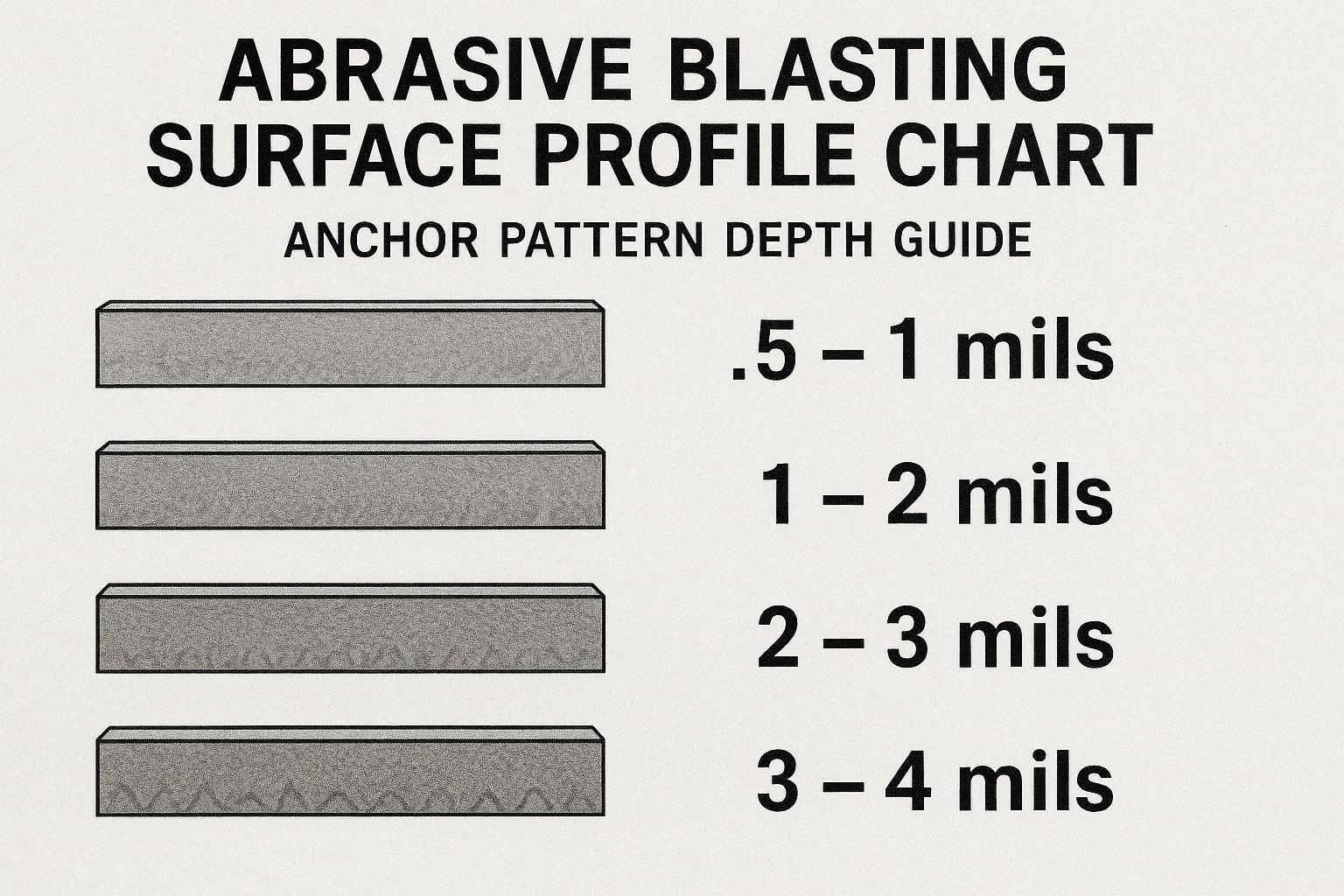
The International Concrete Repair Institute (ICRI) defines nine Concrete Surface Profile levels (CSP 1 through CSP 9) from very smooth to very rough. Reference chips for each CSP level allow visual comparison in the field. Coating manufacturers specify a minimum CSP level for their products:
| ICRI CSP Level | Profile Depth (approx.) | Typical Method | Coating Suitability |
|---|---|---|---|
| CSP 1–2 | 0–0.5 mm | Acid etching, light grinding | Penetrating sealers, thin-film coatings (<250 µm) |
| CSP 3–4 | 0.5–1.5 mm | Abrasive blasting, shot blasting | Standard epoxy floor coatings, self-leveling systems |
| CSP 5–6 | 1.5–3.5 mm | Heavy abrasive blasting, scarifying | High-build epoxy (>3 mm), polyurethane mortar, broadcast systems |
| CSP 7–9 | 3.5–6.5 mm | Scarifying, milling, bush hammering | Cementitious overlays, structural repairs |
3. Best Blast Media for Concrete
| Тип носителя | CSP Achievable | Best Application | Key Consideration |
|---|---|---|---|
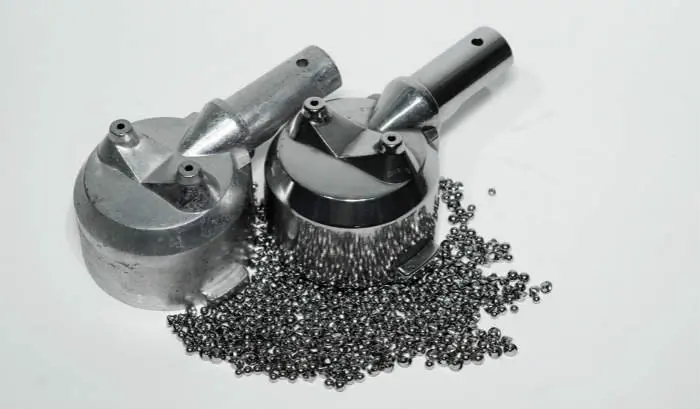
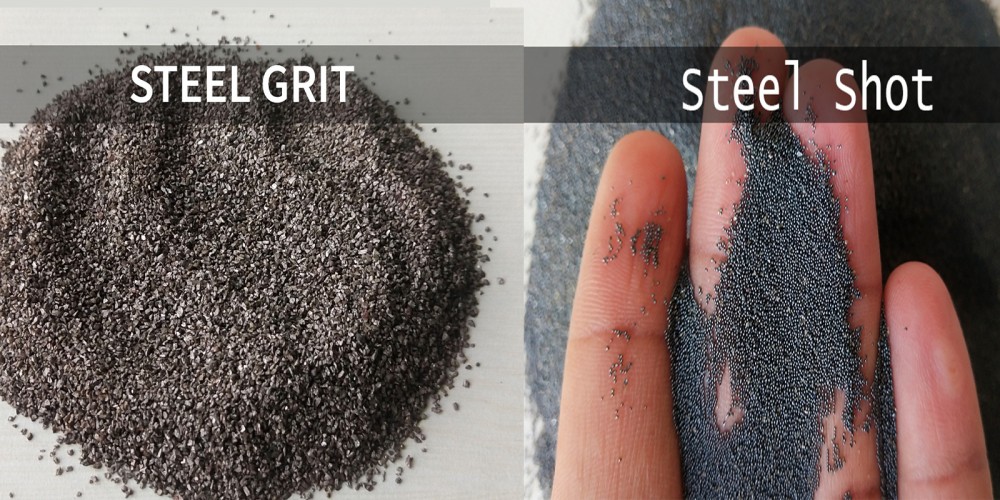
| Steel shot S230–S330 | CSP 3–5 | Industrial floor prep, shot blast machines | Requires specialized shot blast machine — not pressure pot blasting |
| Steel grit G25–G40 | CSP 4–6 | Aggressive coating removal, high-build prep | More aggressive than shot; harder to control uniformity on concrete |
| Aluminum oxide BFA #36–#60 | CSP 3–5 | Precision profiling, decorative concrete prep | High cost; best where profile consistency is critical |
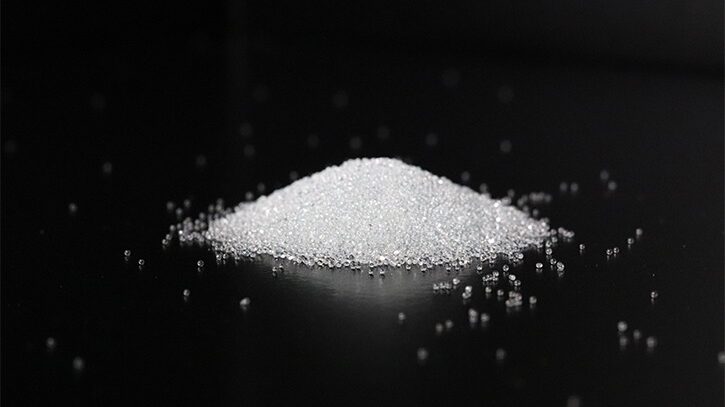
| Crushed glass 20/40 | CSP 3–4 | General concrete cleaning and profiling | Environmentally favorable; low heavy metals |
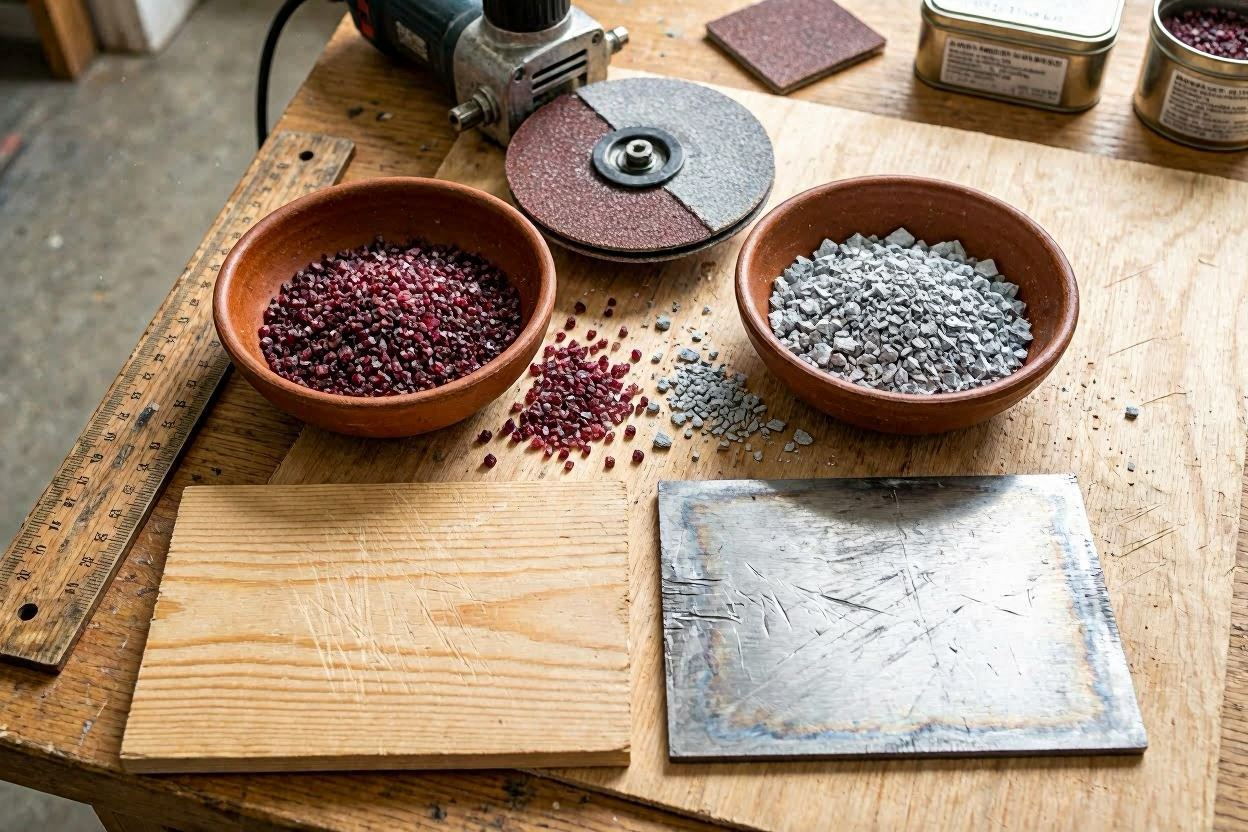
| Garnet 20/40–30/60 | CSP 3–4 | Low-dust concrete prep in occupied buildings | Low dust generation — preferred for indoor environments |
| Coal/copper slag medium | CSP 3–5 | Outdoor concrete profiling (once-through) | High dust; disposal concerns; competitive unit cost |
For a full comparison of these media types — including cost-per-cycle analysis and safety data — see our dedicated pages on crushed glass blast media и slag abrasive suppliers.
4. Blasting Methods for Concrete
Shot Blast Machines (Self-Contained, Walk-Behind)
Walk-behind shot blast machines are the dominant method for large concrete floor areas — warehouses, parking structures, manufacturing plants. They use steel shot in a contained, self-recovering centrifugal wheel system, simultaneously profiling the concrete and recovering spent media and dust in an integrated vacuum system. Output is CSP 3–5 depending on shot size and machine passes. These machines do not use an open blast pot — the media is fully contained and recycled within the machine.
Pressure Blast Equipment (Pot Blasting)
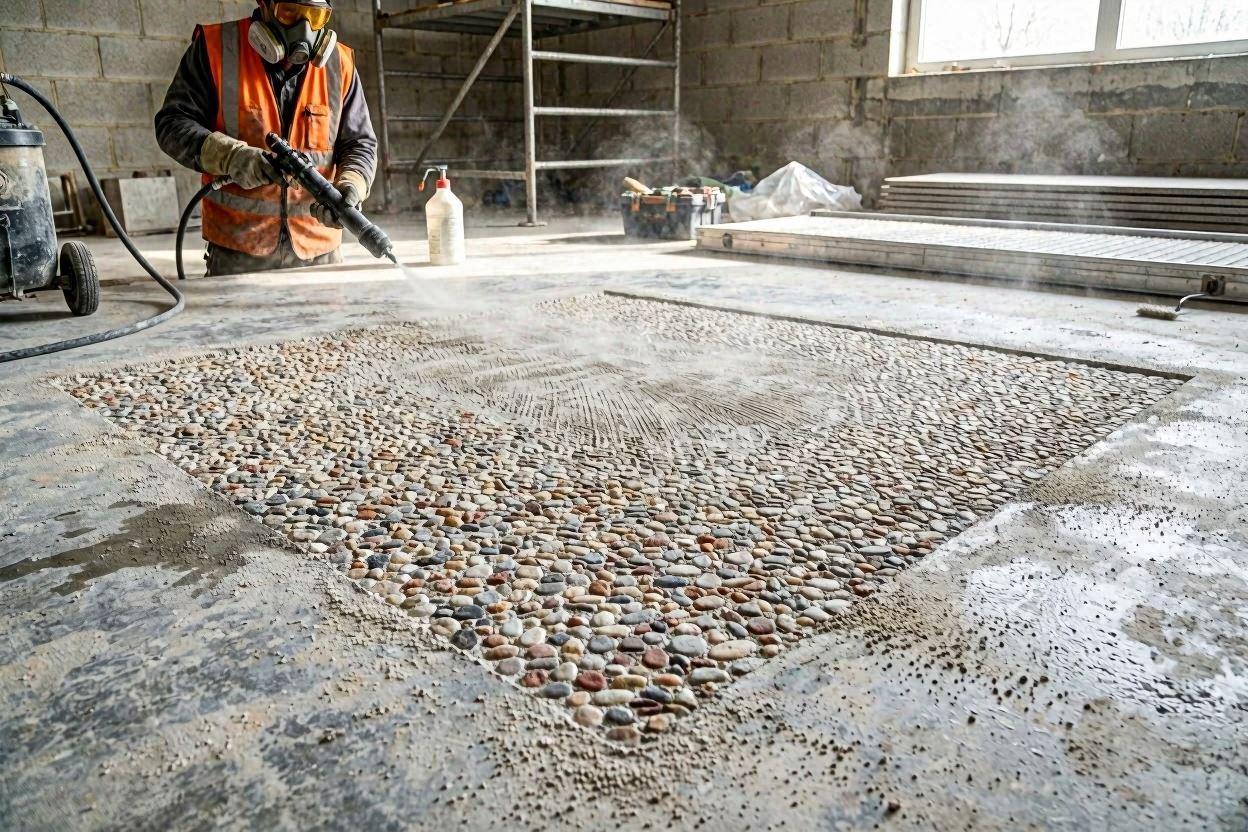
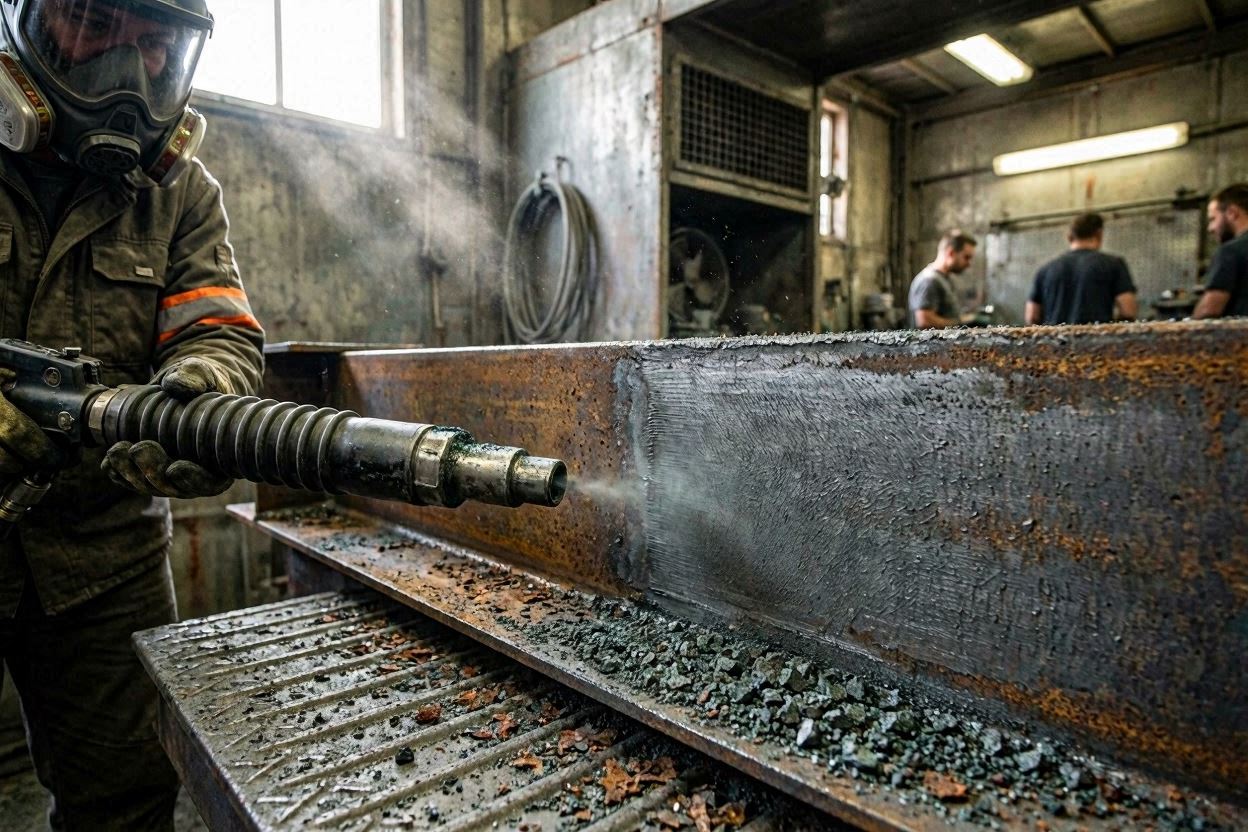
For vertical surfaces (walls, columns, bridge abutments), irregular shapes, or areas inaccessible to machine blasting, pressure blast equipment with garnet, aluminum oxide, or crushed glass is the standard approach. This method generates significant airborne dust and requires engineering controls, respiratory protection, and containment. It is more versatile than machine blasting but considerably slower per unit area.
Wet Abrasive Blasting
Wet blasting — introducing water into the abrasive stream — dramatically reduces airborne dust, making it attractive for interior work and environmentally sensitive sites. Steel shot, garnet, and crushed glass all work in wet blast systems. The trade-offs are increased setup complexity, longer drying time before coating, and management of contaminated water and slurry.
5. Concrete Prep for Epoxy Floor Coatings
Standard commercial epoxy floor coating systems (100% solids, 2–4 mm total thickness) typically specify CSP 3–5 and concrete compressive strength ≥25 MPa as minimum surface requirements. The most economical approach for large floor areas is a walk-behind shot blast machine using S230–S330 steel shot:
- First pass: achieves laitance removal and CSP 2–3
- Second pass (slower speed): achieves CSP 3–4 with consistent profile across the slab
- Edge preparation: pressure blast with crushed glass or garnet to within 50 mm of walls and columns where the machine cannot reach
- Post-blast: vacuum thoroughly, air-blow, and test for soluble salt contamination (ISO 8502-9 Bresle method) before priming
For high-build polyurethane mortar or broadcast quartz systems requiring CSP 5–6, two or three slow machine passes with S280–S330 shot are required, or a single pass with G25 steel grit in a machine configured for grit operation. Always check the coating data sheet — not generic CSP charts — for the manufacturer’s specific surface profile requirement.
For the full framework on matching abrasive to coating specification, see: Surface Profile & Sa Rating Guide: Matching Blast Media to Coating Specs.
6. Masonry & Historic Stone Cleaning
Cleaning brick, stone, terracotta, and historic masonry presents a distinct challenge: the substrate is hard but also brittle, with mortar joints that may be significantly softer than the masonry units themselves. Aggressive abrasive blasting can etch stone surfaces, damage masonry faces, erode historic pointing, and deposit iron contamination (from metallic abrasives) that causes subsequent rust staining on light-colored stonework.
Preferred approaches for historic masonry cleaning by application:
- General brick and hard stone: Crushed glass (70/140 fine grade) at very low blast pressure (10–30 psi) — non-contaminating, gentle profile, no heavy metals
- Most delicate historic surfaces (soft limestone, sandstone): Walnut shell grit (20/40 mesh) — removes biological growth and atmospheric soiling without etching the stone face; biodegradable waste
- Moderately soiled masonry requiring slightly more cutting action: Garnet (80 mesh) at low pressure — clean chemistry, controlled aggression
- Terracotta glazed units: Do not blast — the glaze is irreplaceable and cannot withstand any abrasive impact. Use chemical cleaning methods only.
7. Frequently Asked Questions
Get Concrete Surface Prep Media Recommendations
Tell us your concrete type, CSP target, floor area, and required coating system. The technical team at Jiangsu Henglihong Technology Co., Ltd. will recommend the right media and provide competitive pricing.
Contact Us →Фильтры