Black Beauty vs. Aluminum Oxide: Sandblasting Media Comparison
A full performance comparison between coal slag and aluminum oxide — covering hardness gap, cost-per-cycle, cutting speed benchmarks, and which is better for field work versus blast cabinets.
1. Material Overview
Black Beauty (Coal Slag)
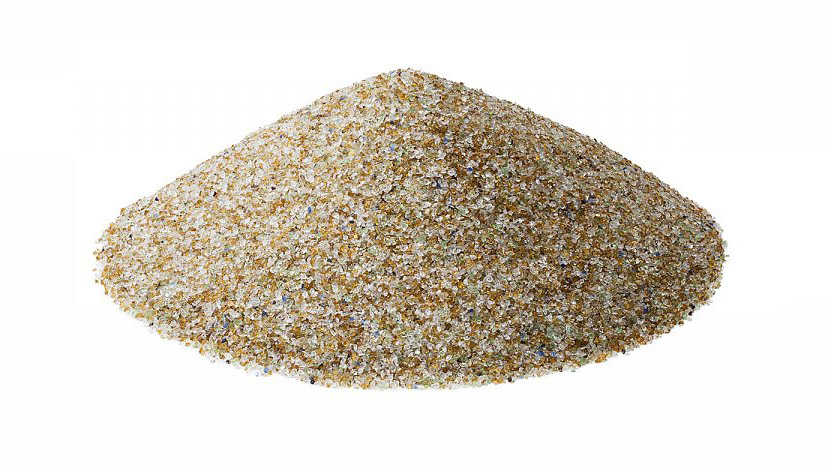
A vitrified byproduct of coal combustion — angular, dark, and moderately hard (Mohs 6–7). Primarily a single-use disposable abrasive. Low cost per ton makes it the default choice for large-area industrial surface preparation where media reclaim is not practical.
Aluminum Oxide (Al₂O₃)
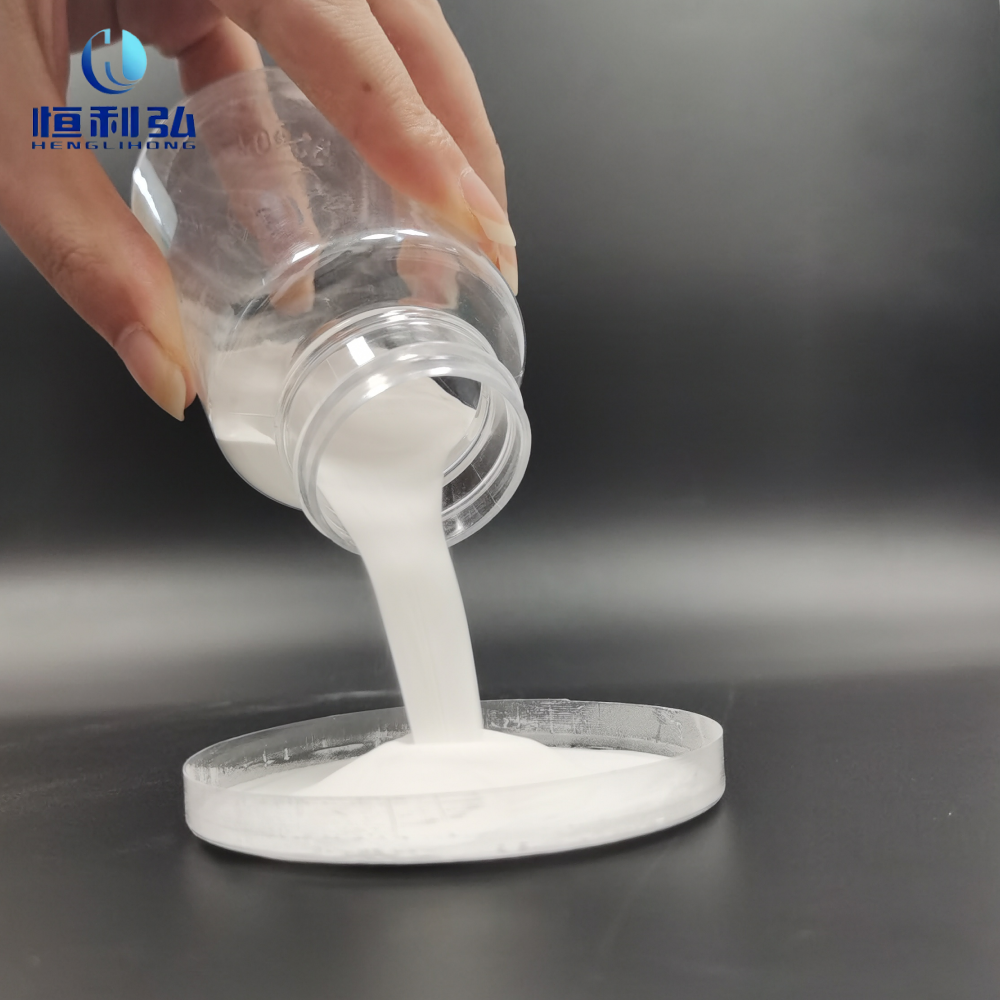
Also known as alumina, aluminum oxide is a manufactured abrasive produced by fusing bauxite in electric arc furnaces at temperatures exceeding 2,000 °C. It is one of the hardest commercially available blasting abrasives at Mohs 9 — second only to diamond and cubic boron nitride. Available in white (pure Al₂O₃), brown (iron-alloyed), and pink or ruby grades, aluminum oxide is highly reusable (5–10+ cycles), fast-cutting, and free of crystalline silica. It is the standard abrasive for blast cabinets requiring aggressive cutting on hardened steel and for precision surface finishing in aerospace and automotive applications.
Full product context: Black Beauty Abrasive Blasting Media: The Complete Buyer’s Guide.
2. Specification Comparison Table
| Property | Black Beauty (Coal Slag) | Оксид алюминия |
|---|---|---|
| Material origin | Coal combustion byproduct (slag) | Fused bauxite (manufactured) |
| Твердость по Моосу | 6.0 – 7.0 | 9.0 |
| Удельная плотность | 2.6 – 2.9 | 3.9 – 4.0 |
| Free Crystalline Silica | < 0.1% | < 0.1% |
| Форма частиц | Angular (fracture-derived) | Angular, blocky (fused crystal) |
| Цвет | Dark grey / black | White (pure) / Brown (iron grade) |
| Reuse Cycles | 1–2 (primarily disposable) | 5–10+ |
| Cutting Speed (relative) | Высокий | Highest (+30–50% vs. coal slag) |
| Dust Generation | Низкий | Low–Medium |
| Bulk Price (per ton) | $150 – $220 | $700 – $1,200 |
| Cabinet-suitability | Extra Fine / Fine grades only | All grades; excellent reclaim behavior |
3. The Hardness Gap: What Mohs 9 vs. 6–7 Means in Practice
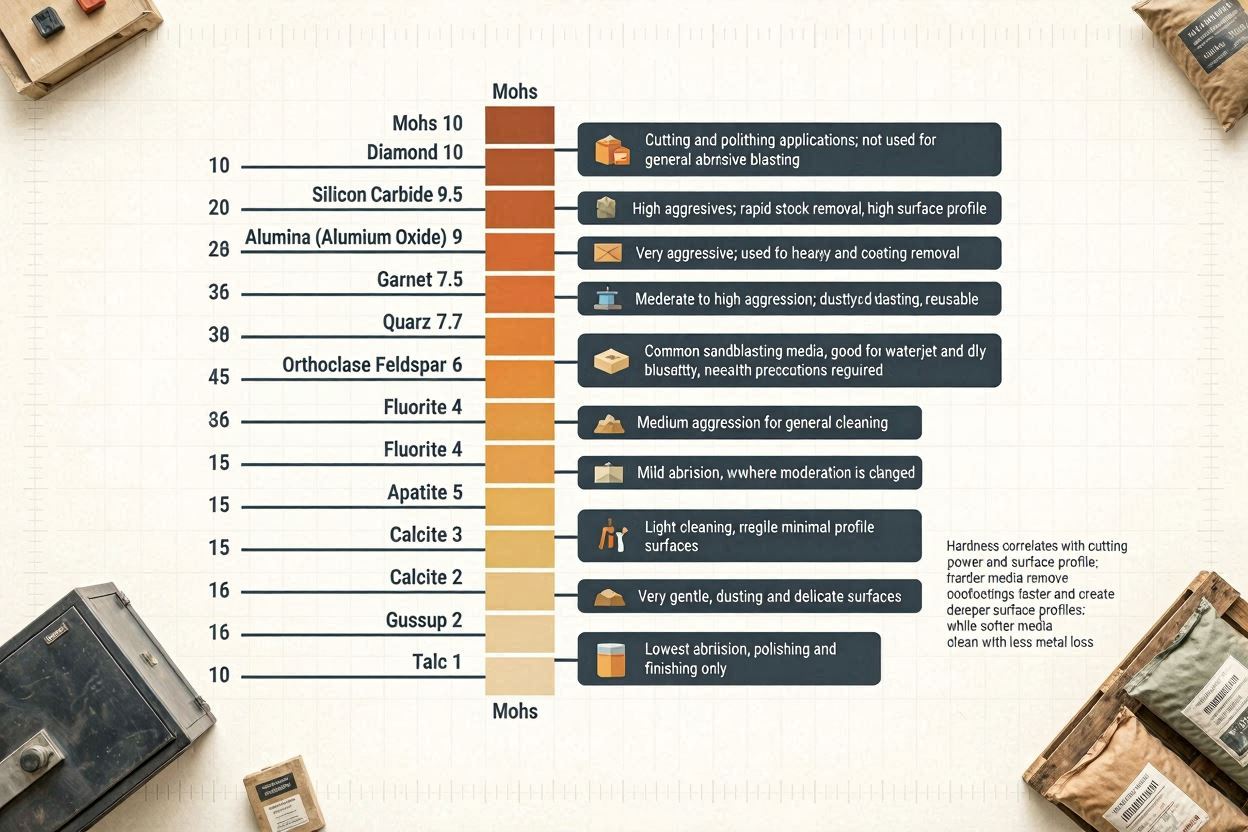
The difference between Mohs 9 (aluminum oxide) and Mohs 6–7 (coal slag) is not linear — the Mohs scale is logarithmic. Aluminum oxide is dramatically harder than coal slag, and this translates to several practical differences:
- Cutting speed: Aluminum oxide’s harder particles cut through mill scale, rust, and hardened steel surfaces 30–50% faster than coal slag at comparable nozzle pressures. For operations where blasting time is the primary productivity constraint, this is a significant advantage.
- Substrate surface hardness: Coal slag at Mohs 6–7 is fully adequate for cutting through rust and paint on standard carbon steel and mild alloy steel. For harder substrates — tool steel, case-hardened components, ceramic-coated parts — aluminum oxide is required; coal slag will not effectively profile these surfaces.
- Profile precision: Aluminum oxide’s consistent fused-crystal particle structure produces more uniform, reproducible anchor profiles than the highly variable fracture-derived particles of coal slag. This matters for tight-tolerance coating applications.
- Particle friability: Coal slag fractures readily on impact, generating fines that reduce cutting efficiency over time. Aluminum oxide is much less friable, maintaining consistent cutting geometry across multiple reuse cycles.
4. Cost Analysis: Initial Price vs. Cycle Economics
Aluminum oxide costs 4–6× more per ton than coal slag. However, at 5–10 reuse cycles in a clean cabinet reclaim system, the per-cycle media cost becomes highly competitive:
| Cost Element | Black Beauty (single-use) | Aluminum Oxide (8 cycles, cabinet) |
|---|---|---|
| Purchase price per 100 lb | $10–15 | $40–65 |
| Effective cycles | 1 | 8 |
| Effective media cost per cycle (per 100 lb) | $10–15 | $5–8 |
| Disposal per cycle | $5–10 (non-haz) | Minimal (fines only) |
| Total per-cycle cost (per 100 lb) | $15–25 | $5–10 |
In a blast cabinet with a clean, functional reclaim system, aluminum oxide achieves 40–60% lower cost per cycle than single-use Black Beauty. This is the primary economic argument for aluminum oxide in cabinet applications where cycling the media is practical.
In field blasting where reclaim is not an option, aluminum oxide’s $700–1,200/ton purchase price makes it uneconomical for large-area work — Black Beauty at $150–220/ton wins decisively. Full cost context: Black Beauty Pricing Guide & Bulk Buying Tips.
5. Blast Cabinet Performance Comparison
Sandblast cabinets are where this comparison is most relevant. Both media work in cabinets, but they behave differently:
| Factor | Black Beauty (Extra Fine/Fine) | Aluminum Oxide (Medium/Fine) |
|---|---|---|
| Initial cutting speed on rusted steel | Хорошо | Excellent (+30–50%) |
| Cutting speed after 3 cycles | Significantly degraded (fines) | Minimal degradation |
| Media life in cabinet | 1–2 cycles before performance drops | 5–10 cycles consistently |
| Dust collector filter load | High (high friability → more fines) | Умеренный |
| Nozzle wear rate | Умеренный | High (very hard particles accelerate nozzle wear) |
| Surface finish quality | Rougher, deeper profile | More controlled, consistent profile |
| Suitable for delicate parts? | Extra Fine only — with caution | Fine or Very Fine grades — better control |
For cabinet use on parts that will be recycled through the cabinet frequently, aluminum oxide’s consistent long-term performance makes it the better specification. For one-time or infrequent cabinet use (e.g., a maintenance shop that blasts occasionally), Black Beauty Extra Fine is a practical and economical choice. See our cabinet setup guide: Black Beauty Abrasive for Sandblast Cabinets: Setup, Tips & Compatible Machines.
6. Field Blasting: Where Coal Slag Wins
For outdoor field blasting — bridge maintenance, structural steel, tank exteriors, pipelines — aluminum oxide is rarely specified and almost never cost-justified. The reasons are straightforward:
- Field blasting is inherently single-use — there is no practical reclaim system on a construction site, so aluminum oxide’s reuse advantage disappears entirely
- Black Beauty at $150–220/ton (disposable) versus aluminum oxide at $700–1,200/ton (also disposable in field conditions) — a 4–6× cost penalty with no performance benefit at field scale
- Both media produce adequate anchor profiles for standard zinc/epoxy coating systems on structural steel
- Both meet SSPC AB 1 and OSHA silica requirements
7. Application-Specific Selection Guide
✅ Choose Black Beauty When:
- Field blasting on structural steel, bridges, or pipelines
- One-time cabinet use without reclaim system
- Cost-sensitive maintenance blasting on standard carbon steel
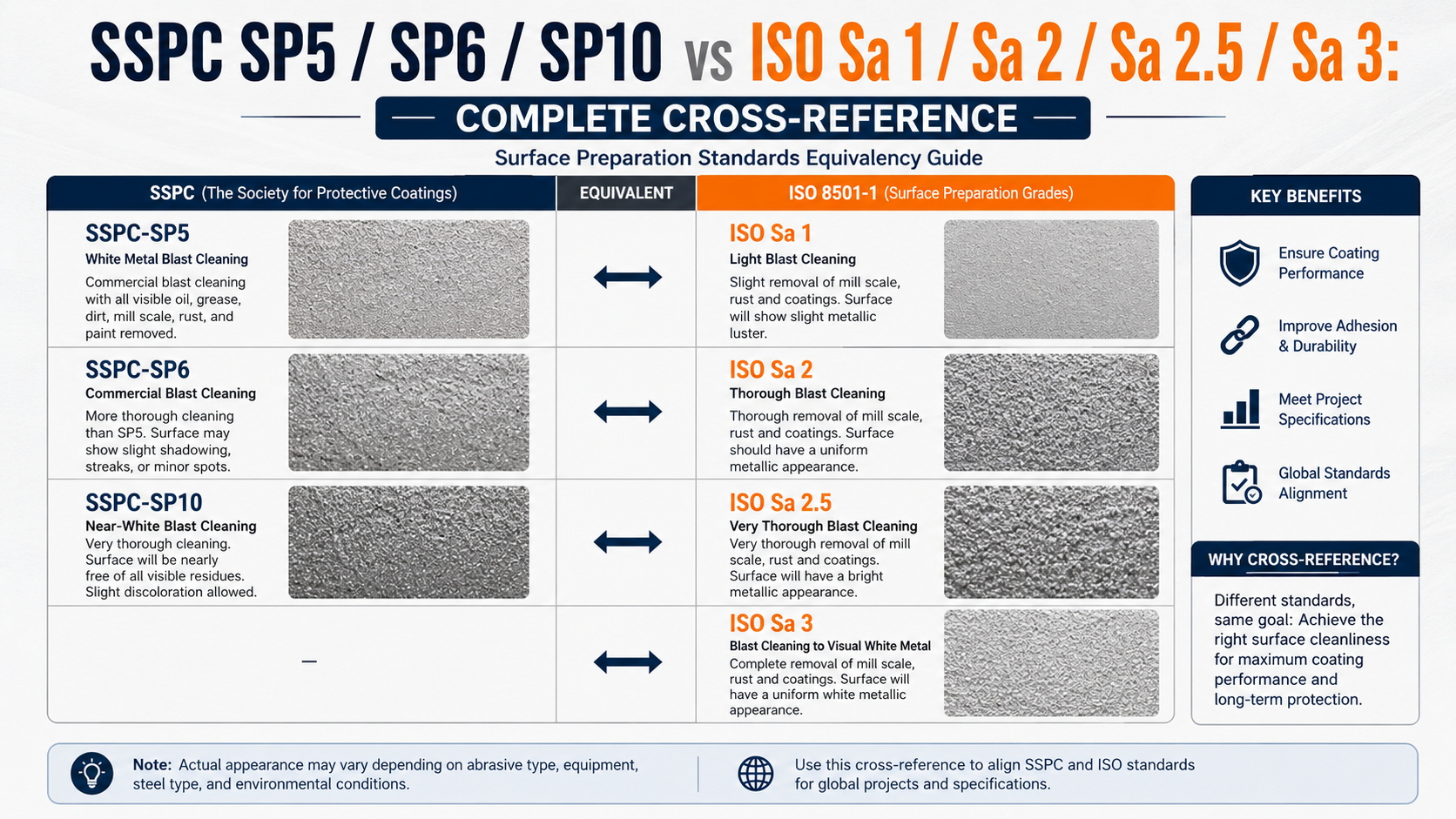
- Standard rust and paint removal to SSPC-SP 6 or SP 10
- Single-use disposable applications where reclaim is impractical
✅ Choose Aluminum Oxide When:
- Blast cabinet with functional reclaim system (5–10 cycles)
- Hardened steel, tool steel, or ceramic-coated components
- Precision profile control required (aerospace, automotive)
- High-frequency cabinet use where consistent media performance is critical
- Substrates that coal slag cannot adequately profile at Mohs 6–7
8. The Verdict
Bottom Line
The choice between Black Beauty and aluminum oxide is primarily determined by whether media reclaim is practical in your operation.На сайте blast cabinets with reclaim systems, aluminum oxide’s superior hardness, cutting speed, and multi-cycle economics make it the better long-term investment — lower effective cost per cycle and more consistent performance across the media life.
For field blasting, large-area work, or single-use cabinet operations, Black Beauty offers equivalent surface preparation results at a fraction of the per-ton cost. The hardness advantage of aluminum oxide does not translate to a proportional productivity benefit on standard rust-grade carbon steel substrates — the difference matters mainly when the substrate hardness approaches the coal slag Mohs range.
Return to overview: Complete Buyer’s Guide · Also compare: Black Beauty vs. Garnet · Black Beauty vs. Copper Slag
Фильтры