Sand Blasted Steel for Marine & Offshore: SA 2.5 + Zinc Primer Workflow
Marine and offshore steel demands the most rigorous sand blasting and coating workflow in industry. This guide covers the SA 2.5 / SP 10 cleanliness standard, recommended profile depth, the 4-hour primer window, salt contamination testing, and the complete yard workflow used in commercial shipbuilding.
Why Marine Coatings Are Different
Marine and offshore steel sees the most aggressive corrosion environment in industry: cyclic immersion or splash, high chloride content, biofouling, mechanical impact, and decades of expected service life. The protective coating system must perform reliably for 15–25 years between drydockings — failure means structural compromise, loss of class certification, or environmental incident.
The entire workflow rests on the substrate preparation. A perfect coating over a poorly prepared substrate fails within 2–5 years. For the broader specification context, see the pillar guide on sand blasted surface.
Sa 2.5 / SP 10 Cleanliness Standard
Virtually all modern marine coating systems specify Sa 2.5 (ISO 8501-1) / SSPC SP 10 / NACE 2 — near-white blast cleanliness with at least 95% of each unit area free of all visible contaminants.
Why Sa 2.5 rather than Sa 3? The 1.5% improvement in coating life from going to Sa 3 (100% white metal) rarely justifies the 30–50% cost increase, and modern coatings (especially zinc-rich primers) tolerate the slight residual shadowing permitted by Sa 2.5. The full breakdown of cleanliness grades is in our SSPC vs ISO Sa cross-reference.
Classification societies (DNV, LR, ABS, BV, RINA) typically reference Sa 2.5 in their coating performance standards (e.g., PSPC for ballast tanks). Sa 2.5 is not negotiable for new-build commercial vessels.
Target Profile Depth
Marine zinc-rich primer systems require an anchor pattern of 50–100 µm Rz. This range matches the 75–125 µm DFT of typical inorganic zinc primers, satisfying the 3:1 DFT-to-profile rule covered in our anchor pattern specifications guide.
| Coating System | Profile Target |
|---|---|
| Inorganic zinc-rich primer alone | 50–75 µm Rz |
| Zinc + epoxy + polyurethane (atmospheric) | 60–90 µm Rz |
| Zinc + epoxy (immersion ballast) | 75–100 µm Rz |
| Coal tar epoxy underwater | 75–100 µm Rz |
| Thermal spray aluminum (TSA) | 75–100 µm Rz |
Media Selection
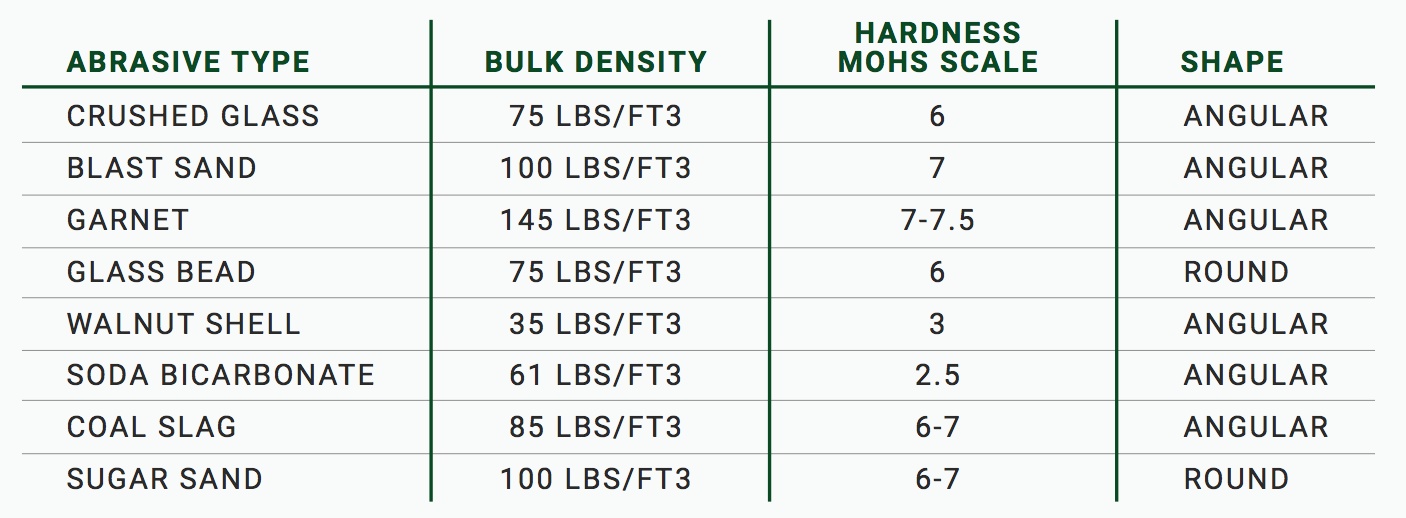
Three media dominate marine and shipyard work:
- Steel grit (G-25 to G-50) — closed-loop recycled in yard cabinets; lowest cost per square meter; 100+ cycle reuse. Standard for new-build shipyards with reclamation systems.
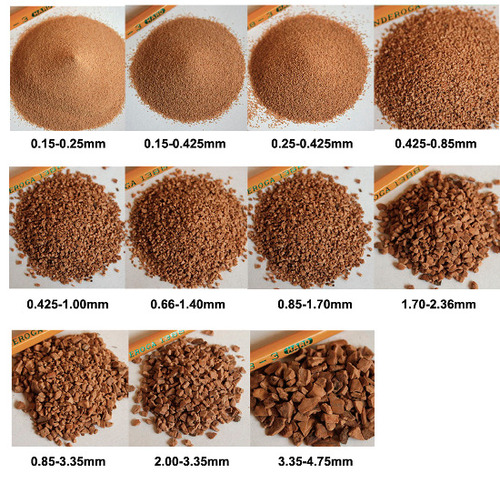
- Garnet (30/60 mesh) — open blasting and field touch-up; 3–5 cycle reuse; lower dust than slag alternatives. Standard for offshore field work and dry-dock repair.
- Copper slag / iron silicate slag — single-use; lowest material cost; high dust output. Used in regions with cheap slag supply and limited reclamation infrastructure.
Jiangsu Henglihong Technology Co., Ltd. supplies certified marine-grade garnet and steel grit with the conductivity (≤ 50 µS/cm) and chloride (≤ 25 ppm) certifications required by major class society specifications.
The 4-Hour Holding Window
The single most important operational constraint in marine blasting: bare steel must be primed within 4 hours of blasting in typical humid coastal conditions. Flash rust forms when atmospheric moisture condenses on the freshly blasted surface, and even very light flash rust (Grade C or D per ISO 8501-3) voids the blast and requires re-preparation.
| Conditions | Safe Holding Time |
|---|---|
| RH > 85%, high temperature | 30 minutes to 2 hours |
| RH 70–85%, moderate temperature | 2–4 hours |
| RH 60–70%, dehumidified hall | 4–8 hours |
| RH < 50%, climate-controlled | 8–24 hours |
Modern yards address the window by integrating blast and prime operations in the same shift, often with dedicated dehumidification of the blast hall.
Salt Contamination Testing
Even properly blasted steel can retain soluble chloride contamination from prior marine exposure. Embedded chlorides cause osmotic blistering and coating failure within months. ISO 8502-6 and SSPC-Guide 15 specify chloride test methods:
- Bresle test — sample patch extraction with deionized water; chloride measured by conductivity or strip test.
- Latex patch test — adhesive patch with controlled water; alternative to Bresle.
- Direct surface conductivity — emerging method using surface-contact probes.
Class society limits typically allow ≤ 30–50 mg/m² soluble chloride. Above the limit, the surface must be water-washed and re-blasted or re-tested after evaporation.
Complete Yard Workflow
Часто задаваемые вопросы
What blast cleanliness is required for marine steel?
Sa 2.5 / SSPC SP 10 / NACE 2 (near-white blast) is the standard for new-build commercial vessels and offshore structures. Class societies (DNV, LR, ABS, BV) reference this standard in their performance requirements.
What profile depth does a marine coating system need?
60–90 µm Rz is standard for zinc + epoxy + polyurethane systems. Higher (75–100 µm) for immersion service and thermal spray aluminum. The profile depth pairs with the coating DFT to satisfy the 3:1 rule.
Why is there a 4-hour limit before priming?
Atmospheric moisture forms flash rust on bare blasted steel within hours, particularly in coastal humidity. Flash rust voids the cleanliness grade and requires re-blasting. The 4-hour window represents typical conditions; dehumidified halls extend the window.
What is a Bresle test?
A standardized chloride contamination test (ISO 8502-6) where an adhesive patch contains a known volume of deionized water that extracts soluble chlorides from the steel surface. The extracted water is then measured for conductivity or chloride concentration.
Can copper slag be used for marine blasting?
Copper slag is widely used in regions with cheap slag supply and limited reclamation infrastructure. It is single-use, generates significant dust, and produces a slightly aggressive profile. Major class societies accept slag media if it meets conductivity and chloride limits.
Request an Abrasive Blasting Media Sample
Jiangsu Henglihong Technology Co., Ltd. supplies certified aluminum oxide, garnet, glass bead, steel grit, and steel shot to global industrial buyers. Request a sample with full batch documentation for technical evaluation.
Request a Sample →Фильтры