Blast Media for Automotive & Aerospace: Non-Destructive Stripping Solutions
When the substrate is soft, thin, or structurally critical — aircraft aluminum panels, carbon fiber composites, vintage sheet metal, titanium components — conventional industrial blast media is simply too destructive. The challenge is achieving complete, uniform paint or coating removal while preserving the dimensional integrity and structural properties of the underlying material. This is the domain of non-destructive blast stripping, and it requires a fundamentally different approach to media selection than heavy industrial surface preparation.
This guide covers non-destructive blast stripping for automotive and aerospace applications. It is part of the comprehensive resource at Sandblasting Media Suppliers: The Industrial Buyer’s Complete Guide from Jiangsu Henglihong Technology Co., Ltd. For softer media sourcing details, see our product guide: Plastic & Biodegradable Blast Media Suppliers.
1. The Non-Destructive Stripping Challenge
The fundamental challenge of non-destructive blasting is selectivity: the media must remove the coating without removing or damaging the substrate beneath it. This requires media that is:
- Softer than the substrate — to avoid abrasive material removal from the base material
- Hard enough to cut the coating — to strip the paint, primer, or sealant efficiently
- Dimensionally consistent — to deliver repeatable, uniform stripping without hot spots or unstripped patches
- Non-contaminating — particularly for aluminum and titanium substrates where iron, chloride, or heavy metal contamination can cause corrosion or interfere with subsequent surface treatment
No single conventional mineral or metallic abrasive meets all these criteria for delicate substrates. The solution is purpose-designed soft media: plastic blast media (PBM), walnut shell grit, corn cob granules, and specialty agricultural abrasives.
2. Aerospace Paint Stripping: MIL-Spec Plastic Media
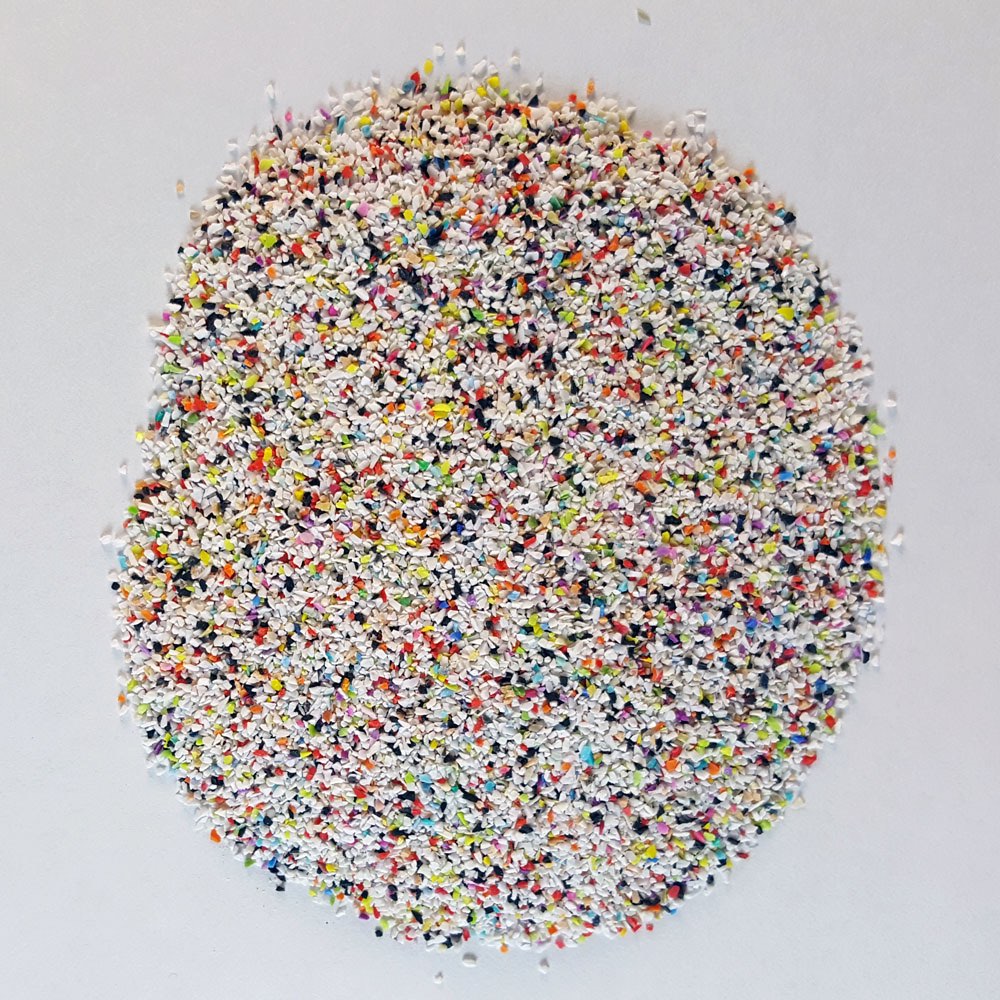
Plastic media blasting (PMB) was developed specifically to address the aerospace industry’s need to strip aircraft paint without damaging aluminum skins, composite structures, or titanium fasteners. The U.S. military specification MIL-P-85891A defines four plastic blast media types by resin chemistry and hardness:
| MIL-P-85891A Type | Смола | Твердость по Моосу | Primary Aerospace Use |
|---|---|---|---|
| Type I | Urea formaldehyde | 3.0–3.5 | Carbon fiber / CFRP, very thin aluminum skins |
| Type II | Melamine formaldehyde | 3.5–4.0 | Aluminum alloy aircraft skins (most common) |
| Type III | Acrylic (PMMA) | 3.0–3.5 | Precision instruments, electronics housings |
| Type IV | Polyester | 3.5–4.5 | Bonded structures, harder composites |
Type II (melamine) is the most widely used aerospace plastic media, providing the optimal balance of stripping effectiveness on multi-layer epoxy + polyurethane paint systems and protection of aluminum alloy substrates. At Mohs 3.5–4.0, it is significantly softer than aluminum alloys (Mohs 2.5–3 for pure aluminum, but 5–6 for 7075-T6 and similar high-strength alloys), yet hard enough to efficiently strip fully cured epoxy primers.
3. Composite Structures: Special Considerations
Carbon fiber reinforced polymer (CFRP) composites present the most demanding non-destructive stripping challenge. The carbon fiber reinforcement has Mohs hardness of approximately 2–3 along the fiber axis but is highly susceptible to transverse crack initiation from impact loading. Any abrasive that penetrates the resin matrix to contact the fiber can initiate delamination damage that may not be visible on the surface but compromises structural integrity.
For CFRP components, Type I plastic media (urea, Mohs 3.0–3.5) at the lowest effective pressure is the standard approach. Some composite maintenance programs use cryogenic CO₂ blasting as an even gentler alternative, but plastic media remains the most widely used production method for large-area composite stripping (e.g., empennage surfaces, radome assemblies, control surfaces).
4. Automotive Restoration: Thin Sheet Metal
Vintage automotive restoration poses a different version of the non-destructive stripping challenge. Thin-gauge body panels from 1950s–1970s vehicles (typically 0.8–1.2 mm steel) are easily warped by the thermal input of grinding, or by excessive blast pressure with hard media. The goal is complete paint and rust removal without the panel warping, thinning, or developing surface hardening that alters its formability for subsequent bodywork.
The most commonly used media for automotive restoration blasting:
- Plastic media (Type II, coarse or medium) for complete paint stripping from intact panels — fast, clean, non-warping
- Walnut shell grit (8/12 or 12/20 mesh) for reaching into body cavities, door jambs, and complex geometry where blast nozzle access is limited
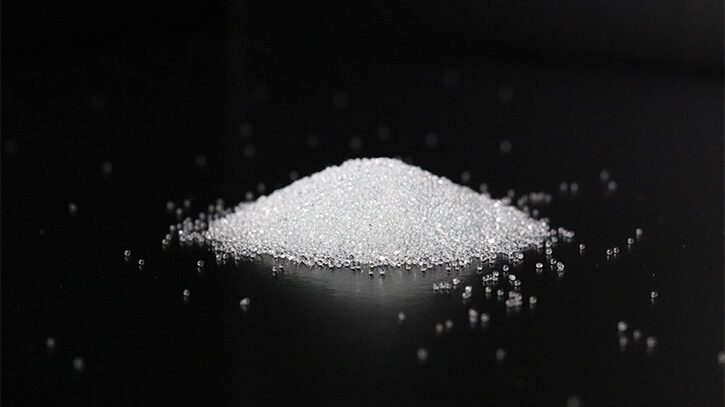
- Glass beads (Grade 5–7) for final finishing of stripped metal to a uniform satin appearance before inspection and priming
5. Shot Peening for Fatigue Life Extension
Shot peening is a controlled process — distinct from cleaning or paint stripping — in which spherical media (cast steel shot, glass beads, or ceramic beads) is propelled at a metal surface to induce compressive residual stress in the surface layer. This compressive stress layer suppresses fatigue crack initiation and propagation, extending component life in high-cycle applications.
Shot peening is used on: automotive leaf and coil springs; gears and transmission shafts; aircraft wing spars and landing gear components; turbine blade roots; orthopedic implants; and any other metal component subject to cyclic loading where fatigue life is critical. The process is controlled by the Almen intensity — a standardized measure of peening intensity using calibrated Almen strips — and must be performed by certified operators following AMS 2430 (automated peening) or AMS 2432 (manual peening) standards.
6. Media Selection Reference Table
| Приложение | Recommended Media | Grade / Type | Key Specification |
|---|---|---|---|
| Aluminum aircraft skin stripping | Пластиковые носители | Type II, Medium | MIL-P-85891A |
| CFRP composite stripping | Пластиковые носители | Type I, Fine–Medium | MIL-P-85891A; low pressure |
| Titanium component stripping | Plastic media or WFA | Type II or WFA #80 | No iron contamination |
| Automotive body panel stripping | Пластиковые носители | Type II, Coarse–Medium | Low pressure; test panel first |
| Body cavity / complex geometry | Walnut shell grit | 8/12 or 12/20 | Moisture <8% |
| Final metal finishing / satin | Стеклянные бусины | Grade 5–7 | MIL-G-9954A |
| Automotive spring peening | Стальная дробь | S170–S230 | SAE J827; Almen intensity certified |
| Aircraft component peening | Cast steel or ceramic shot | AMS 2431 certified | AMS 2430 / AMS 2432 |
7. Frequently Asked Questions
Get Specifications for Automotive or Aerospace Media
Contact Jiangsu Henglihong Technology Co., Ltd. for technical guidance on soft blast media selection, MIL-spec documentation, and sample availability for your application.
Contact Our Team →Фильтры